Hilton Head to start charging for beach parking at Coligny. Here’s what to know
The Town of Hilton Head Island on Tuesday unveiled a sweeping overhaul of its beach parking program to control capacity on busy beach weekends.
It will mean big changes for everyone who drives to a public beach on Hilton Head: Island residents, tourists and day trippers, many of whom have been coming to the island’s beaches for decades.
Among the changes, which the Town Council endorsed but has not yet officially adopted: An hourly fee for parking between May and September; a mobile parking app to allow electronic payments; and enforcement and fines for violations.
Walker Consultants, the firm that prepared the report presented to the town council Tuesday, said Hilton Head will be hard pressed to implement all its recommendations by summer 2021. That means parking changes will likely come within the next year in time for the 2022 summer season.
Still, the about-face on free parking, which council members have begrudged for years, represents one of the biggest changes to the island since the coronavirus upended life here.
Where some town representatives want steep parking fees with the goal of deterring visitors all together, others want to balance visitors’ expectations with protecting residents’ access to the island’s biggest environmental asset.
“Charge severely for that commodity, and we’ll get less and less day trippers coming in here,” Mayor John McCann said.
“We shouldn’t just create an organization that makes it easier for our day trippers and visitors to find parking for the beach,” Ward 4 representative Tamara Becker said. “We need to keep the focus on the residents and our brand and maintaining what we’ve come to know and expect as an island.”
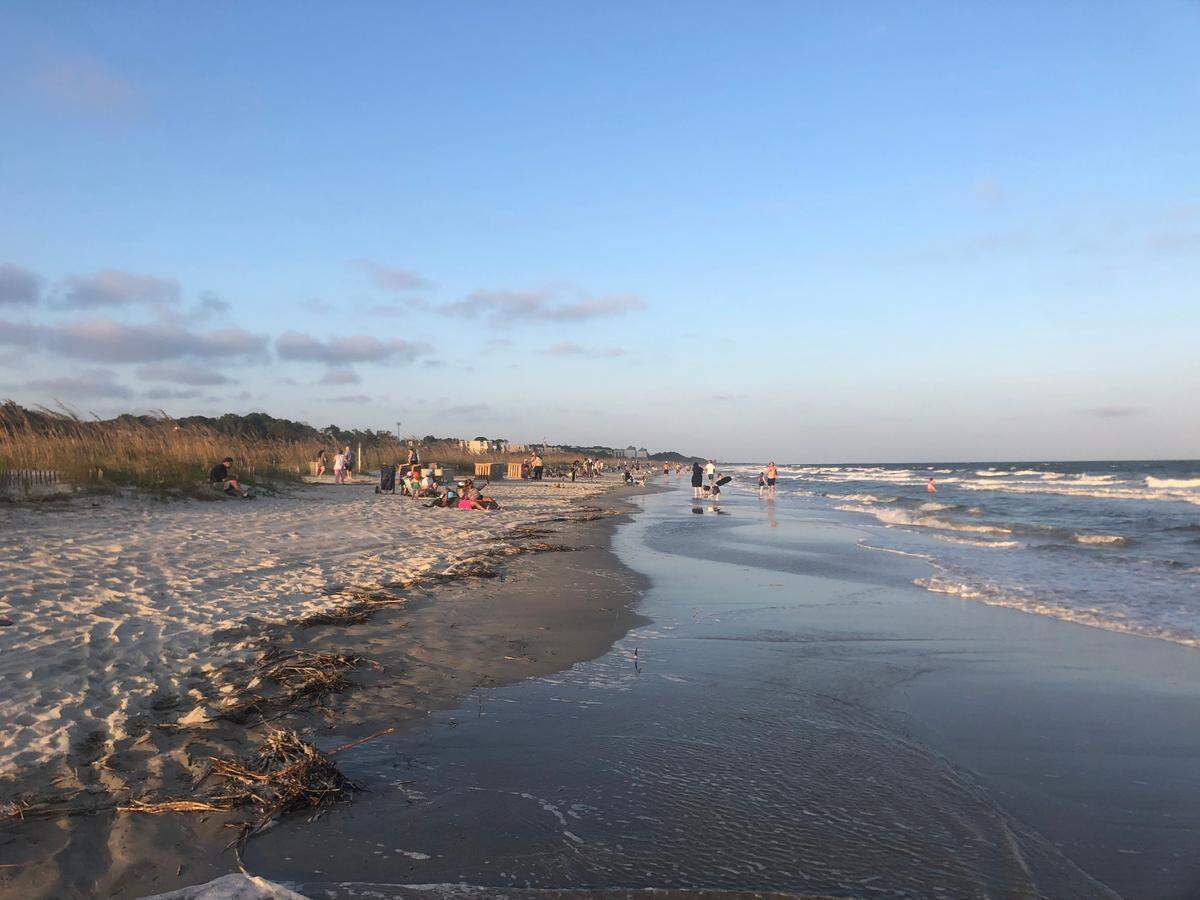
Here are the seven main takeaways from Hilton Head’s parking study:
1. You’ll have to pay for parking
The main recommendation is one the council has been tossing around for years: Charge for parking at all beach access points.
Jim Corbett, of Walker Consultants, said the Coligny Beach parking lot and Fish Haul areas should be converted to hourly paid parking to make the island’s beach parking uniform.
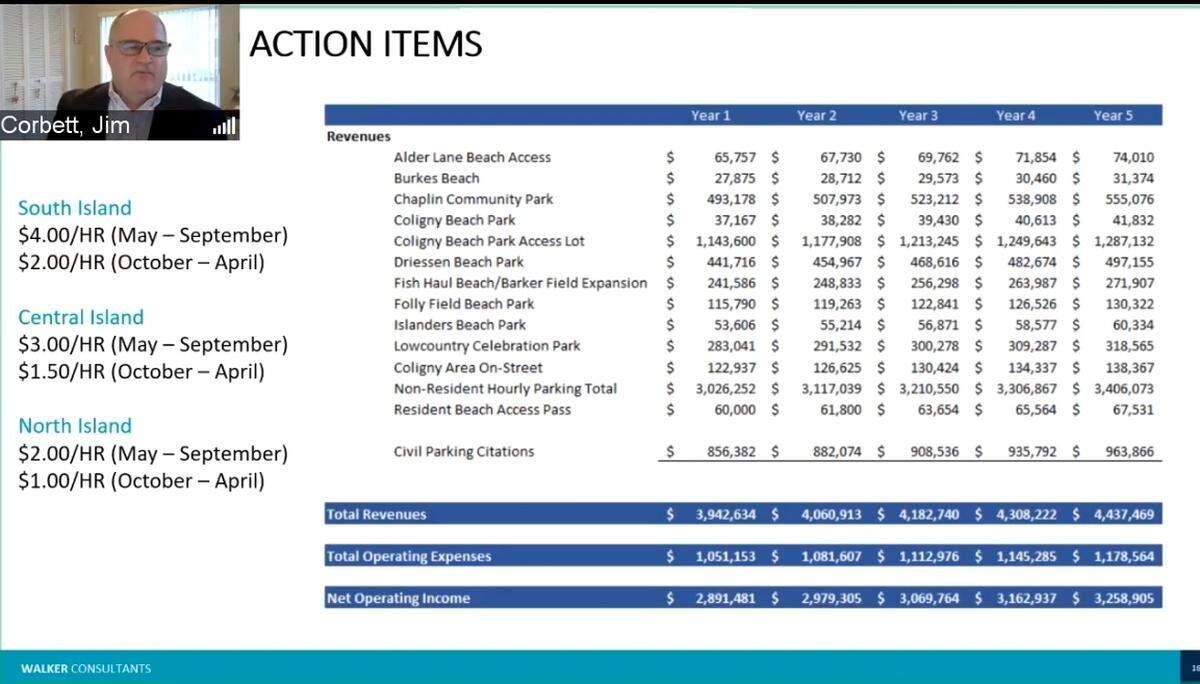
He suggested several rate schedules, none of which the council directly endorsed. The first would charge $4 per hour to park at the south end beach access points, $3 per hour at the mid-island beaches and $2 per hour at the north end beaches during the high tourism season, May to September.
In the off season, Corbett suggested $2 per hour on the south end, $1.50 per hour mid-island and $1 per hour on the north end.
Another rate schedule proposed dropping parking fees altogether from October to April.
2. Residents will still get beach parking passes
Not everyone would pay to park at the beaches. Corbett’s plan would allow residents to purchase an annual beach parking pass and forgo additional fees.
But the white peel-and-stick decals would be replaced with registration of vehicles’ license plates so parking attendants could scan the license plates and know whether that vehicle has an annual beach pass.
3. You’ll be able to pay by cell phone
If you’re picturing over 400 parking meters at Coligny, you’re living in the past.
Corbett said mobile parking apps will allow beachgoers to refill their virtual meter from their beach chair.
He recommends the town partner with several mobile parking app companies so visitors from across the country can use their local app to pay for parking on Hilton Head and avoid having to download another app.
For visitors without smart phones, Corbett said beachgoers can make payments via a telephone number.
4. There will be tickets
Another big change: Parking violations will mean tickets.
Big ones.
Corbett suggests a $50 parking citation for expired meters or parking in the wrong place. He said less expensive citations for visitors could be considered “the cost of going to the beach.”
The Town of Hilton Head’s code enforcement officers haven’t written beach parking citations since the island’s municipal court closed in 2019, according to the parking study’s meeting notes.
This summer, the town towed and issued citations to vehicles parked at the beaches illegally or dangerously.
Parking citations would be civil citations and not require violators to show up in court, Corbett said. Citations, if piled up, could impact a driver’s ability to register their vehicle without paying the citations first.

5. There could be a parking garage at Coligny
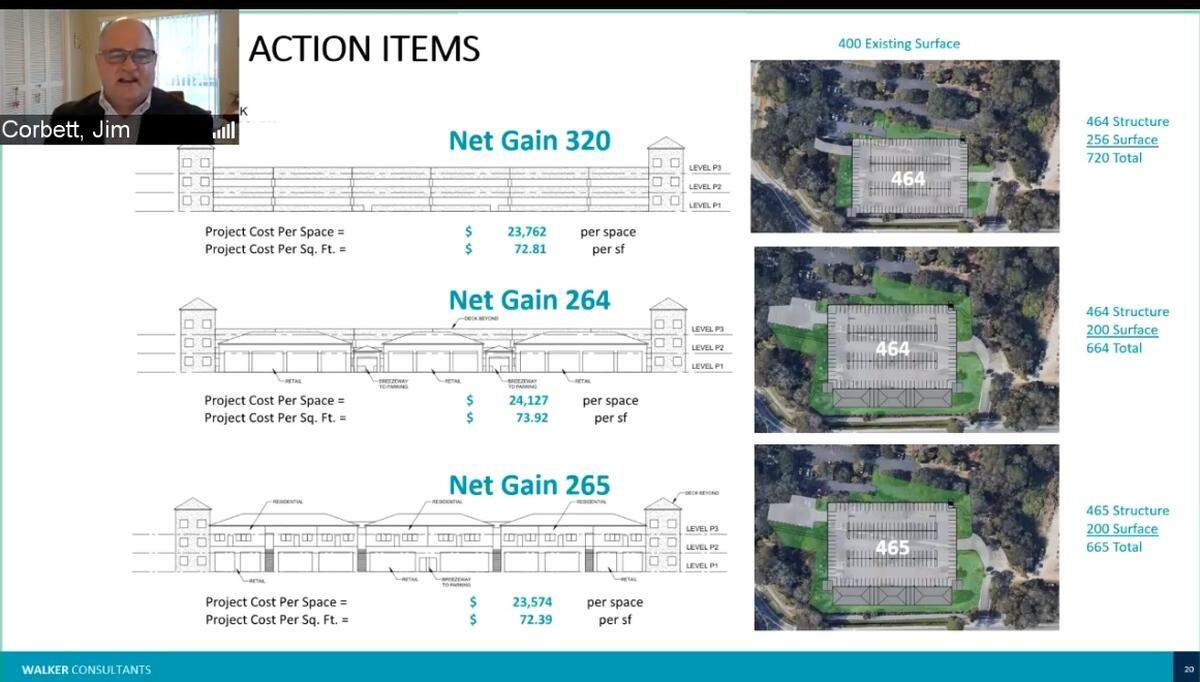
The most notable infrastructure recommendation included in the report is a variety of options for a three-story parking garage at Coligny Beach.
Council members did not vote on whether to include the garage, but Corbett showed options for creating the parking deck surrounded by retail shops.
Still, he said parking surveys showed that 61.9% of respondents did not support a parking structure anywhere on the island.
“We hear both sides,” he said. “More inventory invites off-island users to an already congested area,” but that local businesses generally support the idea of more parking for customers near their shops.
6. Islanders Beach Park changes
For the town to comply with its grant applications, Corbett said Islanders Beach Park would have to be converted back to its old configuration, where 25 metered spaces would be available to the public.
The remainder of the lot would be reserved for resident parking.
“A lot of the comments we heard were ‘maintain islanders beach for the islanders,’” he said. “Almost every respondent said something to that capacity.”
7. The town will make around $3M a year
Between parking fees and citations, the town could make between $1 million and $3 million each year after accounting for expenses like paying for a mobile app contract and an external contractor to handle citations.
Still, the town’s parking revenues would be managed by a parking enterprise fund separate from the annual general fund.
“I’m very pleased with this,” Ward 6 representative Glenn Stanford said. “Parking revenue is a great opportunity for us going forward.”
What’s next?
The Town Council will discuss the parking study at its Nov. 4 meeting.
Residents and visitors can submit comments on the town’s website. An online portal for those comments will open once the meeting agenda is released, which typically happens the Friday before the meeting.
It will also be reviewed by the Public Planning Committee before potential adoption, Mayor McCann said.
This story was originally published October 27, 2020 at 12:33 PM.