
Hilton Head’s swing bridge was out for a month in 1974. Here’s how residents and tourists coped
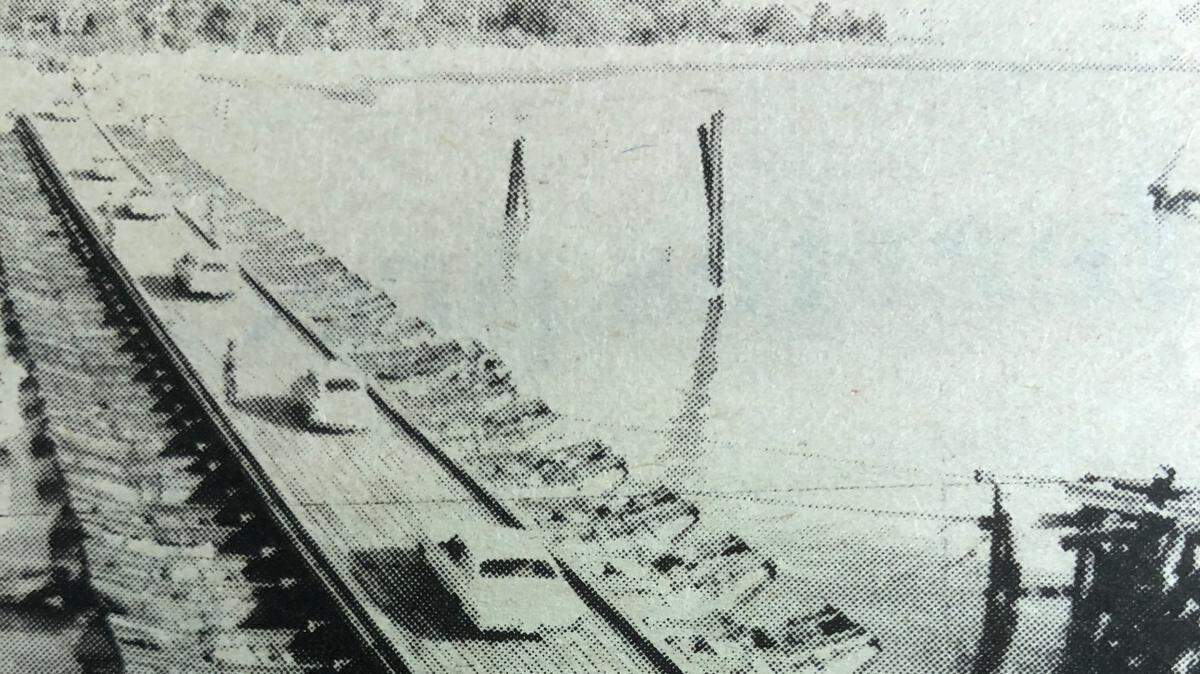
Editor’s note: On March 27, 1974, an errant barge hit the James Byrnes Bridge, Hilton Head’s only connection to the mainland. The bridge was damaged and out of operation for about four weeks. On Feb. 23, 1982, in a special section related to the opening of the J. Wilson Graves bridge, this first-hand account was published.
He’ll never forget the day the bridge went out
I’m just not going to miss the old swing-span Skull Creek Bridge, and now that I think about it, I can’t think of anyone else who will either.
After the chain of events that followed the ramming of the bridge by the barge in 1974, I’ve never crossed that bridge without remembering those first few days of cold rain, confusion and exhaustion that became the lot of all of us who were assigned to “keeping traffic flowing” over a bridge that wouldn’t close.
In other words, the traffic had to flow by water only.
Maybe that’s why Joe Fraser assigned me to the Buckingham Dock and Landing side. I was manager of fishing development for Sea Pines then, and that seemed to fit within my baliwick. Except it was a lot more vehicular traffic I would direct than waterborne in those hectic days.
There was a large dock at Buckingham then, and as I clambered off Cap’n Sam’s “Waving Girl” (tour boat turned emergency ferry), a scene unfolded in the dismally cold, early spring rain that reminded me more of Dunkirk than folks departing for a holiday on lovely Hilton Head Island.
Cars were backed up as far as the eye could see down U.S. 278 toward what is now Moss Creek Plantation. Nevertheless, it was the scene there on the dock itself that was so alarming. No fewer than three trucks were on the structure, along with what I guessed were 250 wet, shivering people and all their luggage.
Two of the trucks were backed down where two shrimp boats were tied up with deck levels, at least eight feet below the dock on a bottomed-out low tide. Everything from sides of beef to cases of champagne were being thrown out of the trucks and stacked onto the decks of the shrimpers. The supplies of Hilton Head were coming out of those trucks and just up the dock, waiting to unload, was a tractor-trailer.
Ominous sign
There was a wooden sign down at the foot of the dock, placed there by the county. I’d seen it before on infrequent trips to Buckingham Landing, and even though I couldn’t see it now through the trucks and the milling crowd, I knew what it said: “Unsafe for Vehicular Traffic.”
With visions of that entire dock with the trucks, people and all crashing into the creek, I found a handy S.C. Highway patrolman, and he agreed that the sign was right and that he was just waiting for someone to tell him to enforce it.
As the trucks began to inch their way off the dock, the S.C. Wildlife Department officers arrived, and we had our first radio contact that established the Bluffton Town dock as one of the central supply points. The truck drivers and shrimp boat captains were a lot happier with that news, and when the last truck was gone, we had Buckingham Landing secure as a primary passenger-loading dock only. And I finally got my first deep breath of air.
There wasn’t a floating dock at Buckingham so anything less than a full floodtide was a real experience for the passengers.
Bubba Marchetti was one face I remember in those first hectic days, and Bubba’s two-way radio gave us some facsimile of control in a situation that varied from just mildly crazy to all out D-Day proportions.
After about three days of being wet and cold and tired, some order began to emerge, and the loading and unloading operations settled down a little.
The pecan grove at Moss Creek was one huge parking lot, and I know there were to be many sacrifices by both individuals and companies in the days and weeks that followed. I live in Bluffton, and so I had it much better than most of the Bridge Crisis Corps who manned the landings day and night. I saw both Charles and Joe Fraser carrying luggage for folks off the docks.
I’ll never forget that dramatic moment some days after it had been determined that the bridge couldn’t be fixed quickly.
The convoy came down U.S. 278 past Moss Creek, and nobody was too proud not to cheer. John Wayne has never arrived with the blare of cavalry bugles and the flutter of banners to such sheer emotion as the arrival of the U.S. Army Corps of Engineers.
They really did build a pontoon bridge over Skull Creek in one great big hurry, and suddenly traffic was flowing again to Hilton Head Island.
There was not a man jack of us who’d worked that crisis who didn’t know that someday a bridge like the one we’ll be using hereafter would have to be built to this island.
And danged if it wasn’t.