A look inside efforts to expand free COVID-19 testing on Hilton Head as SC cases spike
Update: This story has been changed to include Savage’s test results.
The day of her COVID-19 test at Sea Pines Circle Immediate Care, Rosemary Savage said she had no idea how she would eat. Uninsured and with only $30 to her name, Savage said she had to shell out $110 for the test.
“I am your lowly workforce, and I am hurting,” Savage said. “This is outrageous.”
She said she was sure she had the virus, but wanted to get a test to protect her coworkers. She stopped working June 9 when she began experiencing COVID-19 symptoms.
A friend lent her money for the test and other necessities, including food. But as she looked ahead to two weeks of quarantine — as would be required with a positive test result — Savage demanded that the Town of Hilton Head Island expand free COVID-19 testing.
Just hours before she was tested Tuesday, Savage called the mayor’s office and pleaded with officials to do something about the expensive tests. The person who took Savage’s call promised that the issue would be brought up at the town council meeting later that day.
At that town council meeting, Hilton Head Regional Healthcare chief executive officer Jeremy Clark announced a one-day, state-funded free testing initiative on Hilton Head Island that neither requires a physician’s order nor an appointment. It will be June 29 from 7 a.m. to 1 p.m. at Hilton Head Fire Rescue Training Center, and Spanish language interpreters will be present.
According to Heather Rath — a project management consultant in Hilton Head who is collaborating with state officials to increase free testing locally — DHEC will hold its first free testing event on the Island Wednesday, June 24, from 10 a.m. to 3 p.m. at Hilton Head High School.
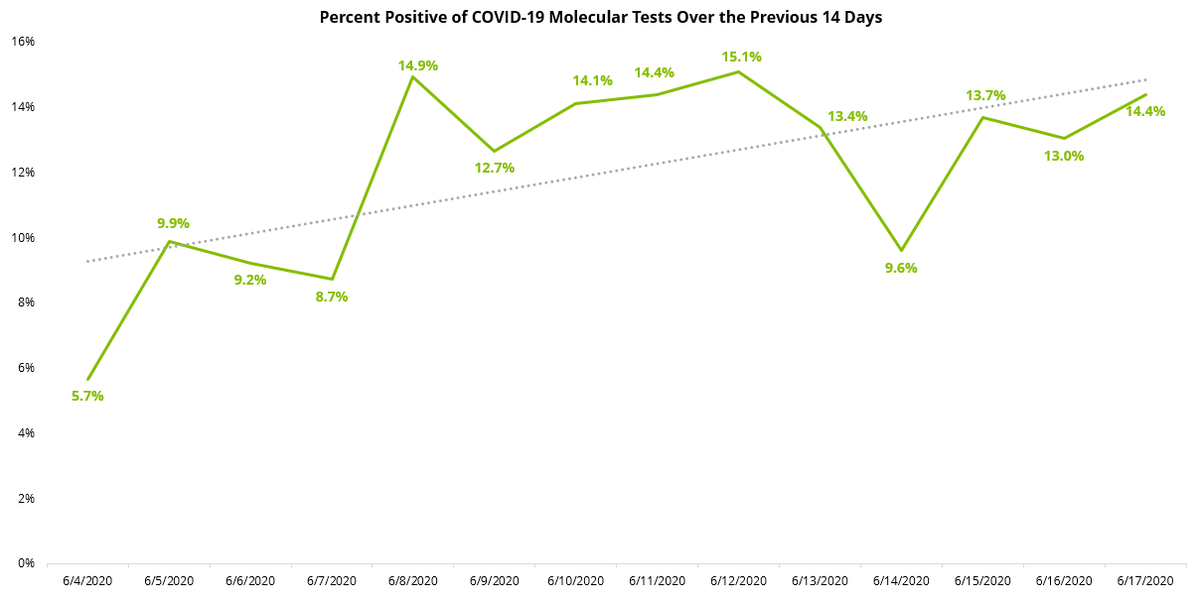
These announcements come as COVID-19 case counts continue to rise in Beaufort County and in South Carolina. On Thursday, Beaufort set a county record for most new cases reported in a single day with 48 — 15 higher than the previous record set just days before. As of Friday afternoon, Beaufort County had 760 cases and 15 deaths.
While some say increased testing capabilities may account for the increases across the state and country, others say that doesn’t explain the recent spike in infections and the growing death toll.
Until this week, no state-funded free testing sites were available in Beaufort County. On Tuesday and Thursday, Beaufort Jasper Hampton Comprehensive Health Services offered free testing at the Leroy E. Browne Medical Center on St. Helena Island.
Savage, who received her test results late Friday — she tested negative for COVID — said that isn’t enough. “One day of free testing ain’t gonna cut the mustard if thousands of people are crossing the bridge daily,” she said.
State Sen. Tom Davis (R-Beaufort) is working with Hilton Head Regional Healthcare, Volunteers in Medicine and the Department of Health and Environmental Control to offer more clinics. He said he hopes to nail down logistics for a testing event in Sun City Hilton Head in the future.
“As I work with DHEC, I’ve emphasized that these can’t be one-off,” Davis said. “We need to have this done on a recurring basis.”
Hilton Head town manager Steve Riley said the town hopes to have more free testing, “but it is dependent on the partnership with DHEC and their ability to put in the resources, the testing resources,” he said.
The tests are important not just to confirm whether individuals have COVID-19 and may have exposed others, Davis said, but also to obtain data to help the state build better models and decide where to allocate resources.
Dr. Ray Cox, executive director of Hilton Head’s Volunteers in Medicine clinic, said organizers are particularly concerned that people feel safe coming to be tested.
On Monday, Davis plans to visit local businesses in Hilton Head such as Lucky Rooster Kitchen and Bar and Watusi Cafe to promote the June 29 event and spread the word that clinic participants’ employment status, immigration status and test results will not be reported to third parties.
“All we are interested in is making sure that people get tested,” Cox said. “That can help us to contain the virus.”
Money matters
The state has pulled $45 million from its general fund to pay for these tests and events, but all are subject to federal reimbursement by the federal Coronavirus Aid, Relief and Economic Security Act.
Davis expects the process to begin next week when the legislature reconvenes. Of South Carolina’s nearly $2 billion in CARES Act funding, $50 million is slated to go toward testing.
Rath said it’s critical that the town take advantage of the federal money “for people who do not have access to health insurance.”
Along with Davis, Rath is pushing for DHEC to institute a “stand-up,” or recurring, testing site on the island to offer more people access to free testing without a doctor’s order. Hilton Head Hospital, the only permanent location on the island that offers free testing to those without insurance, requires that patients provide doctor’s orders to get tested — a potential barrier to those without insurance.
Cox noted that those who need a doctor’s order for a COVID-19 test can get one from Volunteers in Medicine, a clinic for low-income and uninsured people who live or work on Hilton Head or Daufuskie Islands.
Some locations on the island, such as Main Street Medical, do not require referrals for testing but charge those without insurance as much as $135 for a swab.
“The citizens of Hilton Head — all of them — should have access to free testing on a recurring basis in order to protect the health of our community,” Rath said.
Off the island, the situation is not much better. According to DHEC’s testing database, of the seven listed permanent testing locations, only two sites in Beaufort County offer free testing for the uninsured without a doctor’s order. Those are Lowcountry Urgent Care in Beaufort and Lady’s Island. LUC marketing coordinator Helen Holthaus said the centers are able to do so through funding from the CARES Act.
Helping hands
The Deep Well Project, to executive director Sandy Gillis’ surprise, has not received any requests to help pay for COVID-19 testing. But the Hilton Head-based nonprofit has been working with clients who have tested positive and have not been able to go to work but still must pay for rent and food.
She surmises that’s because people do not want to know.
“If positive, they’re out of work and their kids can’t attend daycare [or] summer camp,” Gillis said in an email. “It’s almost like a “don’t ask, don’t tell” type scenario if the person is asymptomatic or has very mild symptoms. Many of our clients’ only healthcare is [through] VIM, and because they’ve been closed until last week — other than teledoc and prescription assistance — they just skipped on healthcare.”
At Volunteers in Medicine, one of the organizations helping to host the testing event June 29, Cox said organizers worry about how COVID-19 is affecting people of color. Studies have shown they are at an increased risk of contracting the virus.
“Many of the people in these communities are patients of ours,” Cox said, later noting that 60% of VIM patients are Latino.
They are also more likely to work in frontline service positions, he added, where they are at greater risk of contracting the virus. Cox said this risk could be exacerbated as Hilton Head Island enters its tourism season.
Expanded testing can help track and contain the spread of the virus, he acknowledged, but urged Hilton Head residents to wear masks and continue social distancing from one another.
“We’re not out of the first wave,” Cox said. “It is more appropriately termed a first-wave spike. Even if everybody’s social distancing, you would still expect to see some increase in cases. We all need to be more intentional about respecting one another and keeping each other safe.”
This story was originally published June 20, 2020 at 7:00 AM.