Bluffton negotiating committee recommends denial of revised Village Park Homes plan
A Bluffton committee that negotiates development plans on the town’s behalf on Wednesday recommended denying the most recent proposal for significantly increasing density in the Alston Park neighborhood.
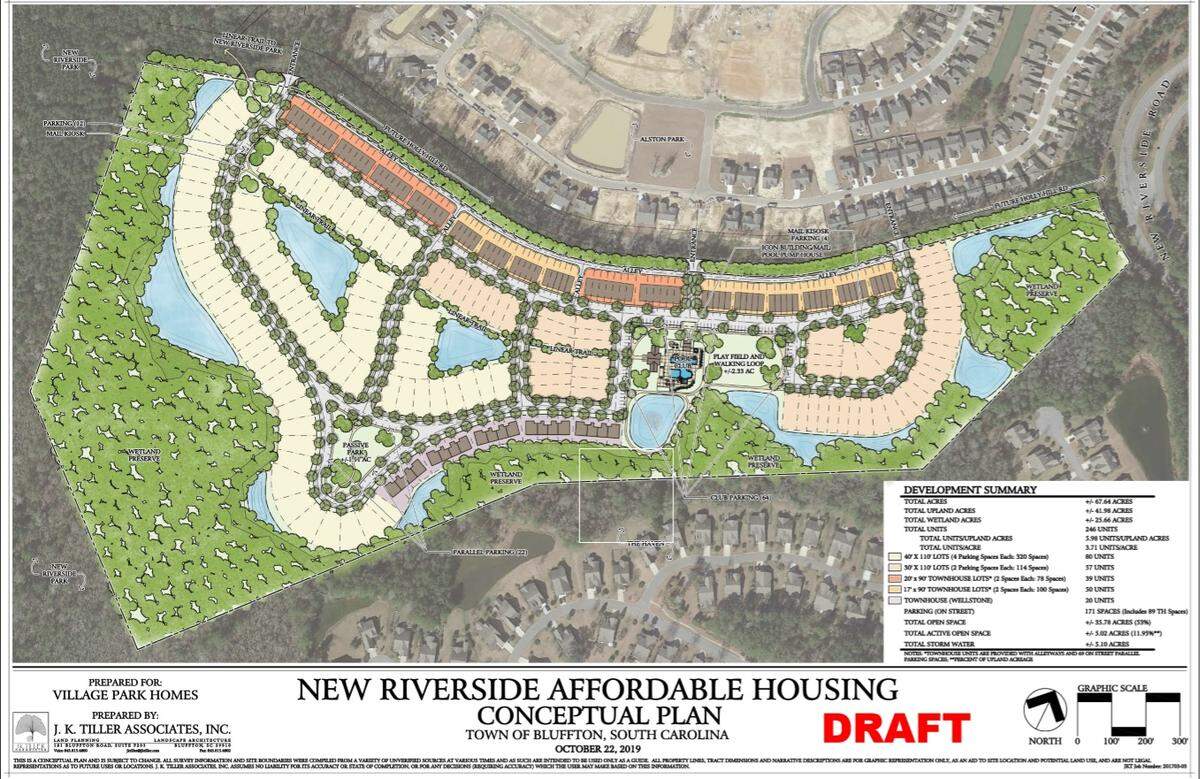
The decision came after the negotiating committee discussed in closed session a revised plan from Village Park Homes LLC that would have added 175 more homes to the already-approved plan for 76 housing units. The developer had described the project, on 42 buildable acres in the New Riverside area, as the “solution” to Bluffton’s affordable housing problem.
Initially, the company has suggested adding 206 more to Alston Park, meaning 282 additional homes would be built. The plan discussed Wednesday came after staunch community opposition to the increase in housing.
Village Park Homes’ revised term sheet still asked the town to waive all permit and development fees associated with Alston Park. The proposal also asked that if a housing unit were to remain unsold and vacant for nine months, the affordable housing deed restriction could be removed.
After meeting behind closed doors, the committee ultimately voted 5-1 to recommend denial of the application unless the developer meets certain conditions.
Those conditions, outlined by Bluffton Mayor Lisa Sulka, include reducing to 74 from 175 the number of additional units, and prohibiting the removal of deed restrictions. Village Park can take their revised plan — the one the negotiating committee recommends denying — to the planning commission, or it can submit a new proposal.
Over 100 residents who live in nearby communities such as The Haven at New Riverside and Alston Park attended Wednesday’s meeting. During the public comment section before the executive session, nine residents spoke against the housing plan, saying the mammoth increase in homes would hurt the environment, increase traffic, crowd schools and jeopardize safety. They’re not against affordable housing, the speakers said, but lament the large increase in density.
After each speaker’s 3 minutes of public comment, the room of fed-up neighbors erupted in applause. The largest was for resident Isabel Miller, who spoke about the perceived lack of transparency with the negotiating committee. She said that because the committee is a public body, the community deserved to know how each committee member felt about the development.
“We have a right and a need to know your position on this matter,” Miller said. “Are you for it? Against it? Are you worried about increased traffic and the impact on our wetlands, flood plains and roads? ...We don’t know your concerns because there has been no public discussion.”
Miller added that the negotiating committee was a public body subject to the S.C. Freedom of Information Act, and while there is an exception that allows for discussions about contract negotiations in executive session, a 2015 opinion from the state attorney general says that the exception should be construed narrowly and a reason must be stated as to why it can’t be discussed publicly.
Bluffton’s negotiating committee, appointed in April, has discussed the proposal with developers at two previous meetings. One discussion between the committee and developers was in executive session. Discussions Wednesday between the committee and town staff were held in executive session. Representatives of the developer did not meet with the town.
When the committee and town staff opened the meeting to the public, committee members discussed the proposal and their decision to recommend denial. Councilman and committee member Fred Hamilton was the only member to vote against recommending denial. Member Ashley Feaster commended Village Park Homes for bringing forward a plan for affordable housing.
“I just think that we can all work together to make our community better and bring and keep our workforce here,” she said.
Sulka said she appreciated all the residents who spoke during public comments and said she hopes more residents will sign up to be on government committees. Regarding comments about executive session, she said she didn’t want residents “thinking we’re out here making backdoor deals. ... If it’s in executive session, it’s a contractual matter, and I promise you that.”
Like some residents, Sulka said, the town is frustrated with the development agreements made 20 years ago and is struggling with the town’s population outgrowing its infrastructure.
According to Village Park Homes’ initial plans, the proposed units would be priced between $175,000 and $310,000 and would be marketed to families whose total income is between 60 percent and 100 percent of the area’s median annual income for a family of four — $49,800 to $83,000. Some have questioned how teachers and firefighters, for example, could afford those homes on their $40,000 to $50,000 salaries.
Michael Lucas and Dallas Hutcheson, who live in The Haven neighborhood and attended Wednesday’s meeting, say they’re not against affordable or workforce housing. They vehemently oppose the large increase in density in an environmentally sensitive area surrounded by wetlands that connect to the New River.
Negotiating Committee
The purpose of the negotiating committee, according to town documents, is for the town, applicants and property owners to discuss development proposals of “significant complexity, size or impact.” Proposals are referred to the negotiating committee by council.
Prior to this year, the most recent committee meeting was Jan. 27, 2011. The committee didn’t meet for eight years because no major changes to development agreements were necessary until now, said Fred Hamilton, one of the seven members. Meetings resumed in July.
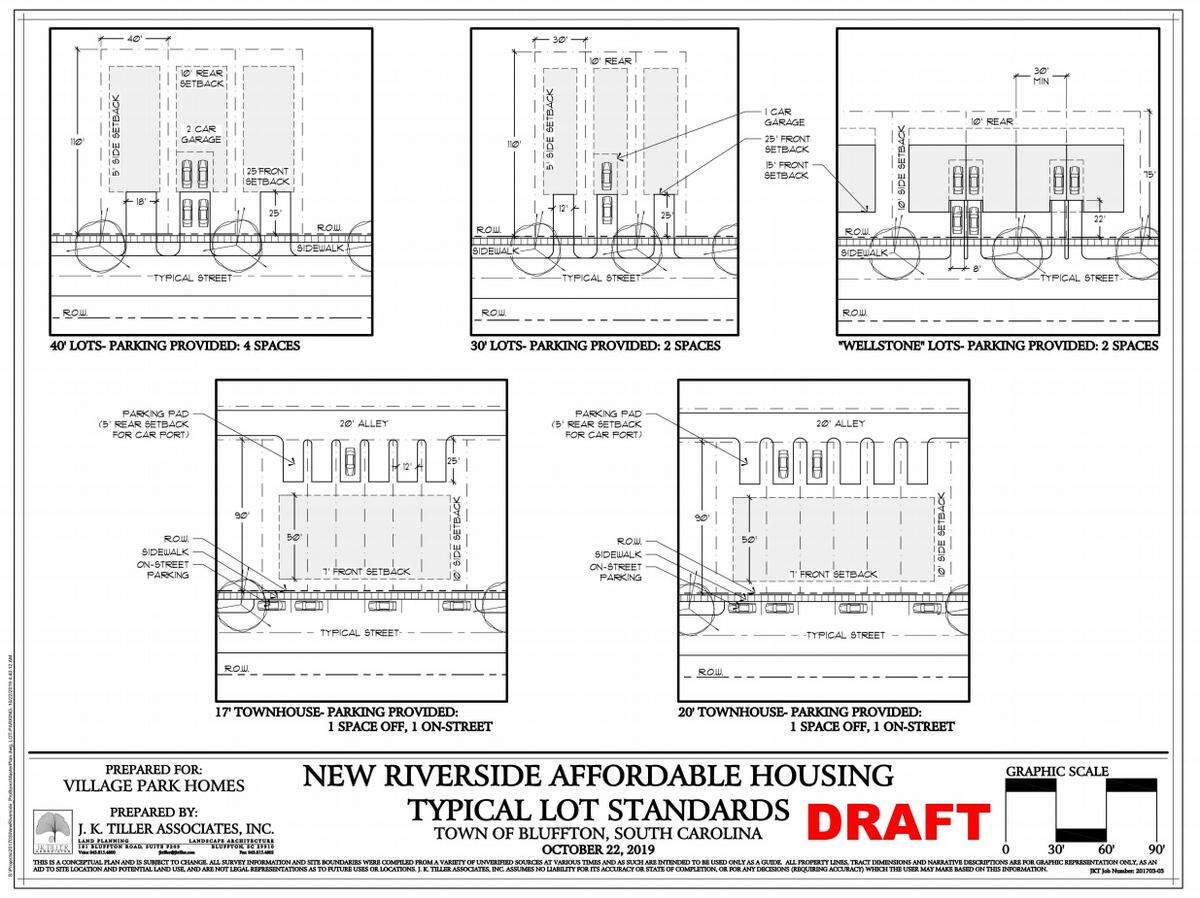
Josh Tiller, president of the landscape architecture firm J.K. Tiller Associates Inc., chair of the town’s planning commission and a member of the negotiating committee, recused himself from all negotiations for this development. His firm designed the master plan for the Village Park Homes development and the new revised plan. Terry Hannock, vice chair of the planning commission, has sat in for Tiller during these discussions. Tiller said he has no financial ties to the development and that he’s been doing the work for free because he supports affordable housing.
This story was originally published October 29, 2019 at 6:56 PM.