COVID, RSV and flu are all coming back to Beaufort County. What is a doctor’s advice?

It feels like almost everyone in Beaufort County is either sick or at least knows someone who is couch-bound and drinking Gatorade, from teachers to students, coworkers to gym instructors.
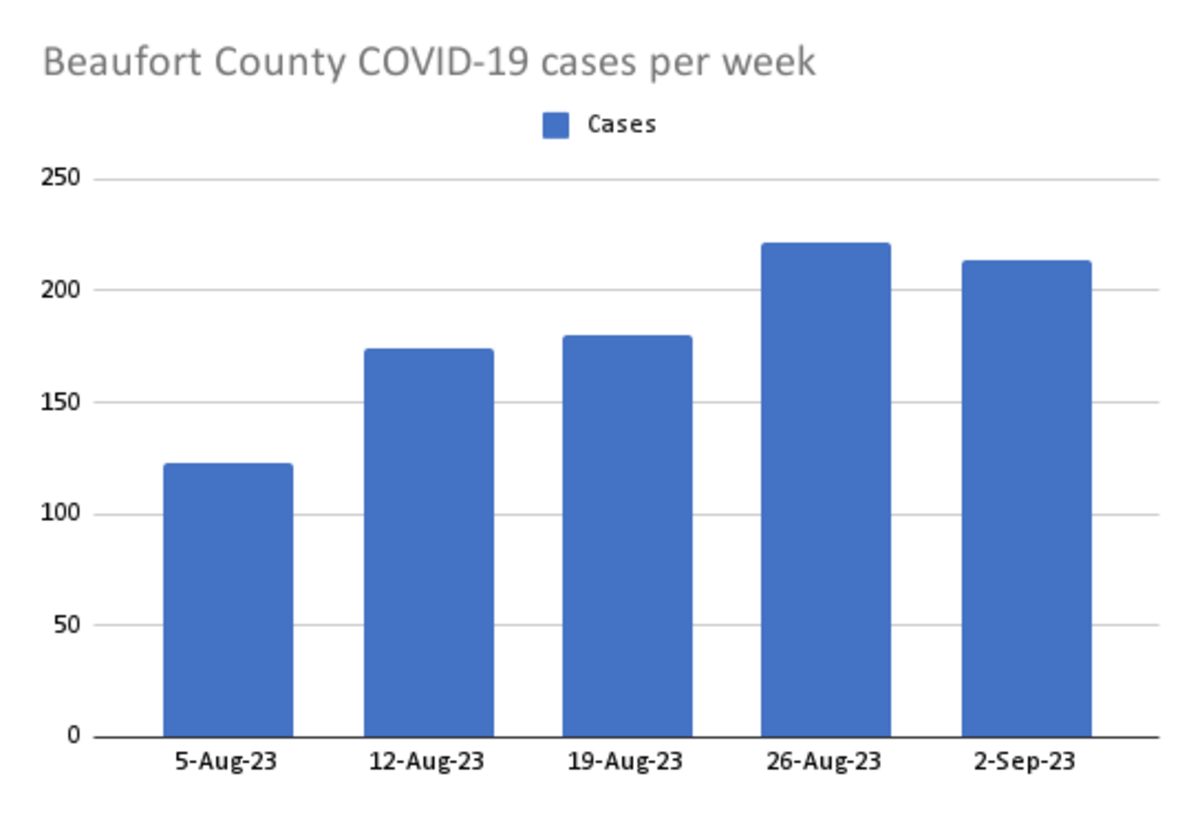
That’s probably because COVID-19 cases have risen by 74% in the county since a month ago, according to data provided by the S.C. Department of Health and Environmental Control.
A percent increase like that may seem alarming. But, considering the base number of cases this month compared to last month, it probably isn’t significant enough to warrant panic. The week of Sept. 2 there were 214 cases compared to 123 cases a month earlier, the week of Aug. 5. This time last year, Beaufort County daily averages reached around 150 new cases per day, according to previous reporting by the Island Packet and Beaufort Gazette.
State Epidemiologist Linda Bell said it’s important to consider that current cases are likely higher because those who test positive using at-home tests aren’t included in the reporting.
“As soon as school opened, we did begin to see increased reports of COVID-19-related outbreaks in school settings,” said Bell, who is in charge of communicable disease control for South Carolina.
Hospital admissions went up 4.5% between the week of Aug. 20-26 and the week before to 70 hospitalizations, according to the DHEC data. During that week 2.2% of intensive care unit beds were from patients with confirmed COVID-19. For the last month, there have been fewer than five deaths each week.
“Right now we’re seeing gradual increases in hospitalizations,” Bell said. “We need to understand that those can result in reports of deaths in the weeks to come.”
What strain are we on now?
During the last two weeks of August the EG.5 strain, a descendant of the omicron variant, was responsible for 16.4% of cases of COVID-19 in the region that includes South Carolina and eight other southern states. This is more than any other single strain.
The Centers for Disease Control and Prevention is monitoring over 20 strains circulating in the U.S., according to Bell. She said that regardless of what COVID variant people get, it could be more severe or less severe depending on the individual and especially their underlying health conditions.
“Yes, it’s fine to pay attention to the circulating variants,” she said. “But please pay attention to the fact that any variant can do harm.”
What about the flu or other respiratory illnesses?
COVID-19 isn’t the only highly contagious respiratory illness to be on the watch for as fall approaches. Influenza and respiratory syncytial virus (RSV) also start to circulate around this time of year.
Bell said the state isn’t seeing the same upward trends for the flu as it is for COVID-19. Statewide there were 130 flu cases this week, up 2.3% from last week, according to DHEC. There isn’t data for Beaufort County.
“We saw a big spike (with RSV) beginning about this time last year,” she said. “If we have the combination of all three of those circulating, either simultaneously or in a staggered fashion, we’re probably looking at a moderately active respiratory virus season for the fall.”
RSV is especially a threat to infants and older adults, according to the CDC. Normally it causes mild, cold-like symptoms and most people recover in a week or two, but serious cases require hospitalization.
When should you get vaccinated or a booster shot? How to protect yourself.
For most people, it’s best to wait for the updated COVID-19 booster shot to maximize protection, according to Bell. She said the new vaccine will likely come out later this month and be best matched to the most commonly circulating variants.
However, there are some cases where people should get vaccinated or a booster shot as soon as possible. If they have significant underlying health conditions and haven’t previously received any vaccination, Bell said they should talk to a healthcare provider to determine if they should get vaccinated with the current vaccine or wait a few weeks for the new one.
The COVID-19 vaccine is different from the flu and RSV vaccines and so is the guidance on waiting to get them. Updated flu vaccines and RSV vaccines are already available for the 2023-24 season. The updated COVID-19 booster shot that targets current strains isn’t available yet.
“We really want people to be aware of getting a flu vaccine as early as possible,” Bell said. For RSV, there are vaccines for adults 60 years and older.
While Bell says vaccinations are the best way to stop sickness from spreading, basic health and hygiene practices go a long way too. That means washing hands and staying home when feeling sick.
For COVID, it also means following CDC recommendations for what to do if exposed, which includes wearing a mask when indoors around others for 10 days, testing, and monitoring for symptoms. If you get COVID-19, continue to follow CDC guidelines, which are to stay home and away from others for at least five days and wear a mask when indoors around others for a period of time.
“The point is that COVID is still circulating, it is still causing avoidable hospitalizations (and deaths),” Bell said. “We don’t want people to let down their guard against these, these illnesses.”
This story was originally published September 7, 2023 at 9:34 AM.