Hilton Head’s 1st coronavirus patient left hospital to ‘perfect storm’ of medical bills
A month after her eight-day stay at Hilton Head Hospital, Pamela Lazarus Rickett has no job, no federal stimulus check and no unemployment benefits.
What she does have is a letter certifying her diagnosis: COVID-19. The charges she’s received so far for her treatment total nearly $63,500.
She was Hilton Head Hospital’s first coronavirus patient, its “guinea pig,” she said. Lazarus Rickett was admitted at 3:30 a.m. on March 21, after nearly a month of feverishly soaking through bedsheets and, finally, struggling to walk.
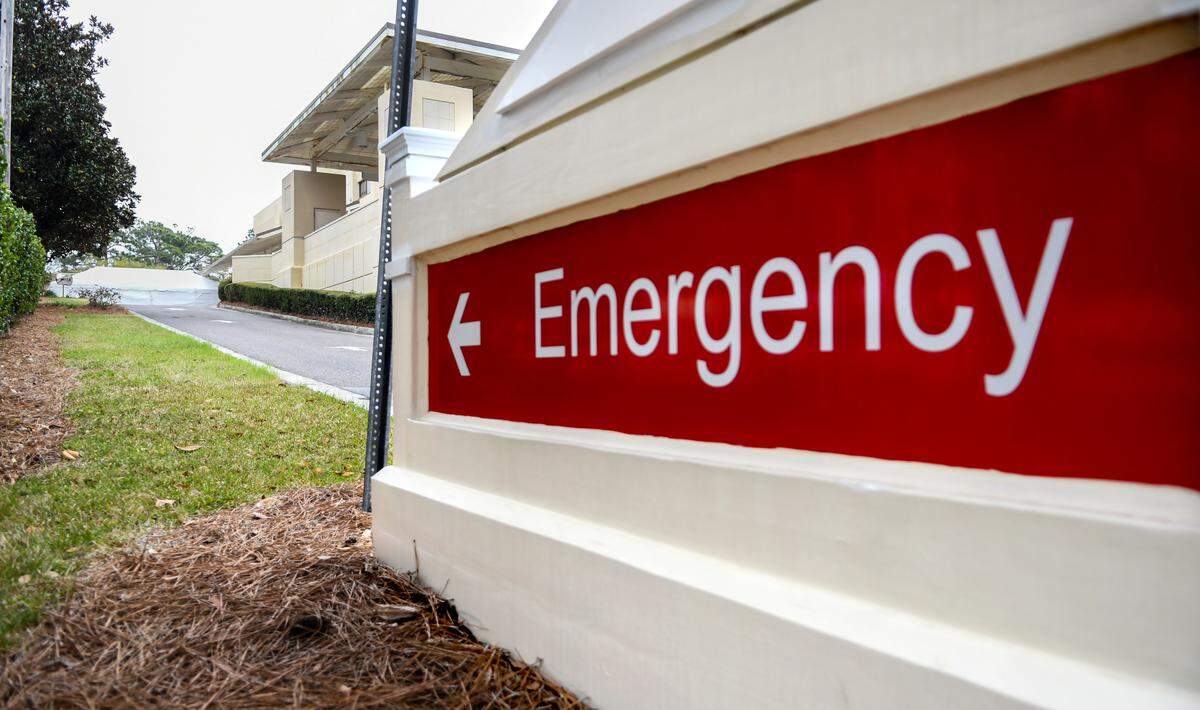
A week later, she was plopped back on the sidewalk outside the emergency room, wrapped in a plastic coat, wearing an N95 mask and gloves. “You’ve just gone through hell by yourself,” she recalled thinking. All she could do was “shuffle on.” The medical bills began arriving that first week.
Lazarus Rickett cares for her husband, who’s waiting for a heart transplant. They already had launched a GoFundMe donations page before coronavirus to pay for his surgeries, the most recent costing over $750,000.
Now, everywhere she has turned for help with her own bills, she’s found only “bits and pieces” of aid, she said. A month after she was discharged and days after a reporter asked her insurance provider for comment, she learned her hospital costs were waived, per the company’s policy on COVID-19 treatment. But that was just one piece of the puzzle.
She remains one of many without a financial cushion trying to navigate this health crisis. The United Way has seen “huge request increases” in statewide calls to its 211 helpline, including a 500% increase in callers worried about access to food and a doubling of requests for utility assistance, Sara Fawcett, president and CEO of the organization’s Midlands chapter, told The State. Included in that bump is a small uptick in calls dealing with medical costs, said Jennifer Moore, one of the organization’s senior directors, in an interview.
And while many private insurers have said South Carolinians won’t pay for COVID-19 testing or treatment, a review of their policies by The Island Packet and Beaufort Gazette found residents shouldn’t count on coronavirus care being completely covered in all situations.
Lazarus Rickett beat COVID-19, but her story is not one of triumph. Even after being discharged, the diagnosis left her isolated: a caregiver chasing meager benefits with no income. Despite assurances from public officials, the systems in place to help people like her — over 5,800 in South Carolina diagnosed with COVID-19 — have been slow to kick in.
Hastily built, the pandemic safety net has gaping holes.
BEHIND THE STORY
MOREAre you covered for coronavirus testing and treatment?
Here’s what you need to know. Note that while this information is current as of April 30, it’s possible details will change as the situation evolves. Click the drop-down arrow to expand.
I've got private insurance.
The best thing you can do is check with your insurance provider to see exactly what your plan covers and what it might cost. COVID-19 testing should be covered at no cost to patients because of provisions in the federal Families First Coronavirus Response Act, signed on March 18, 2020, but policies on office visits and testing ordered for related diagnoses, like the flu, vary. Many of the largest insurers in South Carolina have waived patient costs for coronavirus treatment, including hospitalization, but the exact details vary by insurer. Some “self-funded” employer-based plans can choose whether or not to participate in the waivers, according to CNBC.
I'm uninsured.
In March, the federal government provided funding for states to cover COVID-19 testing at no cost to uninsured residents. The Trump Administration has said it will send federal aid money to hospitals treating uninsured patients with COVID-19, although the exact details remain unclear. People that without insurance because of job loss have several options for regaining coverage, according to the S.C. Department of Insurance. Many health systems are offering free virtual screenings, accessible to uninsured patients.
I have Medicare or Medicaid.
Due to federal requirements, COVID-19 testing and related office visits are covered with no co-payment. For those on Medicare, the cost of treatment depends on whether you have additional insurance beyond basic Medicare. Medicare Advantage plans have their own cost-sharing rules that vary by insurer. Medicare covers hospital stays, with a patient deductible, according to the Kaiser Family Foundation, which published a COVID-19 guide for Medicare recipients. Medicaid beneficiaries are covered for inpatient hospital stays under the state’s plan.
Before the test
In the weeks before her ordeal, Lazarus Rickett led a “small, quiet life,” she said. A short drive to CVS to pick up medications was a big trip out. She and her husband, Kenny Rickett, didn’t travel. Their kids, from previous marriages, live in different states.
She grew up in Rhode Island, he in South Florida. Kenny asked her to marry him weeks after they met. They were both ocean people, and the water brought them to Hilton Head.
Two years ago, a massive stroke left Kenny disabled. Lazarus Rickett clung to his bed rail as his brain swelled. She slept on plastic hospital sofas through multiple heart surgeries. The latest installed a pump that keeps his heart beating while he awaits a transplant. In September, she left her job as a property manager to care for him. “It was the only natural decision,” she said.
Lazarus Rickett started feeling bad at the end of February. Raging 102-degree fevers racked her body. She had stomach pain. On a trip back from Charleston for one her husband’s medical appointments, she pulled over and slept for three hours, fatigued.
A cruise ship was quarantined offshore in California, but the coronavirus felt distant. She wore a mask, just in case, but willed the sickness away. Her focus was Kenny.
Weeks passed. Finally, “I knew that whatever I had going on, I was not going to be able to fix it,” she said. After examining her, the nurse at a clinic in Bluffton wanted to put Lazarus Rickett in an ambulance right away. But Kenny was waiting outside in the car, and he couldn’t drive.
She finally made it to Hilton Head Hospital. After spending the night in the ER, she was tested for the flu and COVID-19. It was protocol for new admissions, she was told. The night was a blur, but she finally came to rest in a beige-walled hospital room.
Eight days in the hospital
Doctors said the coronavirus test result would come back in 24 hours. They discovered a gastro-intestinal condition that needed minor surgery, but Lazarus Rickett had to wait for the result first.
In the meantime, she was alone, in isolation. Nurses gingerly placed medication and food on a tray at the end of her bed, and doctors came in wearing face shields. They were in and out quickly. On the morning of the fourth day, her phone rang. She thought it was a doctor calling to say she had been cleared for her procedure.
“I don’t know how to tell you this, but your test came back positive,” he told her instead. Lazarus Rickett couldn’t speak. She cried, calling Kenny and her daughter. She posted the news on Facebook.
The diagnosis was tough. She had planned to go back to work soon. Now, she was trying to care for Kenny from a hospital bed. While insurance covered a portion, his condition meant an “incessant amount of expenses,” she said: medications, doctor’s visits and surgeries. What would they do?
There is not yet any specific treatment for COVID-19, according to the World Health Organization. Her doctors did everything they could to treat her according to best practices from medical professionals around the country and the world, Lazarus Rickett said. A surgeon told her she was the “hospital VIP,” its first coronavirus case.
But everything was happening quickly. IV lines snaked over her bed. “I was in too sick of a position to question things or challenge medications,” she said. She was used to being Kenny’s advocate, researching drugs and getting answers when she didn’t understand a part of his treatment. Now, Lazarus Rickett was “fighting for myself by myself,” she said.
Lazarus Rickett recalls a nurse who consoled her, holding hands, glove-to-glove. She developed a blood clot in her arm, a life-threatening complication that doctors across the country have begun reporting in their coronavirus patients, according to the Washington Post.
The outside world intruded on her isolation in unwelcome ways. Two days after seeing one of her posts, her husband’s local doctor called her, shouting and demanding she take it down, Lazarus Rickett said. It would “ruin his practice,” she recalled him saying. She’s since cut all ties and is considering filing a complaint with the state licensing board.
On the eighth day, Lazarus Rickett went home. The hospital’s physicians gave her clear instructions: “do not come back to our hospital unless you can’t breathe,” she recalled being told. The paperwork given to her when she left read “discharge for influenza.”
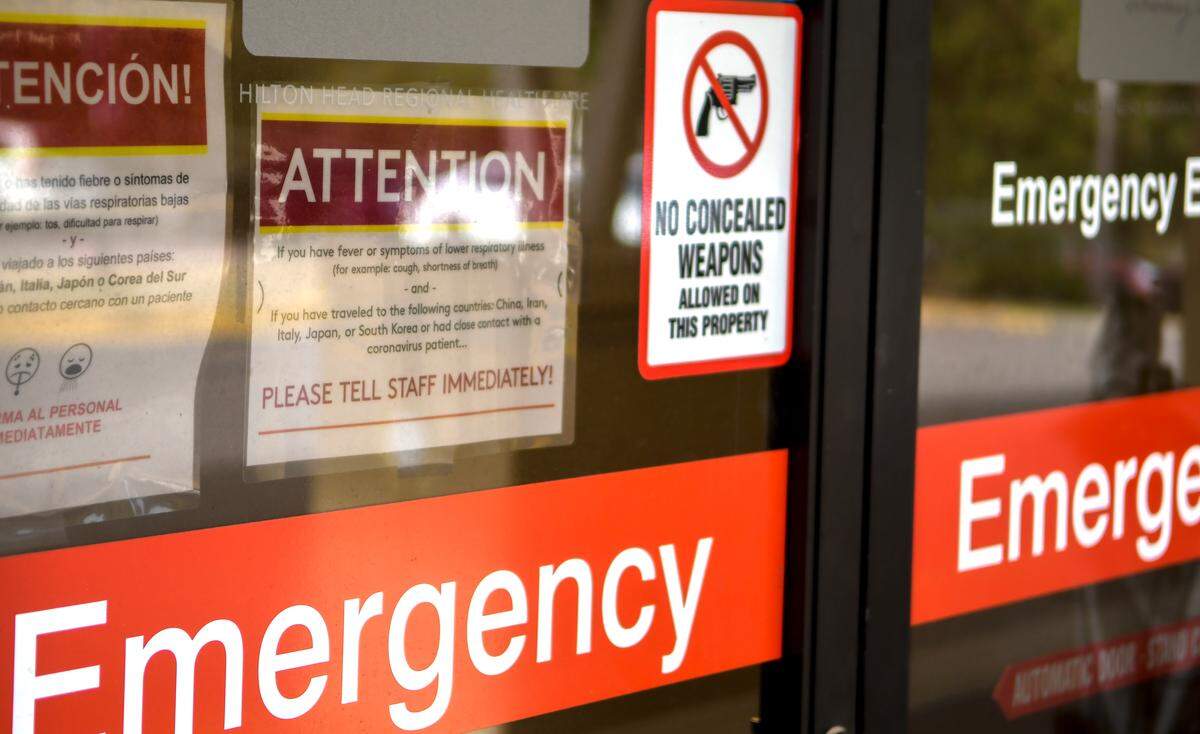
(A spokesperson for Tenet Healthcare, which owns Hilton Head Hospital, said the facility follows Centers for Disease Control and Prevention guidelines related to COVID-19. “We continue to treat all patients that require care and present at our hospital, and we want our community to know it is safe for patients to come to the hospital and our emergency department,” the spokesperson wrote in an emailed statement.)
A friend picked Lazarus Rickett up. A gate attendant at the community where she lived leaned forward when they entered. “You don’t have that coronavirus thing?” the guard asked. “Just erring on the side of caution,” the friend replied. They sped through.
One week into recovery, the bills arrive
Lazarus Rickett isolated herself for two weeks after leaving the hospital, spending all day gloved and masked. She thought there was no way her husband would escape the virus. How would it affect him, a diabetic and a heart-failure patient?
But he’s shown no symptoms, and his doctors didn’t order testing, she said. The first bill from her treatment came that first week, totaling $603.48. A second, related to diagnostics ordered during her hospitalization, demanded nearly $700, according to invoices reviewed by the newspapers.
Weeks passed before she knew the full charges. The bill from the hospital came to $58,456, before insurance, and alongside several thousand in physicians’ charges. (The Tenet spokesperson said Hilton Head Hospital follows federal regulations around billing.)
A study by the nonprofit FAIR Health estimated the average total charge for a six-day hospital stay related to COVID-19 at $73,300, for someone who is uninsured or receives out-of-network care.
After Lazarus Rickett was discharged, her health insurer, Blue Cross Blue Shield of South Carolina, assured customers that they wouldn’t pay a cent for in-network coronavirus treatment.
In an email, a spokesperson for the company said customers with coverage questions should call the number on the back of their insurance cards.
“I thought medical expenses for COVID positive people were going to be paid for,” Lazarus Rickett said, after she began receiving bills related to her treatment.
On April 27, a month after her discharge and several days after the newspapers asked the company for comment, a Blue Cross representative contacted her to say the hospital stay would be 100% covered, with no deductible or out-of-pocket costs, consistent with their policy for COVID-19.
The call was a relief, she said. She had expected a fight over the bills. “We’re not prepared to even meet a deductible,” she said.
Will private insurance cover COVID-19 hospitalizations?
Some privately insured South Carolinians will still face costs for COVID-19 treatment. Federal legislation passed in March requires insurers to cover all costs for COVID-19 tests but was silent on treatment.
While Lazarus Rickett was in the hospital, South Carolina’s Director of Insurance, Raymond Farmer, sent a bulletin to private health insurers saying he expected they would work to “provide relief from certain insurance requirements,” including extending payment deadlines and waiving limitations on out-of-network care.
The bulletin didn’t mention waiving out-of-pocket costs for coronavirus treatment. Since then, the majority of large insurers in South Carolina have come forward, saying treatment and hospitalizations for coronavirus will be covered at no cost to residents.
But there are exceptions. Clover Health, which provides Medicare Advantage plans, hasn’t waived these costs. “If admitted, in-patient hospital co-shares will apply,” reads its website. Bright Health, another private insurer, provides no information on COVID-19 treatment costs on its website and didn’t return two calls requesting comment.
Without cost waivers, coronavirus treatment costs could add up, even for the insured. People with employer-based health insurance could face average out-of-pocket costs of just over $1,400 after a hospital stay for COVID-19, according to a limited study based on inpatient admissions for pneumonia published by the Kaiser Family Foundation. One in five patients admitted for pneumonia with complications faces an out-of-network charge, or surprise bill, the study found.
Many cost waiver policies from the largest insurance companies are currently set to expire. Aetna, Cigna, Blue Cross Blue Shield of S.C. and UnitedHealthcare said they would waive costs through the beginning of June. Spokespeople for each company said the policies would be reevaluated.
Six states struck deals with health insurers or mandated they cover COVID-19 treatment at no cost to patients during the pandemic, according to researchers at the Commonwealth Fund, a private foundation focused on health care.
South Carolina has not.
In emailed statements through a spokesperson, Farmer said the S.C. Department of Insurance applauded insurers that have waived cost-sharing for COVID-19 treatment. He said his department would “monitor the situation and the response of our insurers” and “consider action as this situation evolves.”
“By allowing flexibility on the part of industry, we’ve seen significant steps being taken voluntarily that are then creating models for other companies to implement,” Farmer said.
Lindsey Woodworth, an economist at the University of South Carolina who studies hospital billing, said contrary to what is typical, privately insured patients might be the worst off if hospitalized with coronavirus. The Trump administration said this month that hospitals would receive funds to care for uninsured patients, and Medicare and Medicaid recipients generally face lower out-of-pocket costs for hospitalization.
“Across private insurers it’s such a mixed bag in terms of what they cover and what the patient is stuck with,” she said. “There’s no federal relief to care for the privately insured patients.”
Where can COVID-19 patients go for relief?
Lazarus Rickett is home with her husband, in a one-bedroom apartment on the island, resting as she regains her strength. She anticipated the bills and having to fight them, but has struggled to find resources for COVID-positive people.
NBC News reported multiple examples of surprise medical bills resulting from gaps in coverage for coronavirus care. A paper published online by the health policy journal Health Affairs found that even COVID-19 testing — free under federal legislation passed in March — can result in hidden costs, due to variety in patient diagnosis and variability.
Lazarus Rickett doesn’t know how she will meet expenses. “You can’t draw blood from a stone,” she said. “It’s not money we have.”
When she left her job months ago, she qualified for unemployment insurance and was receiving benefits. After her COVID-19 diagnosis, a staffer for U.S. Rep. Joe Cunningham helped her apply for an extension under a federally financed program in the CARES Act.
The same day she submitted her paperwork, Lazarus Rickett received a letter from the S.C. Department of Employment and Workforce. “Benefits are denied,” it read, citing her “health condition” as making her unable to work and, therefore, receive payments.
She called again and again, getting only a pre-recorded message.
Then, two weeks later, a DEW employee left her a voicemail. Lazarus Rickett did qualify for the extension of benefits. The employee didn’t say when her claim would be processed. According to an April 24 DEW press release, one program she’s eligible for, the federal Pandemic Unemployment Assistance, just began its applications process in South Carolina, but payments could still take up to two weeks to arrive.
Lazarus Rickett’s claim is still listed as “pending resolution,” she said Tuesday.
“She is a victim of a disaster, like any disaster she should be getting help, not being put into financial ruin over this,” said Sue Berkowitz, director of the South Carolina Legal Justice Center, which has assembled an online resource list for those affected by the pandemic.
Lazarus Rickett’s only income is her husband’s disability payments. Their federal stimulus check hasn’t arrived. She intended to go back to work this month, even interviewing at several property management companies before she got sick. They’ve now frozen hiring, she said. The rental business on Hilton Head is at a standstill.
“It’s been this perfect storm of having a healthcare situation that is affecting everyone, and then also affecting our economy,” said Melanie Cozad, an economist at USC’s Arnold School of Public Health. In just over a month, 14% of South Carolina’s workforce, over 340,000 people, reported losing their jobs, according to the Associated Press.
With insurance tied to employment for so many, said Cozad, “costs can pile up so quickly” when that coverage is lost.
“Likely if people can’t pay their medical bills, then they’ve got to declare bankruptcy,” she said. Unpaid treatment costs could have ripple effects on hospitals, whose revenue has plunged with the cancellation of many elective surgeries.
‘Anybody could be me’
Lazarus Rickett’s coronavirus diagnosis has had collateral consequences. Her husband’s doctors have placed him on hold for consideration for the heart transplant he needs.
“Now, he’s penalized because I got coronavirus,” she said. “We just kind of keep getting sucker punched.”
As governors in South Carolina and Georgia move to re-open their economies, she was struck by their “callousness and lack of knowledge,” she said. Lazarus Rickett sees the world differently. To her, the rag used by an employee at Publix to wipe down hundreds of shopping carts in a shift is like “nails on a chalkboard,” she said.
Friends have donated to their GoFundMe, which she updated from the hospital. She’s mindful that there are others worse off. She survived her brush with the virus. But she wants people to know what that means.
“Anybody could be me,” she said.
This story was originally published April 30, 2020 at 8:51 AM.