
Do the Hilton Head 'stingray shuffle' to keep your foot out of this green bucket
There's at least one foot soak you don't want to experience this summer.
It's found at Hilton Head (Island) Hospital, in the emergency room — in a green bucket.
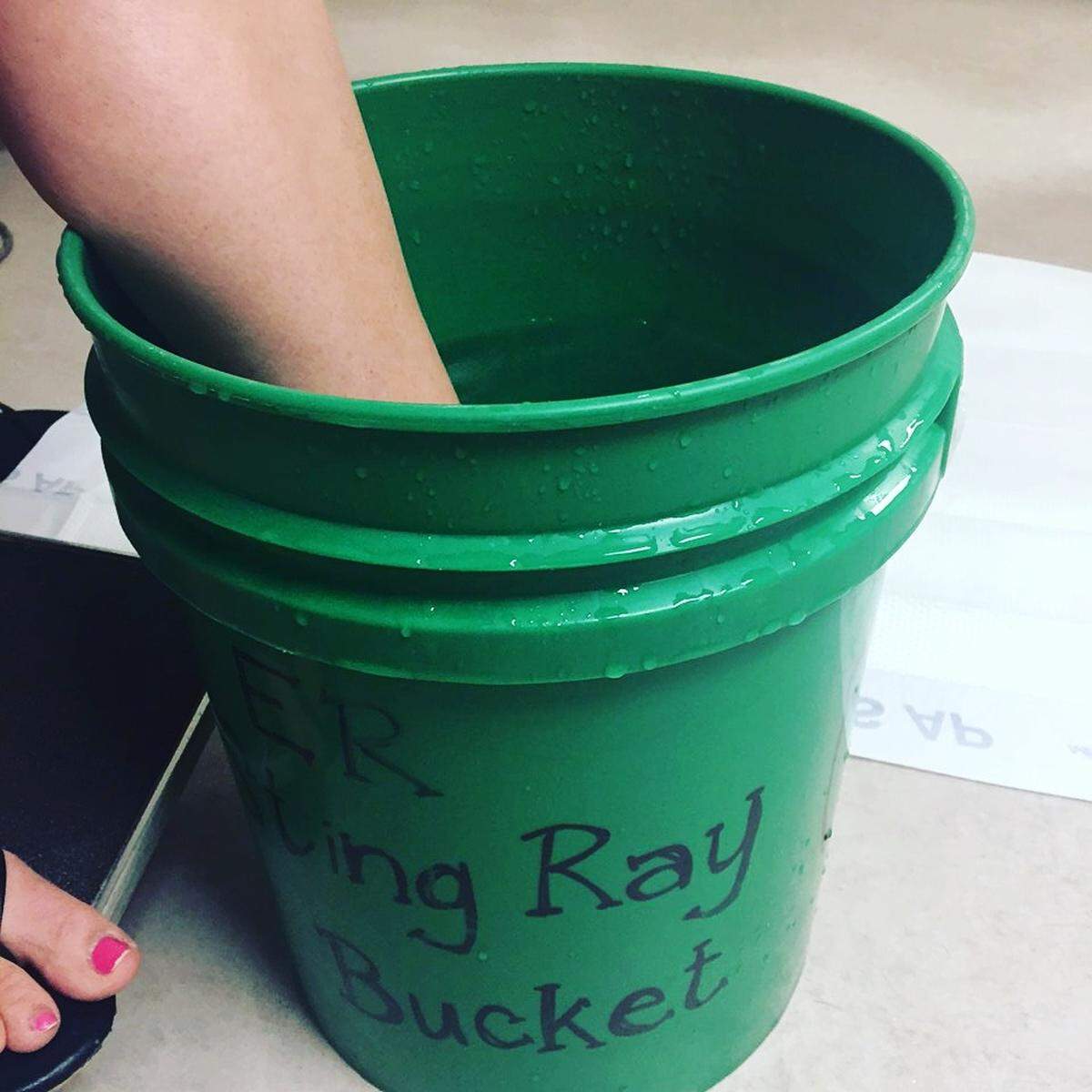
"ER Sting Ray Bucket," reads the black lettering on the pail that held Melissa Kennelly's foot Tuesday afternoon, a few hours after she'd stepped on one of the creatures in ankle-deep water.
"All of a sudden, I felt something hit me that was hard," Kennelly said Friday morning. "I thought it was a shark. I looked at my foot and it was bleeding."
Kennelly is one of about 300 people who have been stung by stingrays on Hilton Head between March 1 and June 13, according to Mike Wagner of Shore Beach Service. His lifeguards monitor more than a dozen miles of beach, treat sting victims and record statistics.
While that number is up from the past two years, there were about as many stings during the same period in 2015, Wagner said. And while this time of year is peak stingray season — as they tend to be closer to shore — there are thousands more jellyfish stings each year.
As Wagner pointed out, there are thousands of beachgoers on Hilton Head's shore every day, so the odds of getting stung are low.
Still, it's a good time to learn — or remember — "the stingray shuffle," how making a little noise with your feet can save you a trip to the lifeguard stand and the emergency room.
“Most people get stung on the bottom of the feet, when they step over a stingray, or sometimes in the hands or arms when trying to get one off a fishing hook," Carlos Chacon of Hilton Head's Coastal Discovery Museum recently told The Island Packet and The Beaufort Gazette.
So, instead of stepping in the water, shuffle in and out — keep your feet in the sand and slide them forward.
Local species are found in several areas of coastal waters, including the ocean and salt marshes, Chacon said. And while our area's stingrays aren't deadly — apart from extremely rare situations such as a sting to the heart, which killed Australian naturalist Steve Irwin — stingray wounds should be addressed quickly.
Wagner said his lifeguards immediately apply a "hot pack" to suspected stingray wounds after stopping the bleeding.
"The next step is to get it in hot water as soon as you can," Wagner said. "Get back to your own house or hotel and apply the hottest water you can take. ... I know if you go to the hospital" — which he recommends — "they put (the wound) in hot water."
Indeed, the green bucket that held Kennelly's foot Tuesday contained just that, said Kevin Ashdown, clinical lead of the emergency department at Hilton Head Hospital.
"The hot water helps relieve the pain," Ashdown said. "The stingray (itself), it doesn't inject you (with venom), but its barbs at the base of the tail have a very high-protein toxin. ... The hot water basically helps release that toxin from the body."
Ashdown recommended that anyone stung by a ray seek medical attention — it's basically a "puncture wound," he said, explaining victims might not know how deep their injuries are.
Hospital staff often X-ray patients to make sure pieces of barbs aren't lurking in the body, he said, adding that antibiotics and tetanus shots are typically administered as well.
Ashdown said the ER treats about 100 patients for stingray injuries during the late spring and summer, sometimes more — in fact, he said someone was being treated as he spoke.
On Wednesday, Ashlyn Blair, 23, of Jackson, Tenn., said she was in chest-deep surf when she felt something dig into her foot.
"All I can remember was screaming and a lot of people surrounding me,” Blair said Thursday. "It hurt worse than anything I have ever felt before. ... I had no idea what happened. The lifeguard was very sure it was a stingray. He said several other people had been stung, as well, that day."
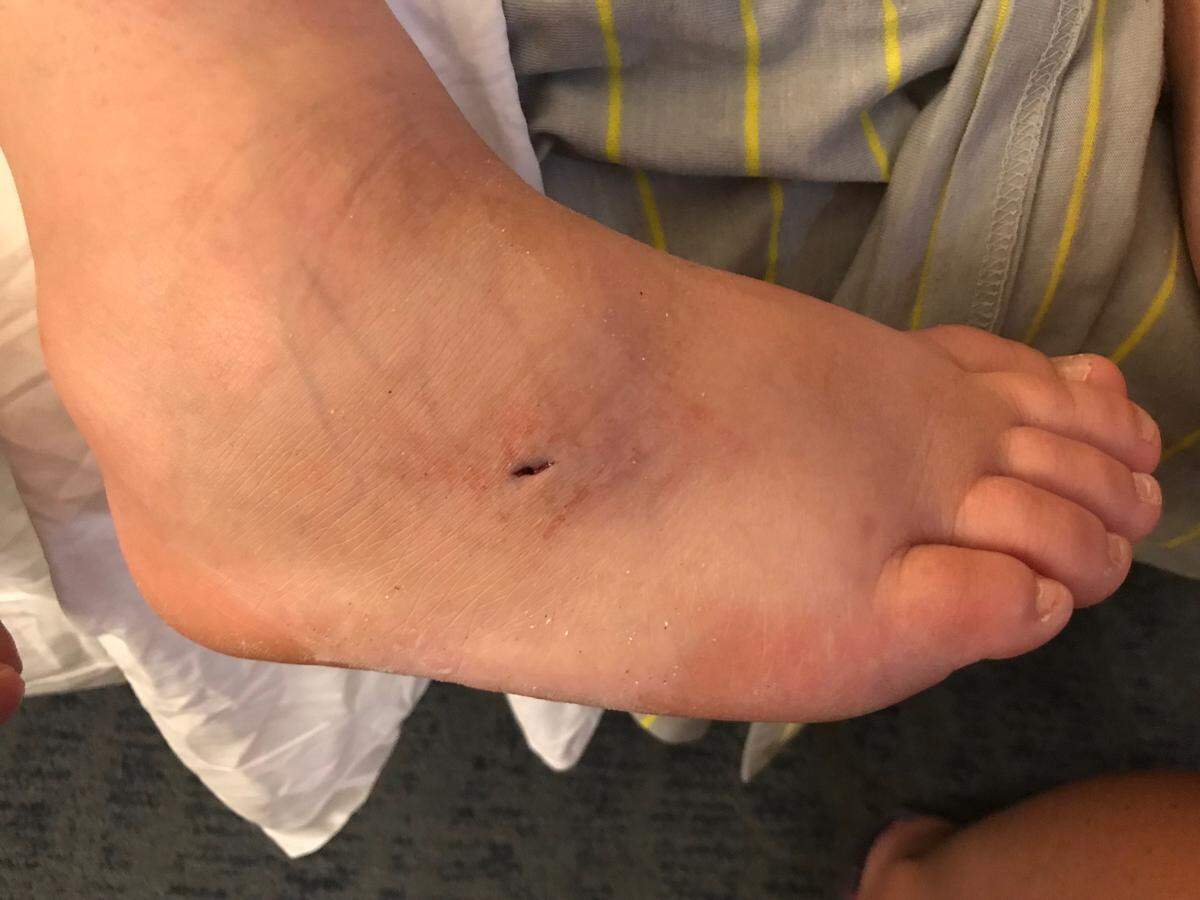
Kennelly said that after her ER visit, she and her children started Googling "stingray facts" to learn more about the creatures.
"It was very random," Kennelly, 34, a Huntersville, N.C., resident, said of her recent encounter. "I've swam in the ocean all over the place. I've lived in Florida, I've lived in Australia. ... On a cruise, I even swam with stingrays."
Her mother, Jean Beck, of Hilton Head, said Kennelly was out of the hospital in about an hour.
"The thing is, you gotta shuffle going in and coming out," Beck said. "We are visiting their house."
"All of God's creatures have a place in the choir," Beck added.
Kennelly likened the pain shortly after the sting to being in labor.
She expressed thanks for the hospital staff and the green bucket.
Still, she said, "It's not a spa experience."
This story was originally published June 15, 2018 at 3:52 PM with the headline "Do the Hilton Head 'stingray shuffle' to keep your foot out of this green bucket."