
Parris Island continues to resolve environmental issues from decades ago
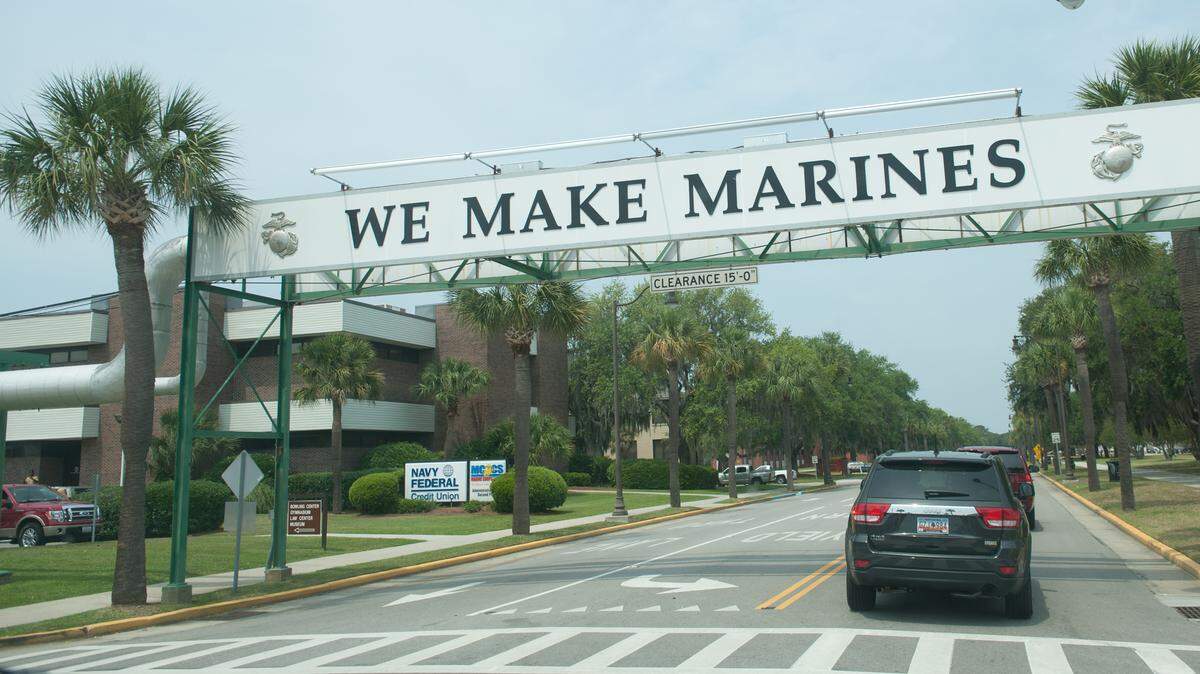
Parris Island’s military history stretches back more than 100 years. In earlier eras of the 1900’s typical uses, in line with very lenient environmental regulations, sometimed led to contamination that remains present on the island today, according to Ryan Register, Deputy on Parris Island.
Parris Island was established in 1915 and added to the National Priority List Superfund site by the EPA in the 1990s following investigations for contamination. The investigations included interviews with people who formerly lived and worked there, according to Tracey Gould, environmental director at Parris Island.
Superfund sites are locations that are designated by the EPA for clean-up due to high levels of contamination that put the environment and human health at risk.
When a site is added to the national priority list, it warrants further investigation into the impacts of the contamination on the environment and public health. It is a management tool for Superfund site cleanup.
Parris Island has shallow groundwater flows into nearby streams and tidal areas that connect to the Beaufort and Broad Rivers and, eventually, the Port Royal Sound. However, this is not a threat to drinking water from the Floridian Aquifer, according to one of the site’s remedial investigation reports.
Parris Island is dealing with the same environmental factors as the rest of the Lowcountry, with groundwater getting higher, therefore more susceptible to surface contamination.
The contamination levels are not a safety concern to the people living and working on the island currently. The sites will continue to be cleaned and monitored to ensure the protection of people and the environment, according to the EPA.
The U.S. navy is leading these efforts while the South Carolina Department of Environmental Services and EPA provides oversight.
Overall clean-up progress
There are 22 “operable units” involved in the cleanup at Parris Island. The status of each unit varies in the progress of its cleaning stages and projected completion date.
An operable unit is a term used by the EPA to divide a Superfund site into manageable steps of cleanup. It could be a geographical area or an action that separates one unit from another.
When first identified, Superfund sites undergo a preliminary assessment and site inspection. State and federal agencies then conduct any additional investigations that are necessary to figure out the feasibility of the proposed solutions. Then, plans made from investigations go to a public comment period.
Next, they will further refine the cleanup plans and proceed with the clean-up. After the clean-up is finished, there will be monitoring to make sure it remains safe.
The ultimate goal is to remove the Parris Island site from the National Priorities list, allowing the area to have no further restrictions on its use.
“The end state here, they anticipate getting to unlimited use, unlimited exposure, which means, at some point, we won’t be monitoring anymore,” said Tracey Gould, environmental director at Parris Island.
Progress is tracked through the use of monitoring wells, which are spread out throughout the units. They are used to gauge where contamination is as well as to detect future spread, Register said.
Each site is at a different stage, some are in the remedial action phase but none are at unlimited use yet. There is no firm completion date for the work to be finished.
Current Projects
One of the clean-up projects involves four units and recently ended its public comment period. The four are all next to one another, each with different purposes and histories, with some contamination dating as far back as the 1950s.
- One of the sites in the plan, recognized as Site 9, was used between 1969-1984 for paint waste storage in drums and 30-gallon cans. Included were paint thinners and paint strippers. The paint strippers had a chemical called methylene chloride, a carcinogen, which was first banned in 2024 under the Biden administration.
- Site 16 was a pesticide rinse disposal area from 1950 to 1978. There could be various harmful pesticides in this area, some with serious health risks, including aldrin and 4,4’-dichlorodiphenyltrichloroethane.
- Site 27 was waste storage for a variety of products, such as piping and scrap metal, among other things.
- When digging a hole for an internet cable for site 55, workers discovered an unnatural liquid. This prompted the investigation and is therefore part of the cleanup as a result.
“While they were constructing the fiber optic vault, is when they noticed the non-aqueous-phase liquid,” said Ryan Register, Deputy on Parris Island. “That was the contaminant there and then, that led them to investigate the boundaries associated with that.”
The proposed cleanup includes digging up and removing the contaminated soil and moving it offsite.
Those involved with the project plan to use oxidizing chemicals that will break down contaminants into compounds that will degrade over time. They also plan to seal off portions of the stormwater drainage system to prevent stormwater systems from entering nearby ponds and waterways.
There will be continued monitoring of all the sites and implementation of land use controls to prevent unacceptable exposure until they reach the goals of cleanup levels.
They have hit many milestones within most of the areas requiring cleanup. However, the work is not done.