Will SC face a COVID-19 surge this winter? DHEC talks case trends, natural immunity
The global COVID-19 outlook is bleak. Medical centers in the Upper Midwest, including in Minnesota and Michigan, are grappling with a surge of coronavirus hospitalizations. A concerning new variant has been discovered in South Africa. And deaths in Europe are quickly mounting.
The grim news raises a crucial question: Will there be another winter surge this year in South Carolina that rivals the devastating wave of COVID-19 cases that occurred in late 2020 and early 2021?
The Island Packet and Beaufort Gazette recently asked Dr. Brannon Traxler, the state’s director of public health, to weigh in on the Palmetto State’s pandemic trajectory.
Traxler warned that unless residents increasingly choose to wear face masks and get vaccinated, South Carolina likely will experience a spike in cases this holiday season, though the severity and timing of that uptick remains unclear.
Here’s what else Traxler had to say during a Wednesday briefing, during which reporters could not ask follow-up questions. Traxler’s responses have been edited for clarity and length.
Questions & answers
Q: Based on the state’s epidemic curve in December 2020, when would you expect a post-Thanksgiving surge to hit South Carolina this year?
Traxler: It’s difficult to project — really this pandemic in general — but particularly when and how cases will rise, and what that curve would look like. Data from the previous year can’t really be used to project ... because we’re talking about COVID. At this time last year, we didn’t have a vaccine, but we also didn’t have that delta variant, which is more transmissible, so it all depends on how much we can increase our vaccination rates, and how safe South Carolinians stay when celebrating over the holidays.
If we increase our masking and our vaccinations, then we hopefully will not see a significant spike in cases. If we don’t practice those protocols, chances are we will see a spike, though it is still difficult to determine how soon and how significant (that may be). We do know it takes roughly a week, plus or minus a couple of days, to start to see the effect in a case curve from an event.
Q: Does the S.C. Department of Health and Environmental Control believe that, because of the surge of infections in South Carolina and other southeastern states this past summer, that any potential winter spike this holiday season will be blunted due to a heightened wall of natural immunity? If yes, to what extent?
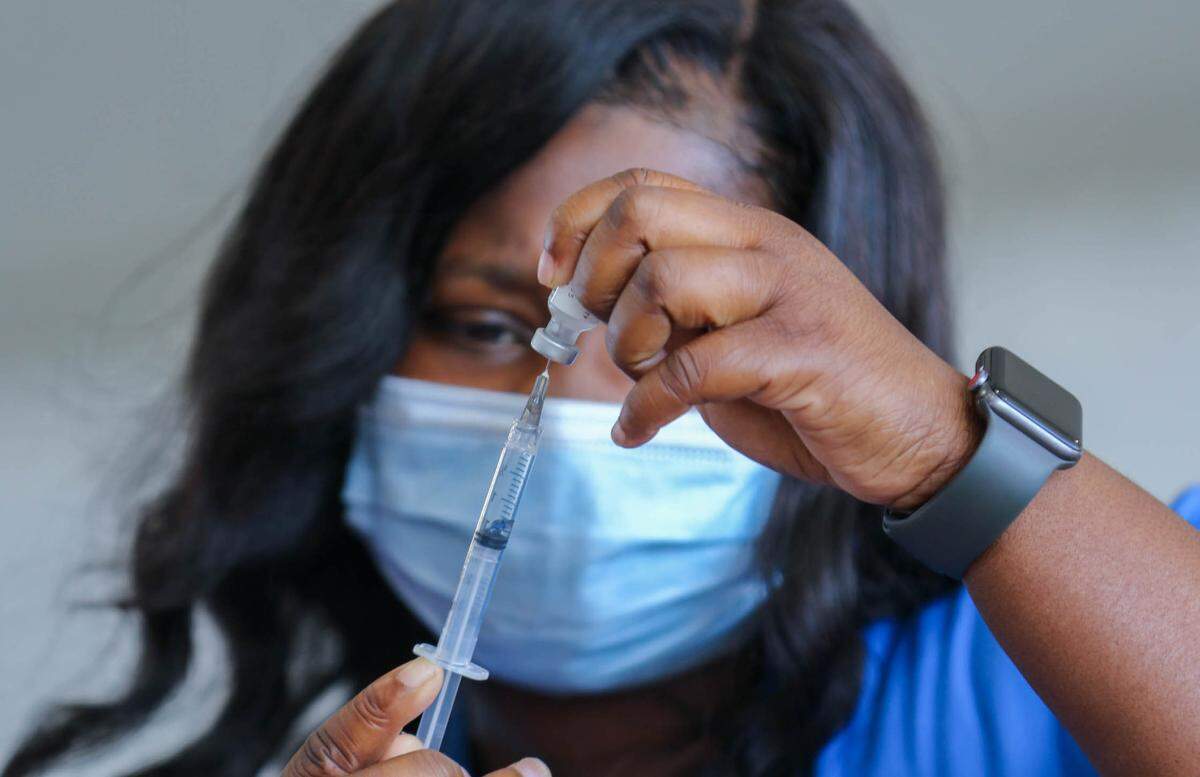
Traxler: Natural immunity can certainly play some role, but we don’t know the duration of natural immunity in a person after an infection to know if or how well people who were infected in the summer — or even last winter — are still protected. The No. 1 way to prevent severe cases of COVID-19 and to end this pandemic is through vaccination. ... And I want to point out that even people with a history of prior COVID-19 infection benefit significantly, in regards to protection, if they get vaccinated.
Q: How worried are you about December and January this winter, given what happened in late 2020 and early 2021?
Traxler: It’s not so much about comparing the specific time frames because situations are very different (now) than they were a year ago, but in general, any time you have large amounts of unvaccinated and/or unmasked folks gathering together, especially indoors, which occurs during colder weather, COVID-19 can and will spread more rapidly. So, from that standpoint, there is concern we could see an uptick in cases and hospitalizations and deaths, which is why we’re pushing so hard for vaccinations and other safety protocols.
Q: Does DHEC have any COVID-19 immunity estimates for South Carolina that include both vaccinations and natural infections?
Traxler: Well, certainly we have our vaccination dashboard ... but beyond that, I don’t have data relevant to this question. Again, part of that goes back to just the entire scientific, medical and health communities — not only nationwide, but worldwide — not having the information to know how long somebody’s protection from natural immunity lasts or even widespread ways to measure that for the typical person in the public.
Q: In terms of coronavirus case investigations, what is DHEC seeing on the ground? Where are people regularly getting infected and who is commonly infecting them?
Traxler: That is difficult to say. Identifying how cases spread during a pandemic is tough, because you don’t always get or have an accurate representation of where and how the disease was contracted, and that’s not because people are trying to be misleading, it’s because they often don’t know.
Case trends
Traxler on Wednesday also said that after recording a consistent drop in COVID-19 spread between early September and mid-November, cases “ticked up” in South Carolina last week, with more than 5,100 new infections reported statewide.
“I don’t want to hit the panic button,” Traxler said, “but we are strongly encouraging all South Carolinians to continue the safety protocols that helped us drive these numbers down.”
What’s at stake?
Between Dec. 1, 2020 and Jan. 31, 2021, South Carolina recorded 245,088 coronavirus cases, DHEC data show. That amounts to roughly 27% of all infections reported in the state since the outbreak first began.
“We need everyone on board,” Traxler said, “if we’re finally going to end this pandemic.”
Data in this story are current as of Friday morning.