Beaufort Co. must remain cautious as US warns of possible 4th COVID-19 surge, experts say
Beaufort County’s COVID-19 case trends have dramatically improved since mid-January. Almost 37% of residents 15 and older have received at least one vaccine dose. And Hilton Head Regional Healthcare last Wednesday reported zero hospitalized coronavirus patients for the first time in over a year.
A near-normal summer is becoming more and more realistic, as the Lowcountry rushes to inoculate as many people as possible.
But area health experts are pleading with residents to “hold on” a bit longer and continue to follow COVID-19 safety recommendations.
Some states in recent days have reported an uptick in coronavirus infections, and Michigan is already facing a fourth surge.
Dr. Rochelle Walensky, director of the Centers for Disease Control and Prevention, on Monday warned that the nation’s seven-day average of new cases had risen 10% in comparison to the prior seven-day span.
“We do not have the luxury of inaction,” Walensky told reporters. “For the health of our country, we must work together now to prevent a fourth surge.”
Daily case counts in South Carolina dropped significantly throughout February and early March, but began to plateau two weeks ago, mirroring a national trend, according to the S.C. Department of Health and Environmental Control.
Dr. Jane Kelly, assistant state epidemiologist, recently told the Hilton Head Island-Bluffton Chamber of Commerce that DHEC is concerned about Passover, Easter, family get-togethers, spring break and other holidays potentially driving another COVID-19 spike in the Palmetto State.
“Keeping fingers crossed is not enough,” Kelly said. “The rates are coming down for a combination of reasons, including vaccination, but they’re still coming down also because people are paying attention to those elements of masking and keeping distances.
“We’ve come this far. I hope people can continue for a little bit longer.”
Local trends
Beaufort County’s seven-day average of new infections per day has dropped to roughly 12 cases (which is comparable to mid-October levels).
The county’s seven-day average of new first-dose vaccinations among residents, meanwhile, has jumped to 1,085 per day.
COVID-19 hospitalizations have plummeted at Hilton Head Regional Healthcare. And Beaufort Memorial Hospital on Friday reported just two coronavirus patients.
Neither of those people were in the intensive care unit, according to BMH spokesperson Courtney McDermott.
“Keep doing what we’re doing,” said Dr. Faith Polkey, chief clinical officer at Beaufort Jasper Hampton Comprehensive Health Services. “We’re almost there.”
Polkey on Friday said she’s noticed a decline in local coronavirus spread, but stressed that it’s still important for people to wear masks in public and follow CDC guidance.
Protecting residents who are unvaccinated, she said, should be a priority.
A fourth surge is always possible, Polkey said, but she hopes that spike wouldn’t be as bad as the winter surge.
Michael Schmidt, a microbiology and immunology professor at the Medical University of South Carolina in Charleston, added that he expects another surge this spring, pointing to Europe as a bellwether for what’s to come.
Many European nations are again grappling with a wave of infections (but also a slow vaccine rollout).
“The trajectory of the pandemic in the United States looks similar to many other countries in Europe, including (what) Germany, Italy and France looked like just a few weeks ago,” Walensky, of the CDC, said Monday.
Schmidt added that more transmissible coronavirus variants circulating around South Carolina should give people pause.
Eighteen cases of B.1.1.7, the variant first identified in the United Kingdom, and 20 cases of B.1.351, the variant discovered in South Africa, have been confirmed in DHEC’s Lowcountry public health region, according to the state.
Those numbers are almost certainly an undercount due to the limited genomic sequencing of S.C. coronavirus samples.
Experts nationwide have warned that B.1.1.7 and the loosening of state-specific pandemic restrictions are likely contributing to the recent increase in U.S. cases.
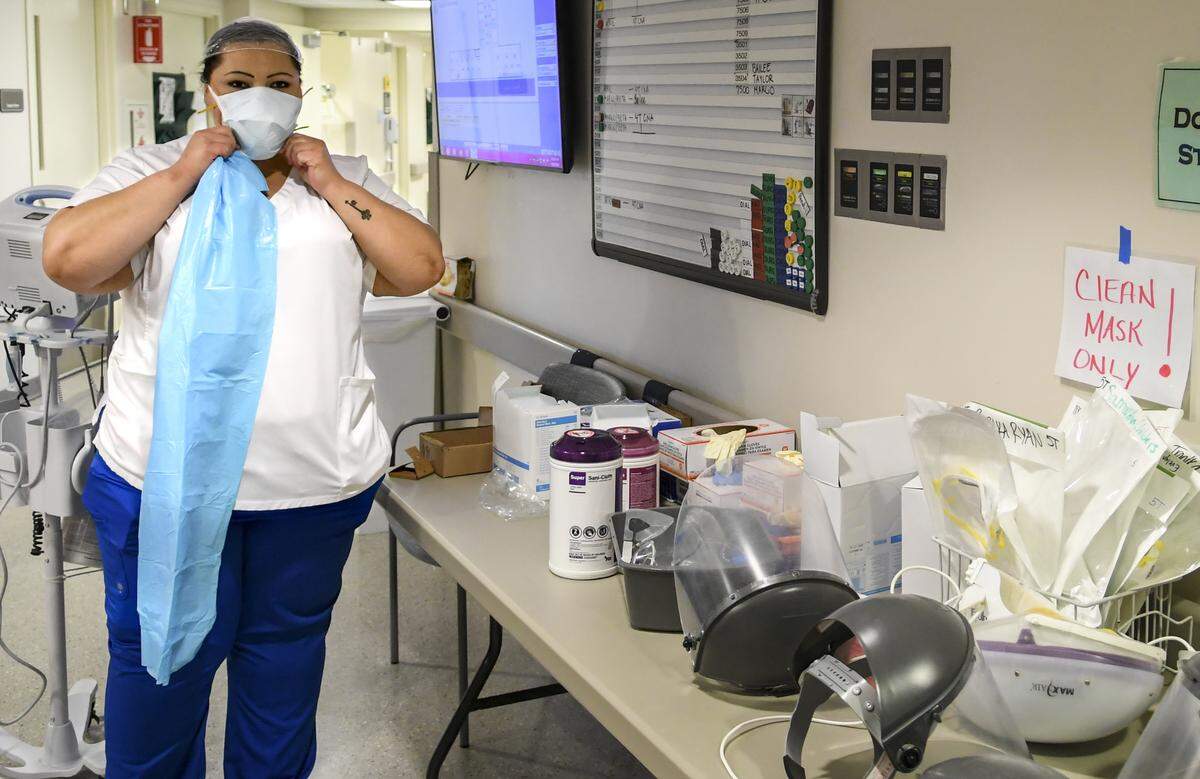
Safety tips
The CDC recently issued new safety guidance for fully vaccinated people.
Residents are considered fully vaccinated two weeks after their second dose of either Pfizer-BioNTech or Moderna’s vaccines. They also are considered fully vaccinated two weeks after receiving the single-dose Johnson & Johnson vaccine.
The federal government says fully vaccinated people can gather together indoors without wearing masks.
Completely vaccinated residents can also gather indoors — without masks — with unvaccinated people from a different household, unless any of those unvaccinated residents, or anyone they live with, has an increased risk for serious COVID-19 complications.
In public, meanwhile, the CDC says fully vaccinated people should continue to wear masks, practice social distancing and avoid large gatherings.
And if a fully vaccinated person has COVID-19 symptoms, they should get tested and stay home, according to the CDC.
Residents can still get infected after being fully inoculated, although that appears to be rare.
A study published by the CDC on Monday found that Pfizer and Moderna’s vaccines were 90% protective for those who were completely vaccinated in a “real-world” setting.
Dr. Michael Kacka, a DHEC physician and chief medical officer for COVID-19, on Friday added that as Easter approaches, the state is still recommending that congregations practice social distancing as they worship.
Pews can be blocked off so people from different households remain spaced apart, Kacka said.
Churches can also opt to hold more Easter services than usual to help promote social distancing.
“Those who are at a high risk of severe infection may want to consider attending a virtual service,” Kacka added.
Note: All data in this story are current as of early Monday.
This story was originally published March 29, 2021 at 2:38 PM.