SC plans to change how it allocates COVID-19 vaccines. How will that affect Beaufort Co.?
South Carolina will likely use a new methodology this spring to determine where COVID-19 vaccines should be sent around the state, but exactly how that will affect Beaufort and Jasper counties remains unclear.
The federal government allocates roughly 76,400 first doses to the state per week, but that’s not enough to meet the growing demand for shots.
The S.C. Department of Health and Environmental Control’s governing board tentatively OK’d a new formula late last month that would have based future in-state allocations on the size of each county’s population.
But that issue was complicated by pending state legislation that could require DHEC to use another formula for its weekly allocations.
The DHEC board on Thursday opted to delay a decision on the new formula and instead asked staff to review an allocation method similar to the one recently proposed by state lawmakers.
Here’s what we know so far:
What’s going on now?
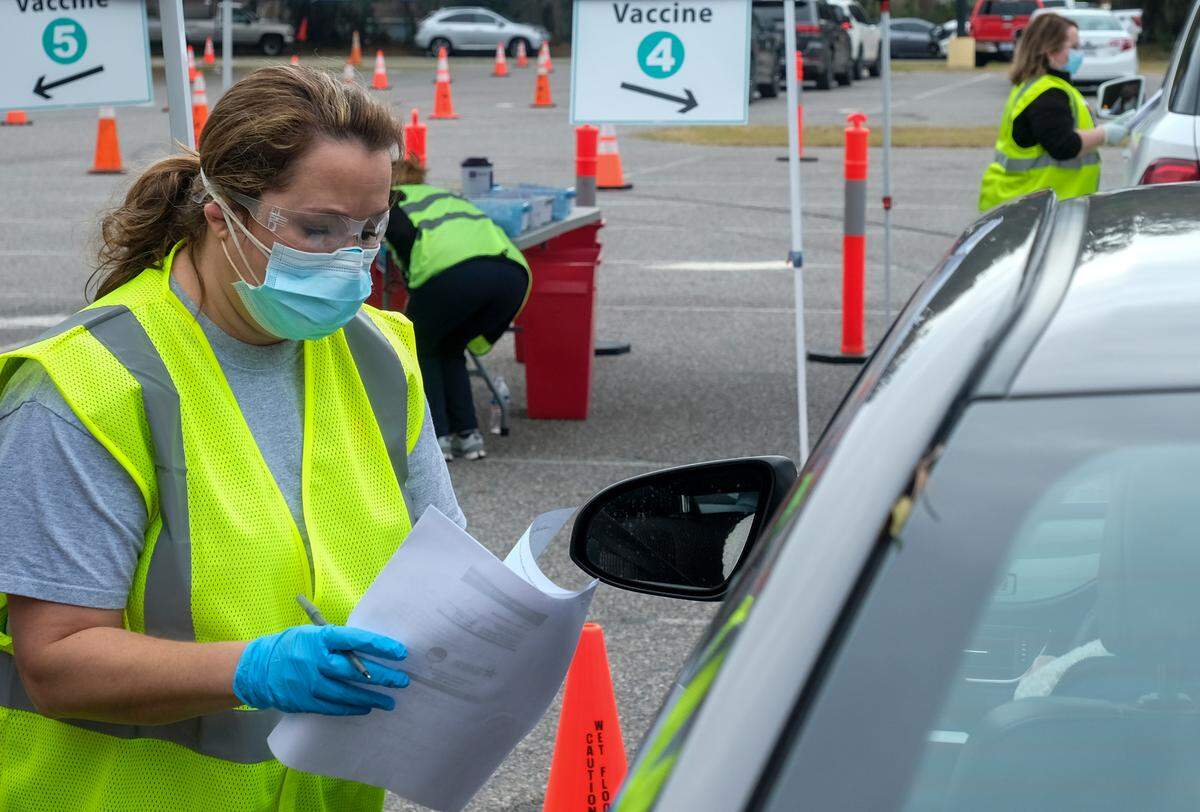
The demand for COVID-19 vaccines still far outweighs the supply. Vaccine providers place weekly orders for more doses, and the federal government uses an algorithm to allocate a certain amount to South Carolina each week based on the state’s adult population.
DHEC later decides how to divvy up those doses, sending them to providers like Beaufort Memorial Hospital.
Nick Davidson, senior deputy for public health, during DHEC’s board meeting Thursday said that when making those allocation choices, a DHEC team factors in the state’s vaccine supply, provider utilization rates and the order requests from providers.
“The requests typically are in the range of three to four times the amount of vaccine we have,” he said. “Pretty much everybody gets less than they request.”
DHEC, though, is now planning to use a new allocation formula so providers have a better idea of what to expect week to week.
The agency’s board in January voiced support for a new per capita formula, in which counties would get a certain percentage of doses every week based on the size of their populations. The board asked staff to present more information about the concept in February before fully implementing the methodology.
But a $208 million vaccine bill passed by the state Senate on Wednesday would require DHEC to allocate doses based on a public health region’s population, demographic information like “age” and “poverty level,” and coronavirus infection rates.
“I think that’s appropriate. I think that you’ve got to take into account that certain areas or certain demographics are going to be in more need than others,” said state Sen. Tom Davis, R-Beaufort, in a Friday interview. Davis voted in favor of the bill.
“It’s important that we move on these things now, to get that infrastructure in place.”
There are four public health regions in the state. The Lowcountry region includes 11 counties stretching from Calhoun County to Charleston County. Beaufort and Jasper counties are in the region.
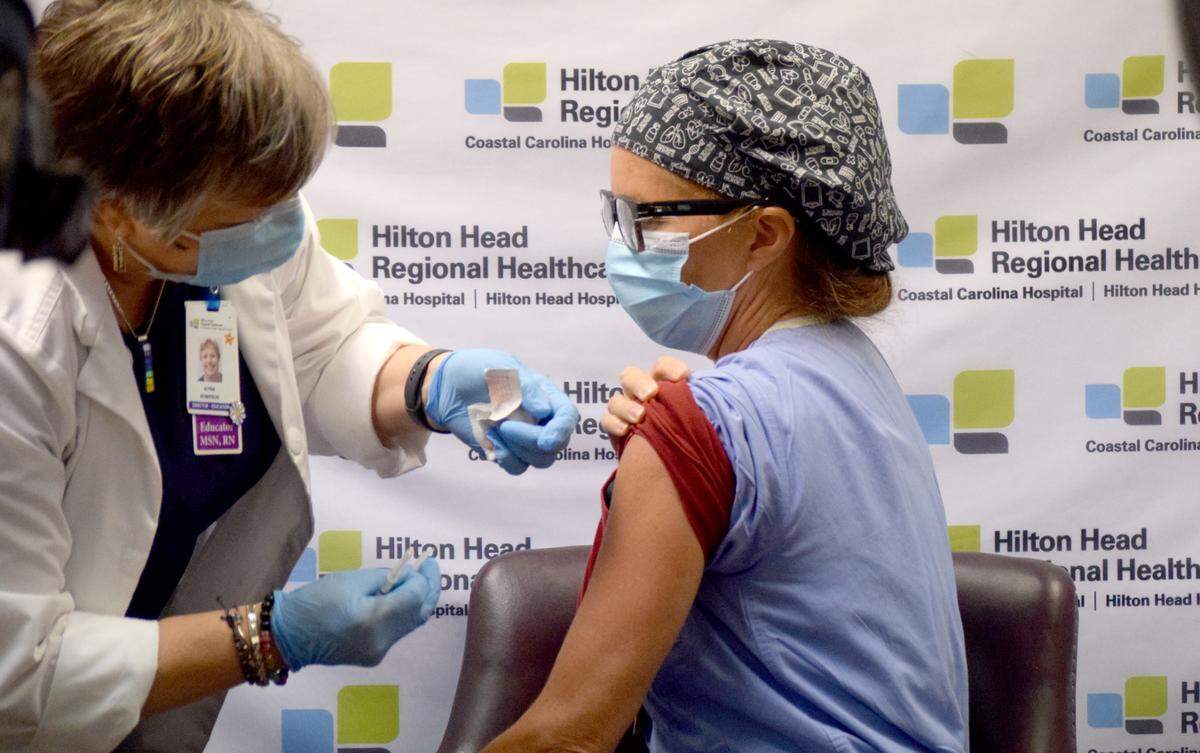
Jeremy Clark, CEO of Hilton Head Regional Healthcare, in a statement Friday wrote that the health system supports a formula that takes age data into consideration, as opposed to a strictly per capita model.
DHEC’s board on Thursday tabled the allocation matter for now and asked staff to review the regional model and provide further information about it by its March 11 meeting.
What does that mean for the Lowcountry?
The allocation issue is still up in the air, and it’s difficult to say how Beaufort and Jasper counties will be affected once the state finalizes its new formula, partially because DHEC hasn’t released an analysis yet on how the regional model would exactly work.
The legislation itself says only that demographic information, including “poverty level,” must be taken into account, as well as infection rates (which change frequently).
But DHEC has published details on how a flat per capita formula would impact Lowcountry counties, although it appears that option will be replaced with the regional approach.
Davidson presented data Thursday to board members showing that Beaufort County received 3,465 first doses this week. Under the county-specific per capita formula, the county would have gotten only 2,678 first doses. That’s a 22.7% decrease.
Jasper County, meanwhile, received 605 first doses this week. It would have gotten 409 first doses under the proposed formula, representing a 32.3% drop.
Those figures capture only one week for comparison. Davidson said the proposed allocation model would distribute doses to some rural counties in a more equitable manner.
Calhoun County, for example, was allocated zero first doses this week, as was Chester County. With the per capita formula, they would have received 228 and 485 first doses, respectively.
The regional model, though, is also centered on equitable distribution, with an emphasis on using demographic data like age statistics to make decisions.
S.C. seniors are a high risk for serious coronavirus complications, DHEC data show.
Almost 82% of COVID-19 deaths recorded in South Carolina since last March have been among people 65 or older, the agency reported on Feb. 3. And over 92% of coronavirus deaths in Beaufort County as of Friday had been among people 61 and up.
More than 34% of Beaufort County’s population was 60 or older in 2019, according to U.S. Census Bureau estimates. Roughly 26% of Jasper County’s population was 60 and over.
“It’s an empirical fact that certain populations are more vulnerable to the virus than others,” Davis said.
More than 19,000 people as of Friday afternoon had received their first vaccine dose in Beaufort County, excluding those vaccinated through a federal long-term care initiative. Over 4,300 people had been inoculated with at least one dose in Jasper County.