Coronavirus testing is down in Beaufort Co. What does that mean for the area?
Fewer people are getting tested for the coronavirus in Beaufort County.
The county’s seven-day average of newly reported COVID-19 test results has fallen to a level last seen in early June, according to the S.C. Department of Health and Environmental Control.
For example, the Wednesday average sat at about 212 molecular, antibody or “unknown” test results received in the county per day.
The county’s seven-day average hasn’t been that low since June 9, when it stood at roughly 201.
“The demand for testing is down quite a bit,” said Dr. Stephen Larson, owner of Sea Pines Circle Immediate Care on Hilton Head Island.
The trend isn’t exclusive to Beaufort County.
DHEC officials have also acknowledged that statewide testing numbers dropped late last month.
Dr. Brannon Traxler, a DHEC physician consultant, is urging residents to get tested even if they have mild symptoms or think they just have allergies, considering the high percentage of positive tests in South Carolina.
“I can’t speak to each person’s reason for not getting tested,” Traxler told reporters in August when asked about the decline.
A drop in disease spread
At Beaufort Memorial Hospital, 268 non-surgical and non-community event COVID-19 tests were conducted Aug. 23-29, internal data show.
Compare that to a given week in late July: 571 non-surgical coronavirus tests were administered by the hospital at one point, according to the data.
Larson, who’s also the medical director of the hospital’s emergency center, said he’s noticed a recent drop in the number of symptomatic people locally.
That indicates there’s less disease circulating around the community, he said. If there are fewer residents with COVID-19 symptoms, that would mean less people are curious about whether they have the disease.
Asymptomatic patients can still spread the coronavirus, of course. But it’s less likely they will actively seek out a test.
Beaufort County’s two-week incidence rate, an important metric that illustrates how a disease is moving through a given population, had fallen to 210.3 cases per 100,000 people as of Thursday. While that’s still high, it’s an improvement from mid-August, when the rate was 365.9 cases per 100,000 people as of Aug. 17.
Michael Schmidt, a microbiology and immunology professor at the Medical University of South Carolina in Charleston, agreed with Larson in an interview last month. Schmidt said a drop in disease spread could have contributed to the decline in testing.
“I think the virus is having a harder time finding hosts,” he added, citing a patchwork of local mask mandates around the state.
Painstakingly slow turnaround times, though, may have also discouraged people from seeking COVID-19 tests.
In early July, for example, it took 14 days or longer for the national Quest Diagnostics lab to deliver results for Lowcountry Urgent Care, said Lauryn Smiley, a clinics manager.
Health care providers in Beaufort County previously said labs were processing test results faster by early August.
But at that point, Schmidt said word of mouth may have dissuaded some people from getting tested, considering how uncomfortable a nasal COVID-19 test can be.
DHEC reports test results, so there’s a lag between when a test is conducted and when it’s added to the state agency’s data.
For example, the Hilton Head Regional Healthcare system said it’s hospitals were on track to test more people this week than those tested at each of its three pop-up testing events last month, but DHEC may not have published that information yet.
Why does testing data matter?
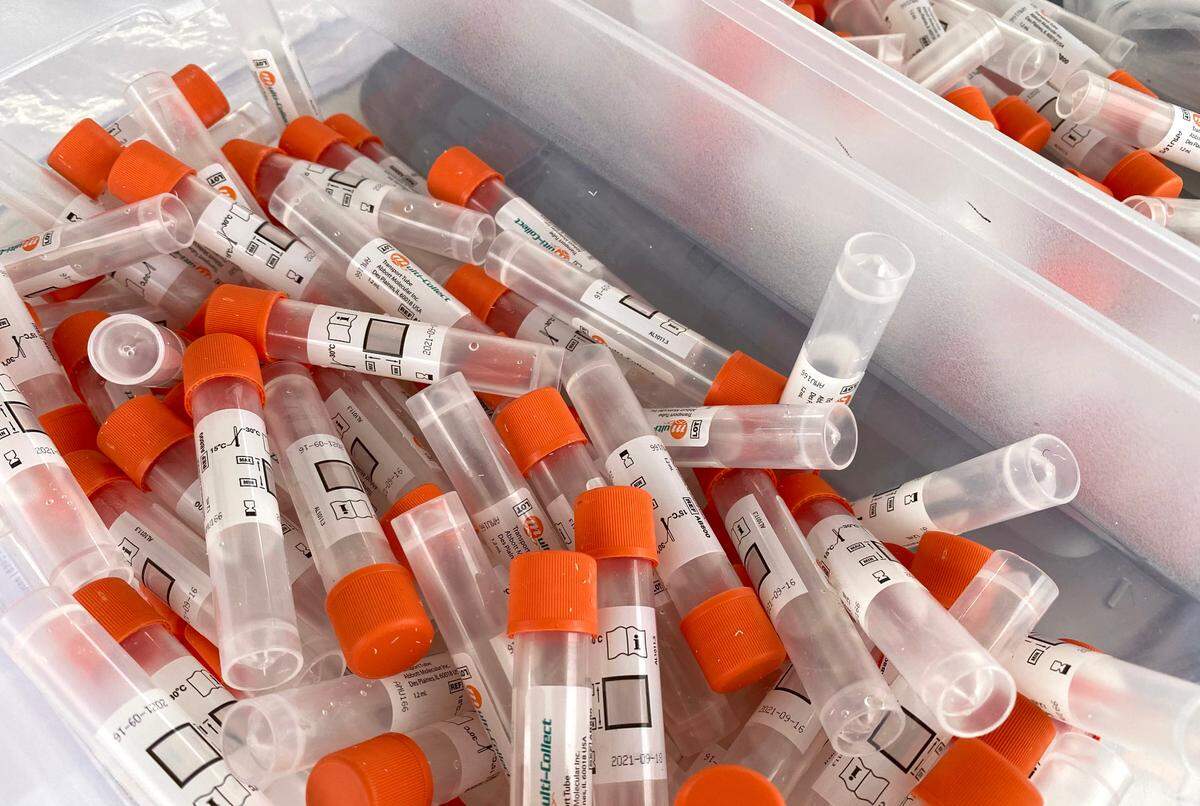
Widespread COVID-19 testing is critical to identifying both symptomatic and asymptomatic carriers of the coronavirus.
Because people can spread the deadly pathogen without feeling sick, testing is one of the few ways DHEC can squelch future outbreaks.
COVID-19 conditions in Beaufort County have seemingly improved in recent weeks. Daily case counts have fallen. Area hospitals report that they are treating fewer coronavirus patients.
But the percentage of positive tests week-to-week remains high. From Aug. 23-29, 14.3% of molecular tests in the county were positive.
The World Health Organization, meanwhile, has suggested that governments reopen only after the percentage of positive tests is below 5% for at least two weeks.
“We’ve plateaued at a pretty robust clip of disease,” said Dr. Scott Curry, an infectious disease specialist at MUSC.
What happens next?
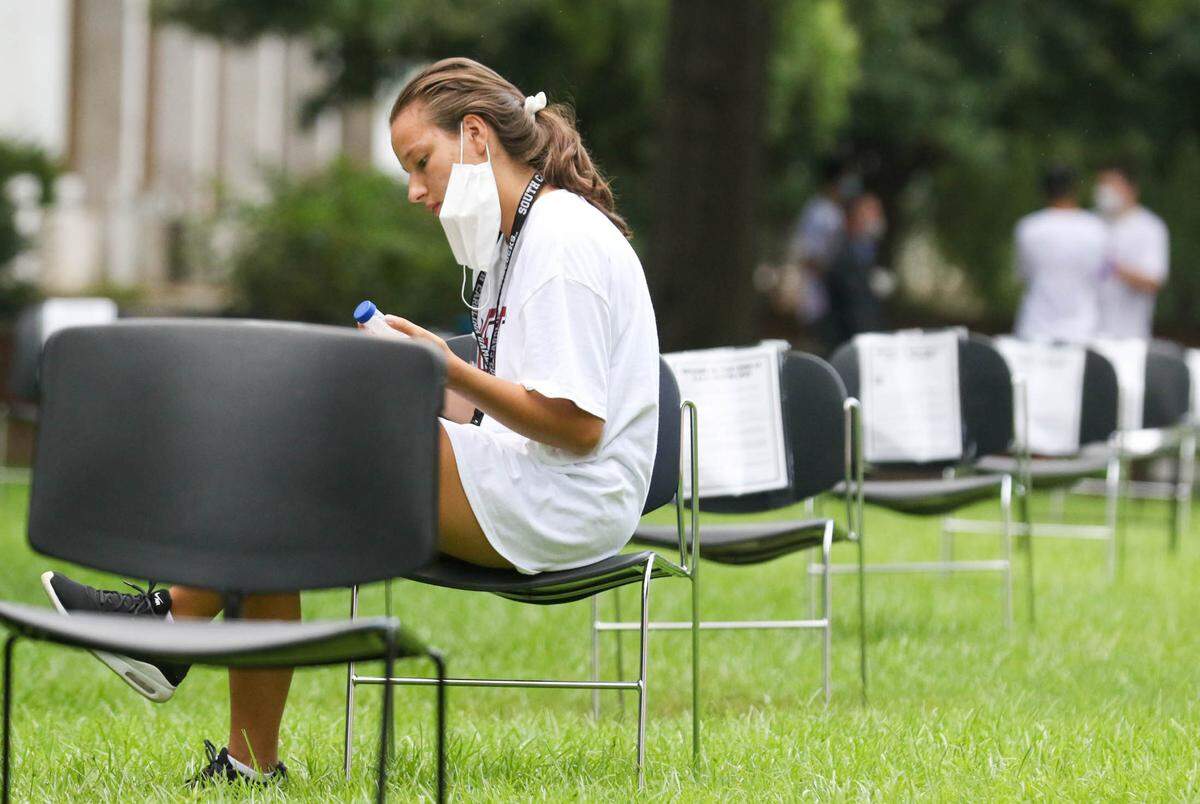
State Sen. Tom Davis (R-Beaufort) has been pushing DHEC to expand saliva testing around the state.
At present, saliva tests are used by the University of South Carolina in Columbia, although the school paused that effort Thursday after a key staffer fell ill.
The tests are faster — USC’s generally take 24 hours to process — and are less invasive, Davis said. They’re also cheaper.
The U.S. Food and Drug Administration on Aug. 15 issued an emergency use authorization to the Yale School of Public Health for a new COVID-19 saliva test that is “open source,” meaning other diagnostic labs across the country can use it.
In a news release, the FDA said the test doesn’t require nasopharyngeal swabs, which have been prone to shortages throughout the pandemic.
Davis, chair of the S.C. Senate’s testing and tracing subcommittee, on Thursday said DHEC is getting closer to rolling out a statewide saliva testing plan.
“You’re going to see an exponential spike in tests being administered,” Davis said.
Traxler, the DHEC physician consultant, told The Island Packet and Beaufort Gazette on Friday that the state agency had run a pilot event for saliva tests Thursday and it went well.
She said she didn’t have an exact timeline for the statewide set up of saliva testing, but added that it’s moving forward.