SC’s medical supply shortages drove ‘Wild West’ of fake masks, ‘fly-by-night’ sellers
A convicted arsonist, a home daycare owner in Virginia and a Fortune 500 health care conglomerate are among the slew of companies and individuals offering to sell South Carolina government the personal protective gear they need during the coronavirus pandemic.
That’s according to a list of over 450 companies that reached out to the state’s purchasing agency, the Division of Procurement Services, with COVID-19 sales pitches in recent months.
Nationwide shortages of personal protective equipment — commonly abbreviated PPE — drove a Wild West-style economy of resellers, some little more than a website and a business registration, according to hospital officials and supply chain experts interviewed by The Island Packet and Beaufort Gazette.
While there’s no evidence they succeeded in winning large government contracts, the newspapers found medical supply companies run by people with no experience in the industry, sellers with a history of trouble with law enforcement and importers making deceptive sales pitches.
When a reporter confronted one South Carolina-based supplier, Carolina Insight Solutions, LLC, about a respirator mask it was selling that was featured on a Centers for Disease Control and Prevention list of counterfeit products, the response was curt.
“I did not know that, but I will take it out,” the supplier wrote. (The company hadn’t sold any of the masks, it said.)
At least 20 companies on the state’s list of possible COVID-19 vendors didn’t exist in February.
“Be ready for just about anything,” wrote Delbert Singleton, the head of South Carolina’s purchasing division to state agencies in mid-March, days after Gov. Henry McMaster declared a state of emergency responding to the pandemic.
With orders of surgical masks, gowns and gloves operating on months-long backorders from traditional suppliers, health care providers and government officials worked overtime to find equipment to protect frontline workers from the highly contagious virus, sifting through a wave of opportunistic protective equipment importers.
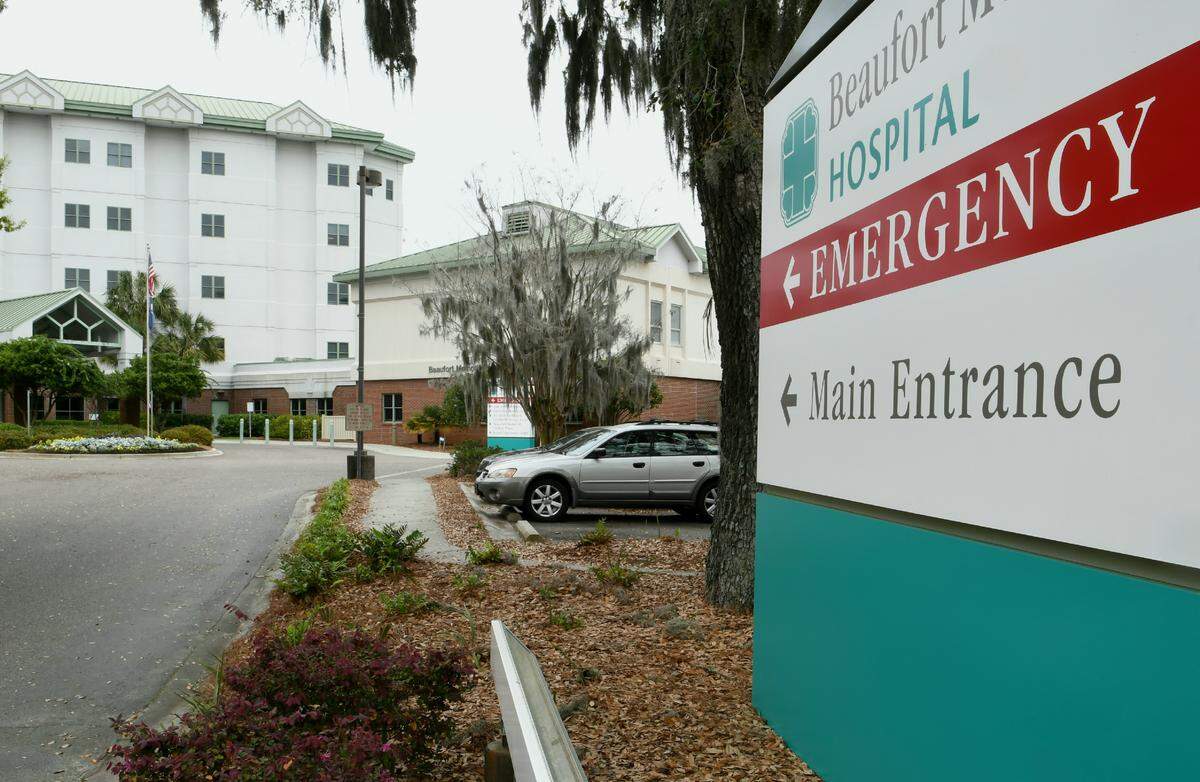
“There’s a lot of these fly-by-night vendors (that) there’s not a lot of information out there on,” said Russell Baxley, CEO of the 197-bed Beaufort Memorial Hospital.
Chuck Spangler, president of the South Carolina Manufacturing Extension Partnership, a nonprofit business group, said he’s seen an explosion of medical equipment resellers. “They’re making incredible money. Some of them are legit,” he said.
The newspapers interviewed several new suppliers who said they have stringent standards and are filling a critical need, providing medical safety equipment to first responders nationwide with minimal markup.
Spangler is working with local manufacturers who are pivoting to produce protective gear. But while coordinating a statewide COVID-19 supply collaborative, he has also run across companies presenting apparently falsified federal certificates and too-good-to-be-true claims.
“Anything with a Gmail account, you’re sitting there going, ‘Whoa, whoa we need to check this,” he said.
Early warning signs
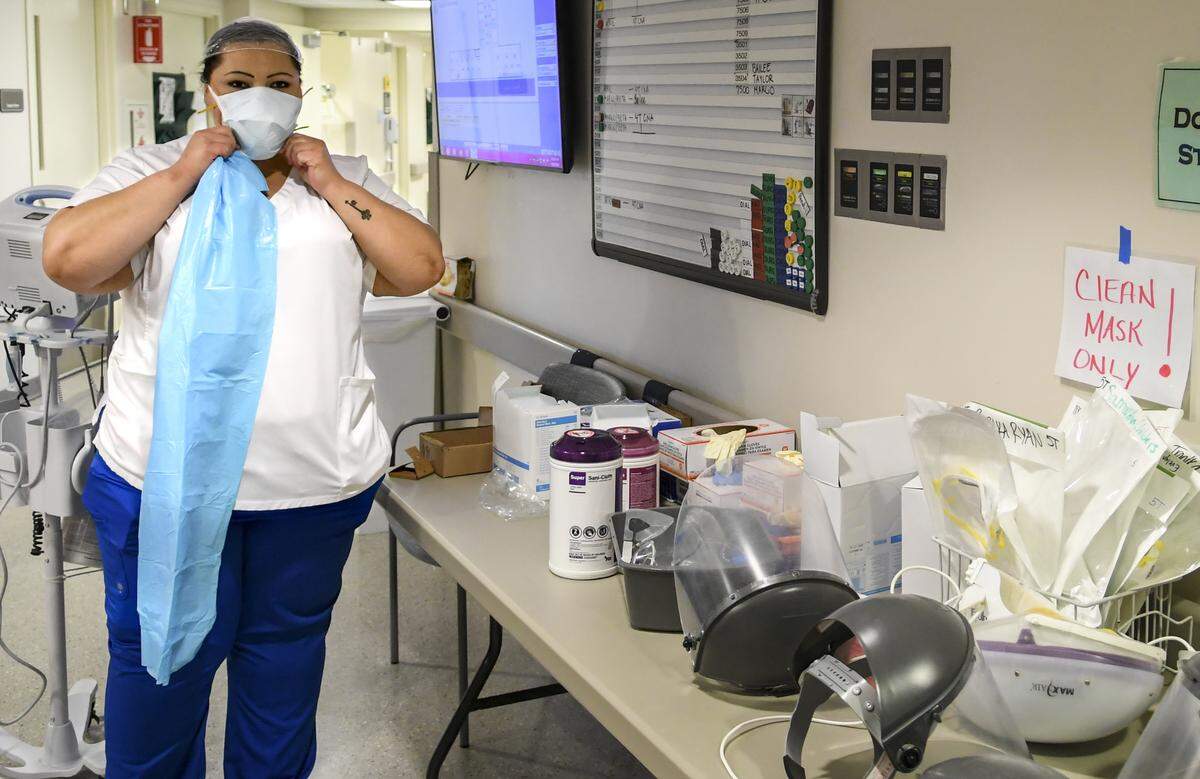
Months before S.C. health officials publicly confirmed coronavirus cases in the state, Beaufort Memorial’s Lavane Barnes saw hints of what was to come.
As the hospital’s purchasing director, he started noticing interruptions in the medical supply chain in February, he said. Barnes started keeping a detailed weekly inventory, anticipating further slow-downs.
More and more items were put on backorder.
By mid-March, hospital officials realized they would have to start getting creative to continue to protect their staff, said Baxley, the hospital CEO. The dire consequences of failing to do so were apparent. Photos from New York City circulated of nurses wearing trash bags and bandanas.
Barnes started getting emails. “We’ve got masks, we’ve got this, we’ve got that,” he recalled. “Ninety-nine percent of them, you’d make a call and ask, ‘You actually have them?’ No, not really.’”
It was a new world, driven by cash. “A lot of them were requiring up-front payment,” Barnes said. Normally the hospital would issue a purchase order and pay after supplies arrived.
“Pricing on some PPE was up over 1,000%,” said Baxley. Some models of N95 respirator masks, which filter out viruses and bacteria from the air and are normally listed at between a $1 to $1.50 each, were being sold at $6 apiece. “That’s price gouging,” said the hospital CEO.
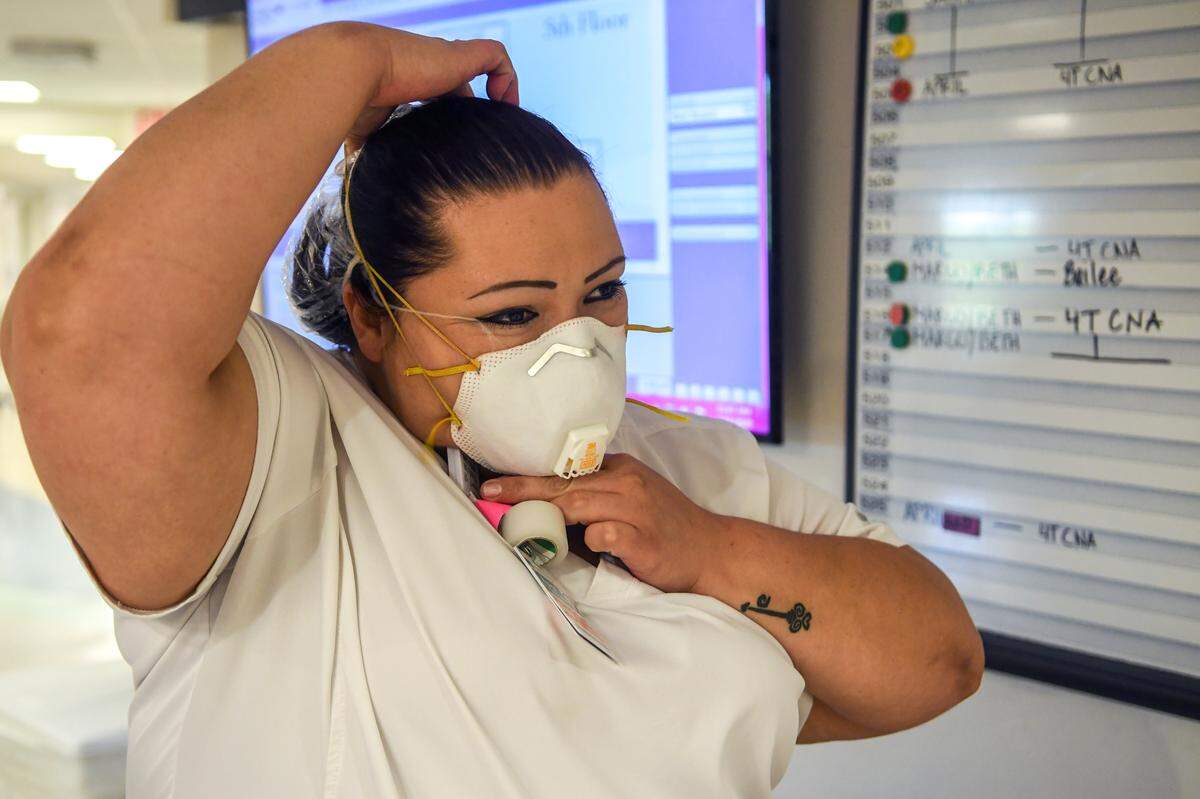
The hospital officials worked vendors through contacts who could vouch for them, trying to find a supplier that they could trust to deliver authentic products on time. Eventually, they found a company in Singapore distributing Chinese N95-style masks.
Before ordering the supplies, Beaufort Memorial checked the vendor’s Food and Drug Administration certificates, and the spec sheets on the masks. But with all the due diligence done, there still was “a little bit of a hope and a prayer” the deal would go through, said Baxley.
“A lot of health care providers are left with no choice but to take a chance. That’s what we did and it paid off,” he said. The hospital never ran out of needed supplies and continues to be well-stocked, Baxley said.
The vendors
The increased demand on traditional medical suppliers during the pandemic, coupled with shortages, has meant an explosion of new outfits, some successfully meeting a critical need and others questionably positioned to deliver on their promises.
The list of suppliers compiled by the state Division of Procurement Services is a testament to that. The document is only meant to be a resource, said Singleton, the division’s director.
“By a vendor appearing on that list doesn’t guarantee them any business nor are we telling agencies that you should do business with them,” he said. His office did a basic level of vetting — compiling business registration records and commercial data — on those that reached out offering to supply the state with protective equipment and other medical supplies, some 460 companies and a handful of individuals.
The vendor list includes major medical suppliers, like McKesson Corporation, one of the largest companies in the U.S. And also major retailers, including Nordstrom, Inc., which offered N95 masks and non-surgical equipment, according to the list.
But questionable suppliers also made the cut. The newspapers identified one individual who said he was a Lowcountry real estate investor. According to court records from two states, Cory Galloway has felony arson and theft convictions on his record stemming from arrests made in 2013.
According to the state records, Galloway offered to sell N95 masks, gowns and “hazmat suits.” Reached by phone, he said he didn’t end up supplying the state with medical equipment and wasn’t pursuing further opportunities.
Lisa Cooper, another individual on the list of suppliers, runs a home daycare in Virginia. Cooper was working part-time to sell surgical masks from a supplier in China, she said. Cooper couldn’t provide the name of the manufacturer and said she was having trouble selling in South Carolina as an individual, although a hospital in New York had bought some.
She’d jumped on the opportunity because of a “connection” she had with someone who could supply medical gear, she said.
Singleton said his staff cautions state agencies to do further research on the vendors that made the list.
“If our team finds that there’s a business that does not seem to be a legitimate business, they’re not going to put that company’s name or the representative’s name out there,” he said. His staff isn’t equipped to conduct criminal background checks on companies or individuals, Singleton said.
Singleton praised his purchasing officers. They’ve done “a yeoman’s job of looking literally under rocks, if you will, finding people who can source (medical supplies)“ for state agencies, he said.
The newspapers emailed close to 40 suppliers on the list, requesting price quotes for an N95 masks and basic information about where it was manufactured. Only a handful of sales representatives responded.
Matt Bowman was one of them. His company, Pharm Envee, is based in Florida, but Bowman said he has Lowcountry roots. Born in what is now Colleton Medical Center in Walterboro, Bowman served in the Navy before retiring to begin consulting.
“It’s the wild, wild West out here in terms of finding PPE,” he said, explaining that a typical workday begins at 7 a.m. Bowman works the phones until the end of the business day on the West Coast at 8 p.m. Then until 3 or 4 a.m., he calls overseas to Malaysia, Turkey, Israel and Hong Kong, he said.
The morning calls with American health care providers keep him going. “The caffeine of this business is the hospitals and the first responders who are really hurting,” he said.
The medical supply industry is lawless now not because it’s filled with bad actors, he said, but because everyone is forced to do business by cash. In early May, Bowman quoted a KN95 mask at $2.80, on the lower end compared to other companies’ offerings reviewed by the newspapers at the time.
“If I can’t track chain of custody, I won’t buy,” he said.
Bowman said his company keeps its profit margins to a bare minimum, around 5% or lower. In two months, Pharm Envee has raked in around $20 million in revenue, he said.
S.C. executives pivot — quickly — to supply medical gear
The newspapers found several South Carolina-based personal protective equipment supply companies that were created in recent months and run by executives formerly associated with firms in other industries.
One of them, SC Health SPV, LLC, a company incorporated in South Carolina in late March, features a website sporting photos of a clean-cut delivery man carrying a company-branded cardboard box and a masked doctor holding a similar package, labeled “Protective Face Shield.”
A photo of the company’s headquarters in Columbia features a nondescript office park, with the SC Health logo in blue across the top of a building.
But reverse image searches revealed the company photos were stock images with the logo added. The image of the building appears to be pulled from Google Street View, with the logo on the building changed.
Reilly Madden, director of operations for SC Health, said in an interview the company is a subsidiary of a housing material importer that had been in business for about 10 years, but wouldn’t provide the name of that company.
When pressed, John Pincelli, SC Health’s general counsel, later said in an email the company was Fix Pads, LLC, which was incorporated in 2019, according to business records. The two companies have no financial relationship or common employees, Pincelli said, referencing years of supply chain experience SC Health’s executives built while acquiring and remodeling homes.
As for the headquarters, Madden said a new sign was being installed. The photos were just “pictures to have on the website,” he said.
SC Health has donated some of its stock at public events with S.C. politicians in recent weeks.
“We want to help out the people that we see every single day, rather than seeing this a as purely an opportunity,” said Madden.
U.S. Rep. Joe Wilson, R-Lexington, recognized the company on the floor of the U.S. House of Representatives Wednesday for its contributions, naming Pincelli and SC Health President Alex Szkaradek.
Pincelli and Szkaradek, according to their LinkedIn pages and court filings, held top positions at Vision Property Management, LLC, a rent-to-own home selling company accused in court by attorneys general in New York, Pennsylvania and Wisconsin of engaging in a predatory lending scheme that targeted low-income families. The firm recently agreed to a $3.76 million settlement in one lawsuit that involved no admission of liability but banned Vision and its officers from mortgage lending in the state of New York, according to a news release by the New York Department of Financial Services.
In an email, Pincelli wrote, “Vision has no relation to SC Health,” referencing a sale of the company’s assets, which the New York Times reported earlier this year would effectively merge Vision with another company.
The company’s founders don’t want to use past dealings — and success — to create an unfair advantage for SC Health, said Madden.
Million-dollar medical supply contracts fall through in other states
It matters where South Carolina’s protective gear is coming from, especially given multi-million dollar contracts that have gone awry in other jurisdictions and reports of fraught federal efforts to secure medical supplies.
The 3M Company, one of the largest manufacturers of N95s in the U.S., has filed lawsuits to stop price gouging and fraud in the sale of its products during the pandemic.
Meanwhile, the Justice Department opened a criminal investigation into Blue Flame Medical, a company created by two well-connected Republican operatives this spring to sell medical supplies, according to the Washington Post.
State officials in Maryland terminated a $12.5 million contract with Blue Flame after they said it failed to deliver masks and ventilators as promised. California also wired nearly a half-billion dollars to the company, and then canceled the payment six hours later, reported CalMatters. (Blue Flame has asked Maryland officials to restore its contract after delivering a portion of the ventilators it sold, and the firm’s lawyer told the Washington Post he didn’t think the federal investigation would amount to anything.)
Blue Flame solicited S.C. officials, according to the state’s list of possible COVID-19 vendors. But there’s no evidence any state agency took the company up on its offer.
Singleton said he wasn’t aware of any situation where a state contract was signed and the company failed to provide the materials during the pandemic. His office hasn’t referred any vendors to law enforcement, he said.
Robert Kittle, spokesperson for the S.C. Attorney General’s Office, said the state’s top prosecutor hasn’t received complaints related to state contracts during the pandemic. If an issue with a vendor or contract rose to the level of criminal activity and the attorney general was investigating, Kittle could not confirm or comment on an active investigation, he said.
Kelly Coakley, spokesperson for the S.C. Department of Administration, said in an emailed statement the agency is working closely with the State Fiscal Accountability Authority and the Emergency Management Division for the central purchasing of protective equipment and cleaning supplies for state employees. Over 70 state agencies have identified needed protective equipment for staff members returning to the workplace, she said.

Sourcing protective equipment closer to home?
The newspapers found South Carolina-based suppliers of protective equipment angling for local business that raised red flags.
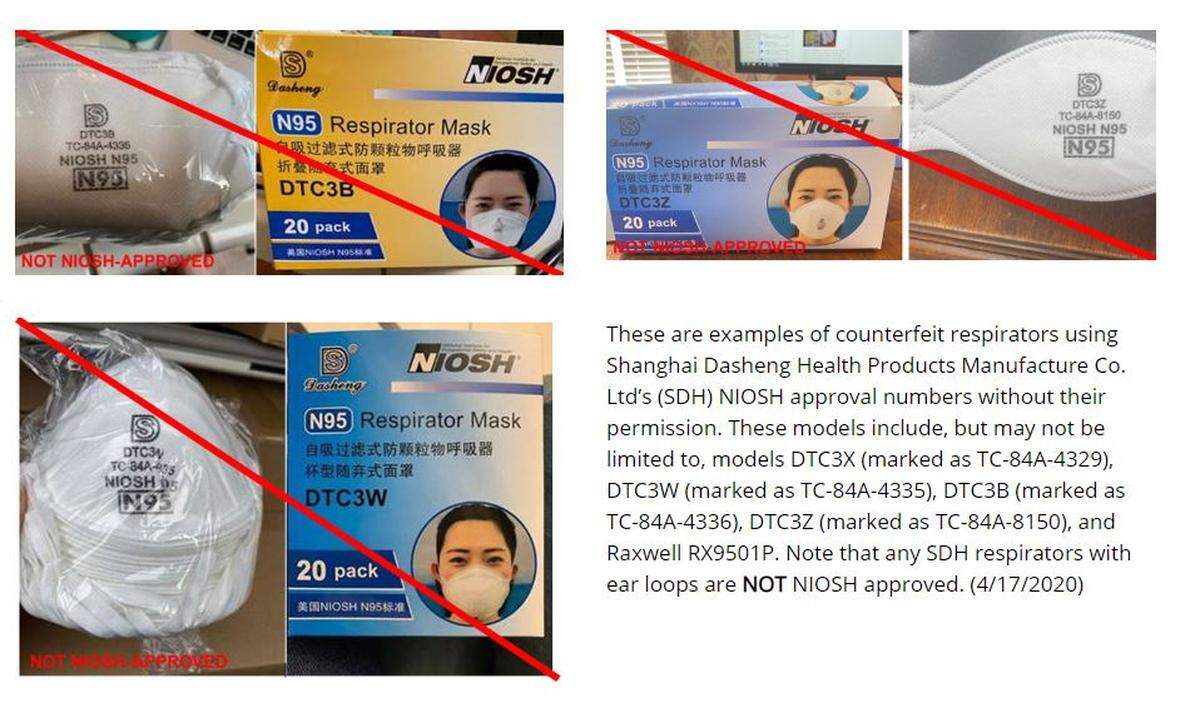
Carolina Insight Solutions, LLC, a company created on April 14, sent a reporter a product sheet via email. It listed “NIOSH approved” N95 masks, marketed at $5 each, including a picture and model number. The National Institute for Occupational Safety and Health tests and approves respirators.
But the mask listed in the catalog matched a CDC list of counterfeit masks. In an email, Rudy Herrera with Carolina Insight Solutions, said the masks were offered by his supplier but he hadn’t yet sold any. He said he had import certificates to show buyers, and he wouldn’t sell the fake masks.
“Anyways thank you for letting me know,” he wrote.
Spangler, the president of the state manufacturing organization, said the supply collaborative he is helping to run has assembled a list of 391 vetted manufacturers and distributors, many S.C. companies, to pair health care providers and businesses in need with trusted suppliers.
Over three quarters of all personal protective equipment is made in China, Spangler said. Doctor’s offices trying to order small quantities of N95-style masks are being told the wait will stretch to the end of June, with Chinese manufacturers giving precedence to large orders, he said.
A Washignton Post-Ipsos poll published last week found over two-thirds of health care providers still reporting shortages of N95 masks into May.
While Beaufort Memorial is well stocked, the traditional suppliers are still straining to quickly meet demand, officials said.
“We aren’t back to normal from supply chain on anything,” said Baxley, the hospital CEO. “Health care in general was, I think, caught off guard. … From a PPE standpoint, no one was truly prepared for this.”
Andrew Caplan at The State Media Co. contributed reporting.
This story was originally published May 28, 2020 at 10:51 AM.