Hilton Head leaders to discuss moratorium in public eye. Here’s what to know
Will Hilton Head impose a moratorium on short-term rentals?
That’s been the top question on the minds of residents, rental owners, and local business owners for the last two months, ever since Hilton Head’s town council first aired the idea at a July meeting. It is a topic on the agenda for tonight’s town council meeting.
Last month, council members spoke with their attorney behind closed doors to seek legal advice regarding a temporary moratorium on short-term rentals, timeshares, and subvisions.
Previous comments from council members suggested that the ability “pause” to these developments could help the town address “pinch points” of rapid development.
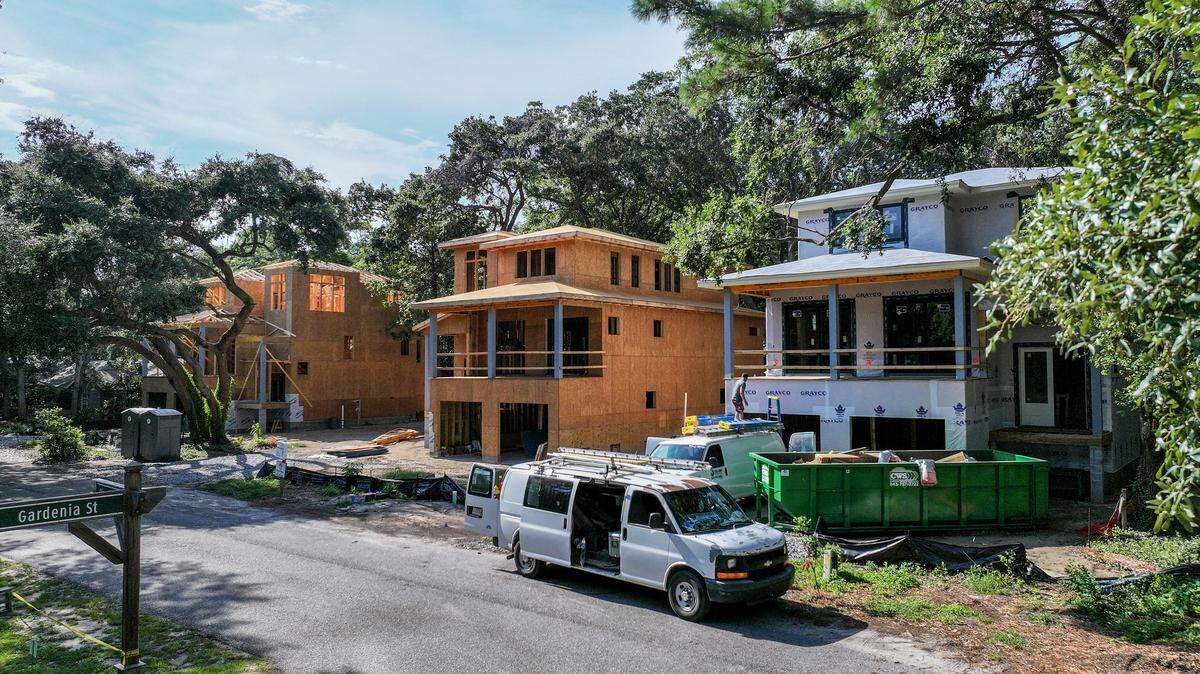
“Travel around this island, you’ll see a lot of areas where someone has come in with a bulldozer and cut a large swath of land, tearing down all the trees and building very small homes and not workforce housing,” Ward 2 council member Patsy Brison said at the July meeting. “Unless we take this pause, we’re going to keep suffering from these pressure points, and our community will keep suffering.”
Those brief comments have been some of the only insights stakeholders have had as to what a moratorium could mean for Hilton Head.
Two months later, Hilton Head’s town council is set to discuss a potential moratorium at their regular meeting Tuesday evening.
They’ll review a new report from town staff detailing why a moratorium could be a effective tool to roll out new regulations and preserve island character.
Even if councilmembers agree to move forward, it may still take weeks or months for a moratorium ordinance to be drafted and approved.
Here’s what to know about what’s in the new staff report.
Why would Hilton Head impose a moratorium?
According the staff report, a moratorium on short-term rentals, timeshares, and/or subdivisions could be used to:
- Prevent developers from rushing to submit applications before new land use regulations are put into place.
- Give the town more time to study impacts of development to neighborhood character, livability, traffic patterns, and stormwater systems.
- Give the town time to make sure new development doesn’t outpace infrastructure and public services.
- Give residents and stakeholders more time to weigh in on policy
What legal considerations need to be made?
According to the report, South Carolina law allows municipalities to adopt a moratorium under the following circumstances:
- It must be of limited duration (commonly 180 to 365 days);
- It must be narrowly tailored in scope to serve a specific and legitimate public purpose;
- It must be supported by findings of fact; and,
- The municipality must actively study or develop policy during the moratorium period.
In short, the law doesn’t allow cities and towns to stop development willy-nilly. They must have well-supported reasoning and a plan of action. They also can’t interfere with permits or licenses that have already been approved.
What steps would need to be taken?
In their report, town staff outline the key steps the council would need to take in order to enact a moratorium:
- Step 1: Town staff define scope of moratorium and take inventory of pending permits; Town attorney conducts initial review
- Step 2: Town attorney and staff finalize legal findings and enabling ordinance
- Step 3: Town council conducts first reading and public hearing of moratorium ordinance
- Step 4: Second reading and final adoption
What data was provided?
Town staff highlighted the following statistics in their report:
- The number of short-term rentals has increased from 3,000 in 2020 to 7,042 in 2025.
- 70% of all short-term rentals are in Forest Beach, Sea Pines, and Palmetto Dunes.
- As of Aug 1, short-term rentals have been issued 136 verbal warnings, eight written warnings, and three administrative citations.
- In 2025, short-term rentals contributed to over $14 million in local taxes and over $29 million in state and county taxes.
- Since 2023, 172 new timeshare units have been approved.
- Since 2020, four major subdivisions have been approved accounting for 200 single-family lots.