Old graves halt new construction. Okatie burial ground is center of neighborhood dispute
Two years ago, Lora Knoppel would sit on her back porch and see 40 modest wooden crosses on the grounds of the neighboring property.
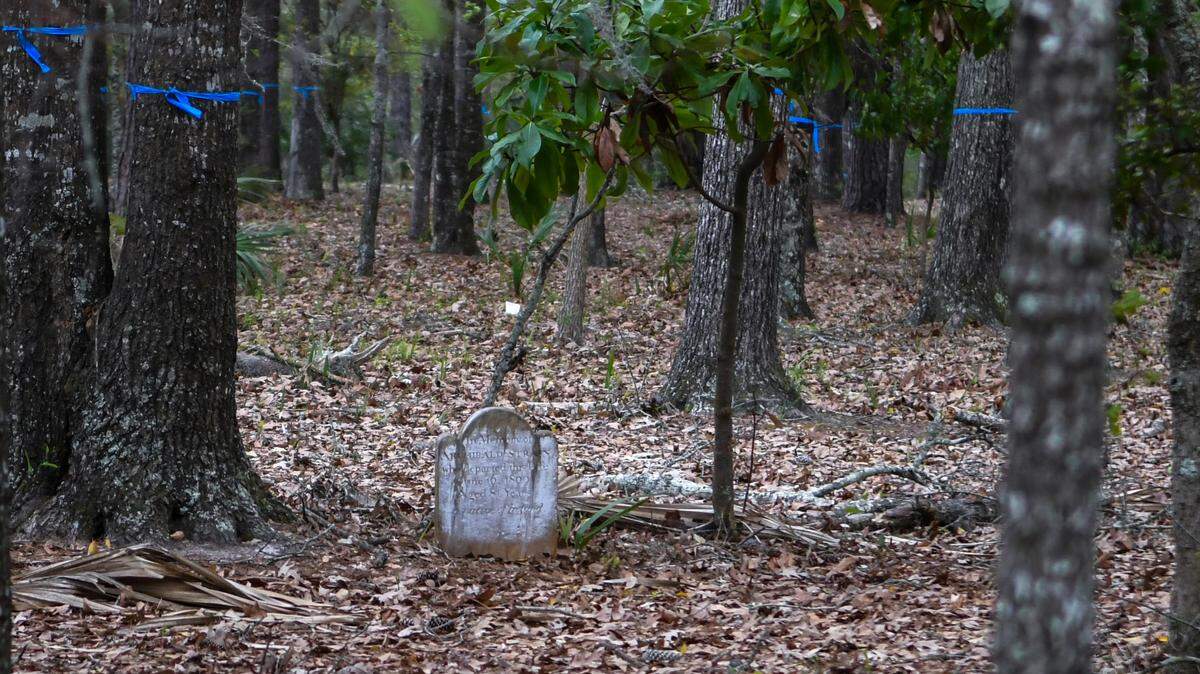
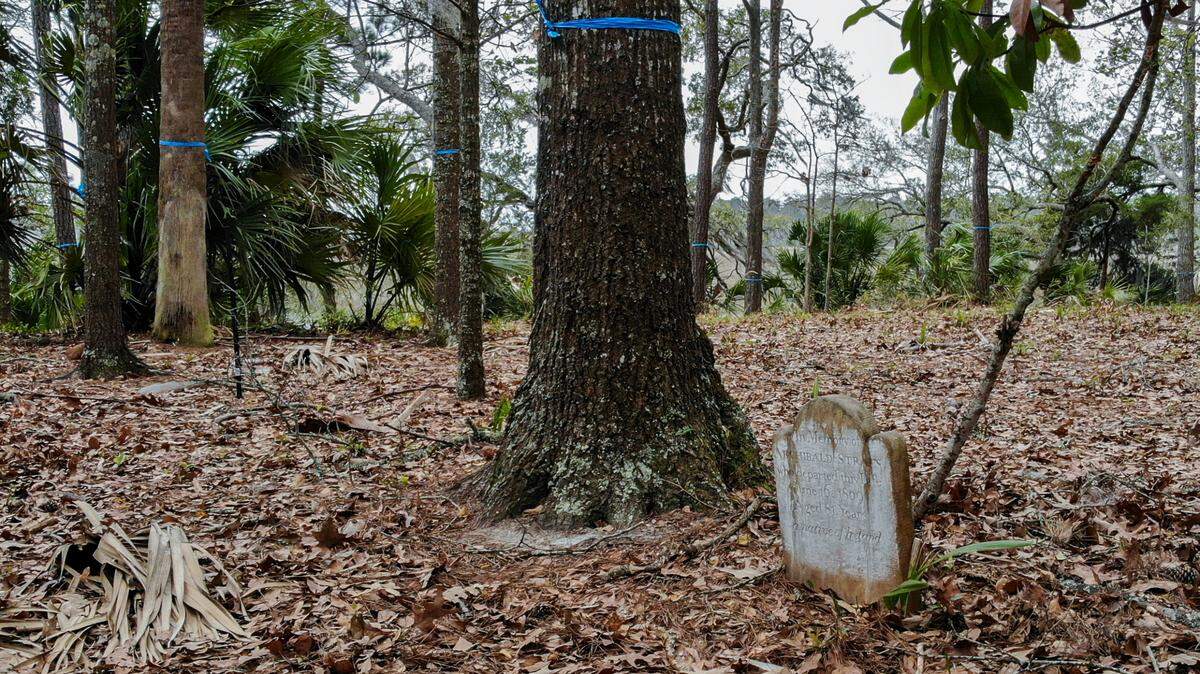
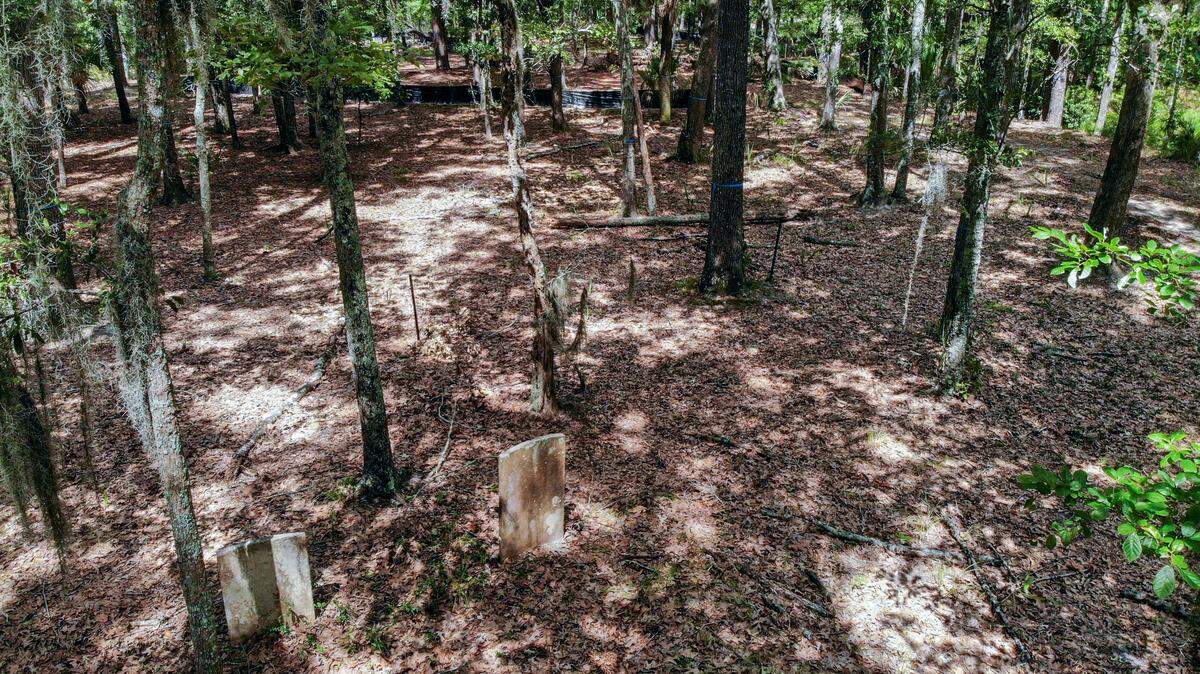
The crosses, simple yet significant, marked historic graves of men, women and children dating back to the 1800s. It’s known as “Cedar Point Cemetery.” The Okatie property, near Callawassie Island, is currently wrapped in blue construction tape, the crosses are gone and only three headstones remain. The tape, a sign of looming construction on the plot, rattles her husband James. He’s supported his wife’s journey as she traced descendants of families as far back as 250 years, so much that he says he can hear the deceased “scream.”
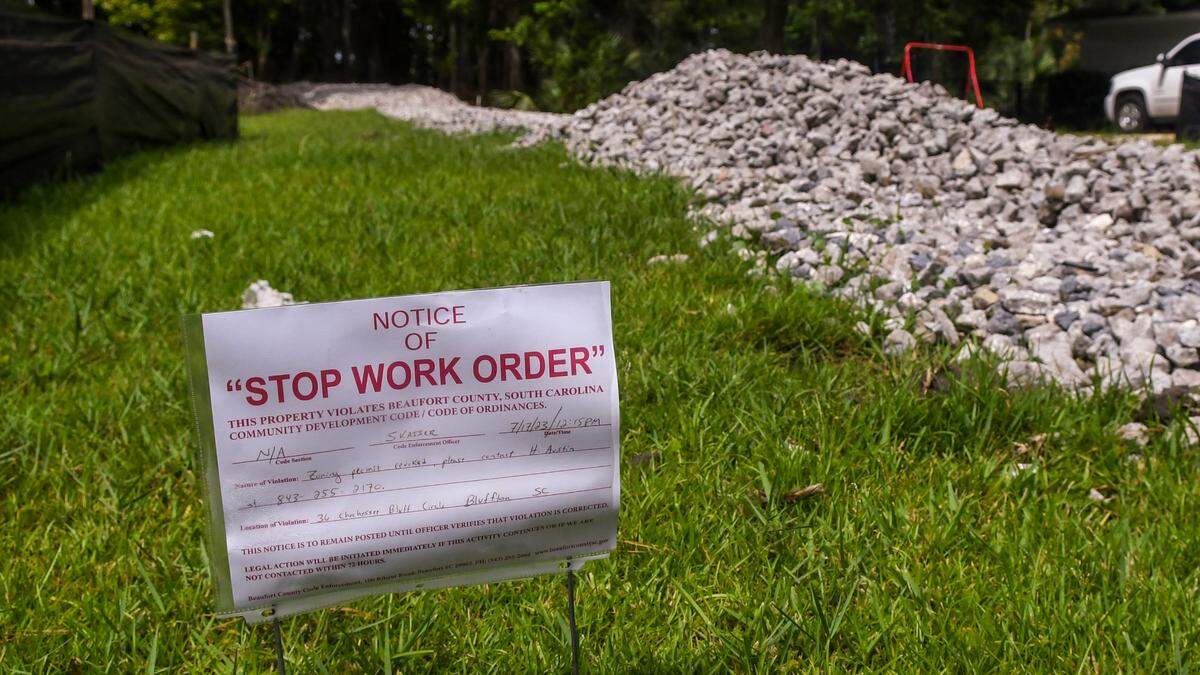
She believes she knows who is buried on the land next to theirs. But it’s not confirmed, and her outcries didn’t stop the county from issuing a zoning permit to the property owner on June 23. Since then trees were flagged for removal, wooden stakes marked the location of a potential home, and gravel was dumped within the 100-foot buffer around the three recognized graves.
Everything stopped July 17 when The South Carolina Department of Archives and History informed the county of the same information Knoppel said she’s been giving the county for months: that there is documentation suggesting more graves are on the site.
When the county issued the zoning permit for the house and driveway, the SCDAH said there were only three graves on the property. Roberts Vaux, the property owner’s lawyer, said this is the only knowledge the current owner had of graves on the property when he purchased it. But after Knoppel contacted the SCDAH, who in turn contacted the county saying there could potentially be more graves, the county issued an order for all construction to halt.
“I fought for hours,” Knoppel said. “Emails, phone conversations. Everything I found, I would send them.”
Vaux says Knoppel is digging up the past for other reasons: she doesn’t want construction next to her home, especially from someone who is African American.
“She never complained when the lot was divided. She never complained when it was listed for sale. She never complained when other people went on the lot,” he said. “They only complained when African Americans went on the lot.”
Knoppel said the accusations are “horse hooey” because she’s researched “Cedar Point Cemetery” for years.
‘People buried up and down the coast’
Back when a waterside property brought fears of yellow fever and malaria, coastal properties in some areas of South Carolina were less desirable. More recently people have been flocking for land like this parcel with sunset views and the potential for docks stretching over the marsh. As they move, many homeowners discover that while they might be the only ones living there, they’re not alone.
Regardless of whether burial grounds are used as a tool to delay development or protected by a neighbor who has taken care of the land for years, construction companies are having to address what it means to build on what could be a boneyard. During the pandemic, South Carolina State Archaeologist Jonathan Leader even started giving seminars to real estate agents on how to navigate discovering cemeteries on land.
“There are people buried all up and down the coast and have been for at least 18,000 years,” he said, explaining that marked cemeteries typically belonged to elite landowners who were white and had money. Black and American Indian cemeteries often went unmarked in ways “recognized by the other portions of the population.”
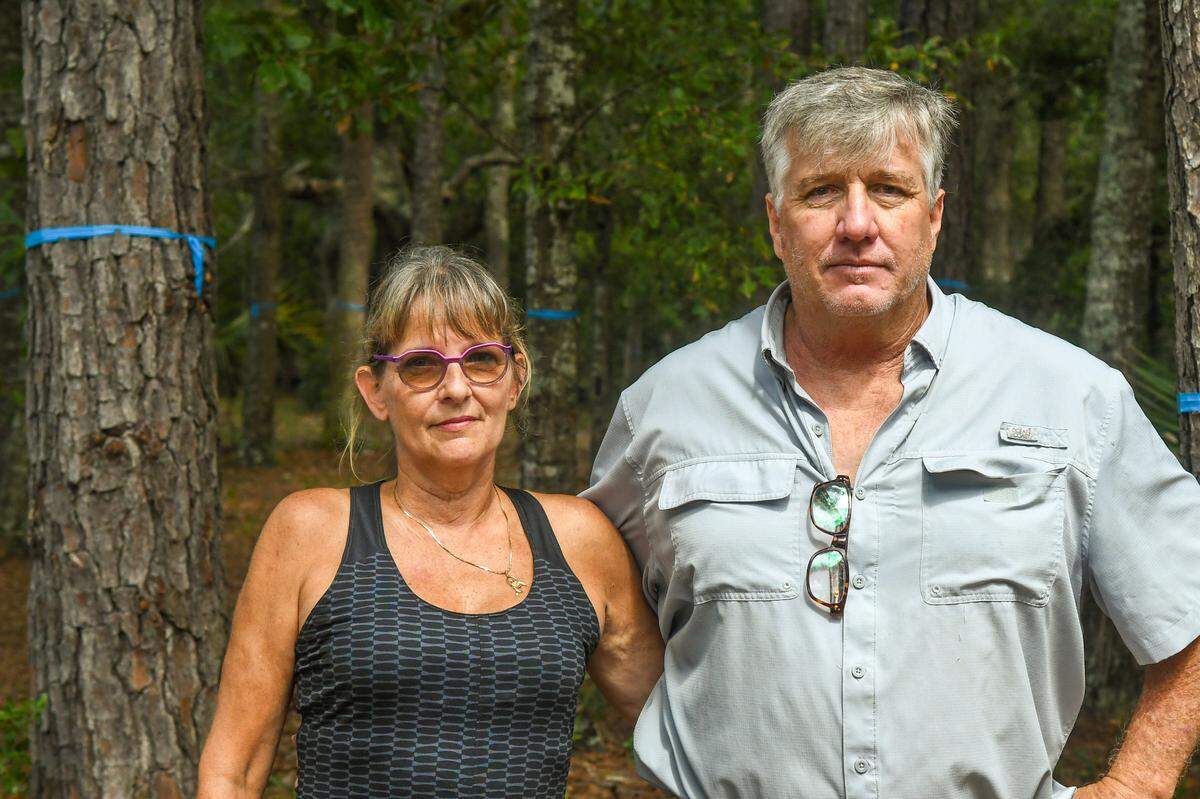
Knoppel said that she can show proof of 26 graves with the documentation she has gathered, but because enslaved people’s graves often weren’t recorded and they could be missing from the records. Absent more records only “leaves room for speculation,” and Knoppel estimates there’s anywhere from 50 to 60 graves on the property.
“I will say that my experience in South Carolina since 1989 is if you find one marker you find ten (graves),” Leader said.
Now, the property is being surveyed by a ground penetrating radar that focuses on disturbances and soil compaction to determine if Knoppel’s assumptions are correct. The study was recommended by the SCDAH and it’s unclear when the results will be returned. The property’s owner is responsible for performing the survey, according to a letter from the county to Knoppel’s lawyers.
The property owner considers Knoppel’s actions, including her insisting on having access to the entire nearly three-acre property, harassment, according to Vaux.
“He’s been harassed. He’s engaged an attorney. He’s been delayed,” Vaux said. “How do you think anybody would feel?”
Who might be buried there?
Knoppel is no stranger to cemetery preservation, and it’s what led her to work to uncover who could be buried near her home.
As a little girl, she remembers preparing family members’ bodies to be buried in the graveyard next to her home, the same as four generations of women did before her.
“Cemetery preservation was a weekly duty just as sure as the sun shined you best know my family’s deceased kin were honored,” she said.
The Knoppels’ have been watching over the property for 23 years. Now, it’s the county’s turn and Knoppel thinks she knows what they’ll find.
The oldest of the three headstones in the cemetery is for Archibald Strain dated 1809. The two other graves are for Arthur Frederick Behn, dated 1824 and Joesph Plummer Behn dated 1836. Arthur had nine children, including Joseph, with a Nigerian woman named Susan Plummer Behn, according to Knoppel, and she believes many of them could be buried there based on death records.
“I’ve never gotten to visit and I hope to visit,” said Peggy Littlefield, a Behn descendant who discovered where her ancestors were buried thanks to Knoppel. “I can’t even express what it means to me (to know where they’re buried). It means so much.”
What happens now
It’s against state law to vandalize or desecrate burials or grave markers and violators can face penalties up to $5,000 and imprisonment for up to ten years. State law also allows the county to use public funds and inmate labor to “preserve and protect any cemetery within their jurisdictions that the counties or municipalities determine has been abandoned.”
In the case of a neighbor wanting to stop development next to them, Leader says discovering graves doesn’t actually stop construction it just slows it down and increases costs for the property owner. Even if there are graves on the site, the property owner could go through the process of moving the graves to a separate location and then build their home, according to Leader.
The county issued the stop work order to protect any potential graves on the site until they have more information from the ground penetrating radar, according Assistant County Administrator Chuck Atkins.
“If they’re not (there) this probably gets to move forward,” Atkins said.
This story was originally published August 9, 2023 at 12:13 PM.