Where should affordable housing go on Hilton Head? Leaders favor 3 neighborhoods
If Hilton Head Island expects to keep up with the demands of an ever-increasing tourism industry and the needs of island residents, a workforce housing consultant said it needs to build 200 homes and apartment units each year for 10 years and reserve around 30% of of those units for members of the workforce and their families.
But where will all those apartments and homes go?
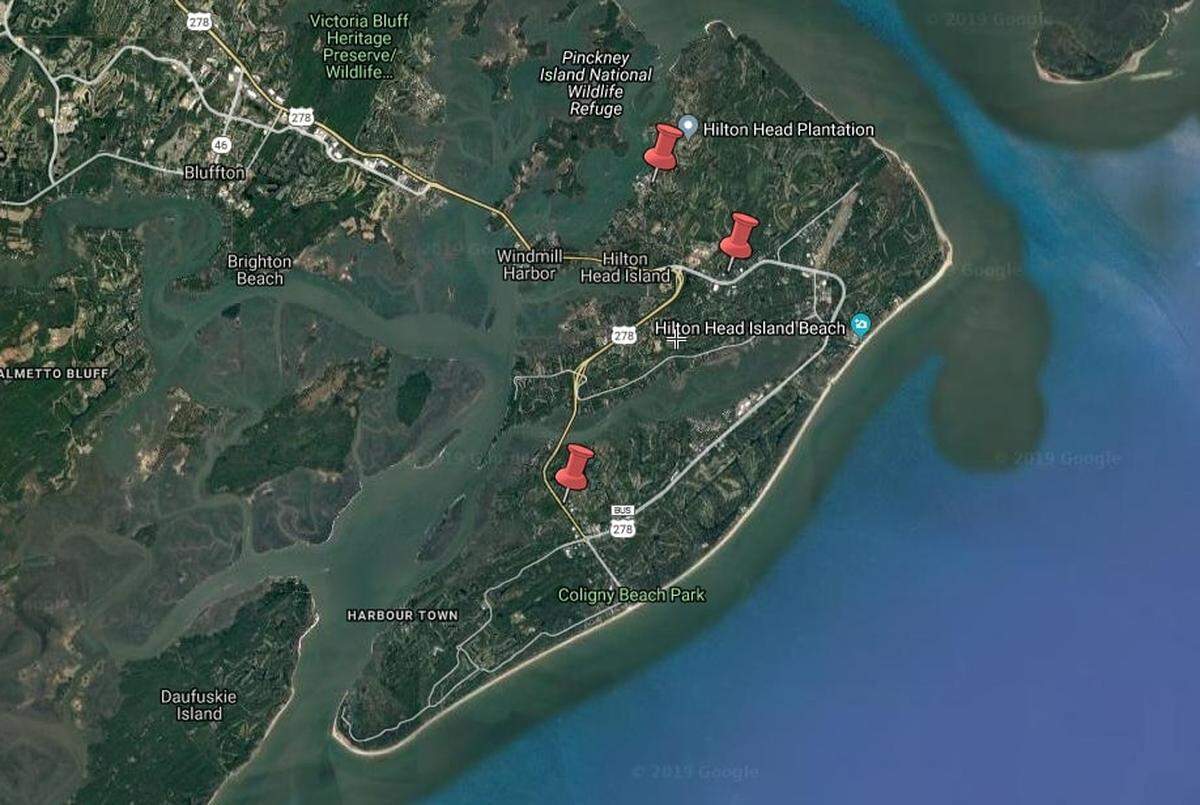
Leaders identified three areas Wednesday that they said were ideal for workforce housing because they were close to employment centers on the island: the Squire Pope area on the northwest side of the island, the Palmetto Bay corridor at the southern base of the Cross Island Parkway, and the Main Street opportunity zone in the north central part of the island.
Members of the public planning committee submitted these areas to town staff to research the possibilities in those neighborhoods and what, if any, zoning or ownership changes the council would have to make to encourage workforce housing developments.
What’s important for working people on Hilton Head?
Here’s the criteria town staff and the planning committee used to choose the Squire Pope, Palmetto Bay and Main Street areas:
Step 1: Near the major roads on Hilton Head
Senior planner Jayme Lopko said ideal locations for workforce housing are within a half-mile of one of the major roads on the island: U.S. 278, the Cross Island Parkway, Pope Avenue, and Marshland Road.
The proximity to the main thoroughfares would encourage people to walk or bike to work, she said.
Being near the major roads on the island also means they’re likely to be closer to public transportation: the Palmetto Breeze bus service and the Palmetto Breeze trolley.
Step 2: Properly zoned
Next was to look at which areas are appropriately zoned for development — that is, not set aside for parks and recreation or conservation. Hilton Head’s land plan specifies which areas are residential or commercial to create neighborhoods and maintain serenity.
Lopko said she excluded all planned unit developments, or gated communities such as Indigo Run, Sea Pines and Hilton Head Plantation, from areas that are appropriately zoned. Some council members pushed back on that.
“I wonder if that’s a decision the [gated communities] ought to make,” Ward 3 representative David Ames said. “I don’t think we as a town are going to demand workforce housing be done behind the gates, but I do think it’s something the different boards can decide on. ... There are communities on the island who are beginning to recognize the demand for workers is increasing.”
Others voiced concerns about whether island residents will be welcoming to workforce housing.
“Clearly we understand that the ‘not in my backyard’ group is going to come out, unfortunately,” Ward 2 representative Bill Harkins said. “Are we going to allow high density and roll in 100 trailers, or are we going to encourage creative architecture that provides dignity to the homeowner or the renter?”
Chris Christon, a resident in the business workforce coalition sponsored by the chamber, reminded those who oppose workforce housing in their neighborhoods: “The workforce are gainfully employed but moderately compensated.” He said he was part of the workforce before he retired.
“They will not dilute the quality of life in these places,” he said.
At last week’s town council workshop, Town Manager Steve Riley said the possibility of home-sharing in some of Hilton Head’s single-family homes may be an option later to accommodate people who need affordable housing.
Step 3: Close to employment centers
Another important component for workforce housing is encouraging developments near the main areas of employment on the island.
Lopko said these “employment centers” are the public school campus on Wilborn Road, the Hilton Head hospital, Shelter Cove Towne Centre and Marina and the major resorts.
.png "Screenshot (54).png")
Harkins said the Squire Pope area would be a good place to build housing because it’s near “high-employment restaurants” such as Hudson’s Seafood on the Docks, Skull Creek Dockside and Boathouse, as well as assisted living employers such as The Cypress.
The Palmetto Bay area is near Sea Pines Resort, and the Pope Avenue commercial district and Main Street have several restaurants and businesses.
Step 4: Empty land
Finally, the town had to find land that isn’t already developed. Many areas that fit the above criteria already have homes because of the location.
Lopko said the town owns “over 1,000 acres but a lot of the parcels have restrictions,” based on promises — such as preserving it as green space — that the town made when it bought the land.
“Any town-owned property [without restrictions] would have to be rezoned,” she said.
What’s next?
With the committee’s identification of three neighborhoods where workforce housing can work, town staff now begins to research what could be appropriate for those areas, Ames said.
The public planning committee will meet again Jan. 23 to talk about workforce housing.