
Local fisherman wants to close Beaufort County waters to crabbing
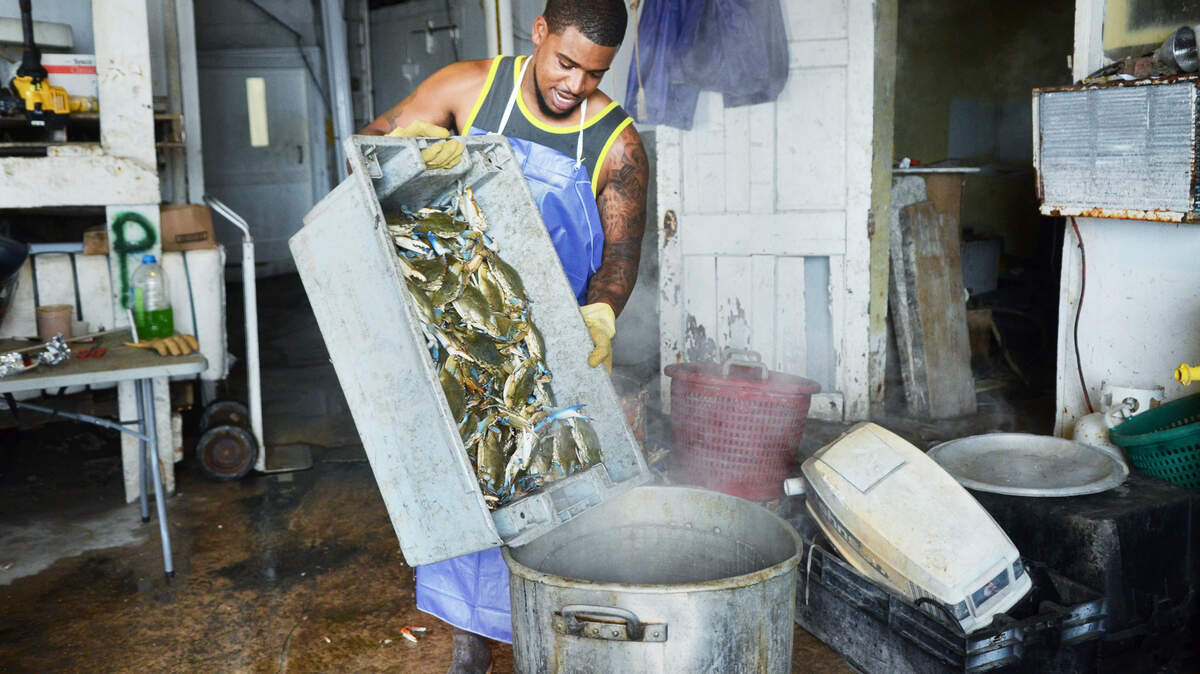
While crab pots across Beaufort and Jasper counties had their worst haul in years in 2014, fishermen can't agree about what exactly that means for the local delicacy.
Commercial crabbers say a light year is business as usual, as crab populations and the number of fishermen on the water fluctuate from season-to-season. Still, residents who have been fishing local waters all their lives say a lack of big jimmies is a serious problem and they blame commerical boats.
"You used to be able to catch as many as you want. They were all keepers," says Tom Keebler, a Bluffton retiree who fishes near his home at Alljoy Landing. "But now you can't. I haven't caught a crab this year."
Keebler says he plans to speak with DNR officials about closing crabbing to help the populations bounce back further, though several DNR biologists said it's highly unlikely the state would support any new restrictions on crabbing.
He says he recalls the days he would take his wife and her family out on the water to see their smiles when they caught a big crab. Now, it's been six years since he was able to haul in enough crabs to hold a backyard boil for his neighbors.
The tradition wasn't quite the same when Keebler gave in once and bought a bushel from Port Wentworth.
"It's just coming to that," Keebler said. "And it was very expensive."
While anyone can crab with a handline or a few nets or traps, the state requires licenses for recreational and commercial crab pots.
Last year, commercial Beaufort and Jasper county crabbers caught only about 1.3 million pounds of blue crabs, nearly half of the harvest in 2013, according to the S.C. Department of Natural Resources.
The number of crabs being caught in those counties nearly doubled between 2010 and 2011, jumping to 2.6 million pounds, but has been declining slightly in the years since.
Last year's decline was followed by one of the worst winters for crabbing, according to local commercial fishermen Larry Toomer of Bluffton Oyster Co. in Bluffton and Craig Reaves of Sea Eagle Market in Beaufort.


Still, commercial crabbers in Beaufort and Jasper counties managed to reel in healthy sales last year. They made $2.1 million, down just about 28 percent from 2013 and more than twice what they made in 2007, according to DNR data.
And while Beaufort and Jasper counties overall suffered in 2014, some areas remained plentiful. In the May River -- which accounts for just a sliver of the state's commercial crabbing each year -- fishermen brought in about twice as many crabs in 2014 as they did seven years before.
Toomer said his success this week -- he brought in 10 bushels of crabs from 50 traps on Wednesday -- is evidence that the current restrictions are enough. He says crabs are too unpredictable to regulate, though mother nature and market demand do a decent job.
"We don't need another rule or law that's saying, 'Oh, we can't catch any so let's close crabbing down,'" Toomer said. "It's different every year."
Crab populations throughout the Atlantic seaboard have been falling for the last decade and a half, mainly due to climate change and commercial crabbing efforts, said Larry DeLancey, a DNR crustacean biologist.
Most of the state's crabs are shipped north, particularly to Maryland, where the Chesapeake Bay's population slipped to disastrously low levels in 2008 and remains depleted today.
DeLancey said DNR would like to see stricter regulations on crabbing, but hasn't managed to get state support to limit the number of crabbing licenses it issues or restrict harvesting of females for a short time each year.
"If you just relieve pressure on them for a little while, it might make a big difference," he said.
Still, DeLancey said he thinks the current level of fishing is sustainable, as long as water conditions are good.
Anything from a drought to a cold snap can write a very different outcome.
"You can't just blame the guys you see on the water every day because there's a lot of other things that influence these creatures besides that," said fellow DNR biologist Amy Fowler.
Reaves added that recreational fishermen may have a harder time finding crabs because the crabs are always on the move, and water that's too salty or cold may drive them deeper into creeks, away from public docks and private piers.
He and Toomer said overfishing isn't the issue.
So far this year, only 375 people have trap permits, down about 6 percent from two years ago but up from 317 licenses issued by DNR in 2007, the Post and Courier reported that year.
Still, Toomer and Reaves agreed with biologists that there's cause for concern for blue crabs.
Sea level rise has driven many crabs out of easy reach as they search for their preferred habitat, a mix of fresh and brackish water, Toomer said.
Reaves agreed, saying too many homes, buildings and golf courses are encroaching on marshland.
"That's the elephant in the room," he said. "These are your estuaries, these are your nurseries, and they're being developed."
Reaves said he would support some new rules for crabbers, such as limiting their pots or prohibiting people from harvesting soft-shell she-crabs every few years.
"People want to have seafood, but there's got to be a medium in between," Reaves said.


Follow reporter Rebecca Lurye on Twitter at twitter.com/IPBG_Rebecca.
Related content:
- Crabbing off to slow start, local fishermen say , July 3, 2014
- South Carolina needs a better grip on the beloved blue crab , July 19, 2014
This story was originally published September 3, 2015 at 5:18 PM with the headline "Local fisherman wants to close Beaufort County waters to crabbing."