
Ridgeland looks to the past to focus on its future
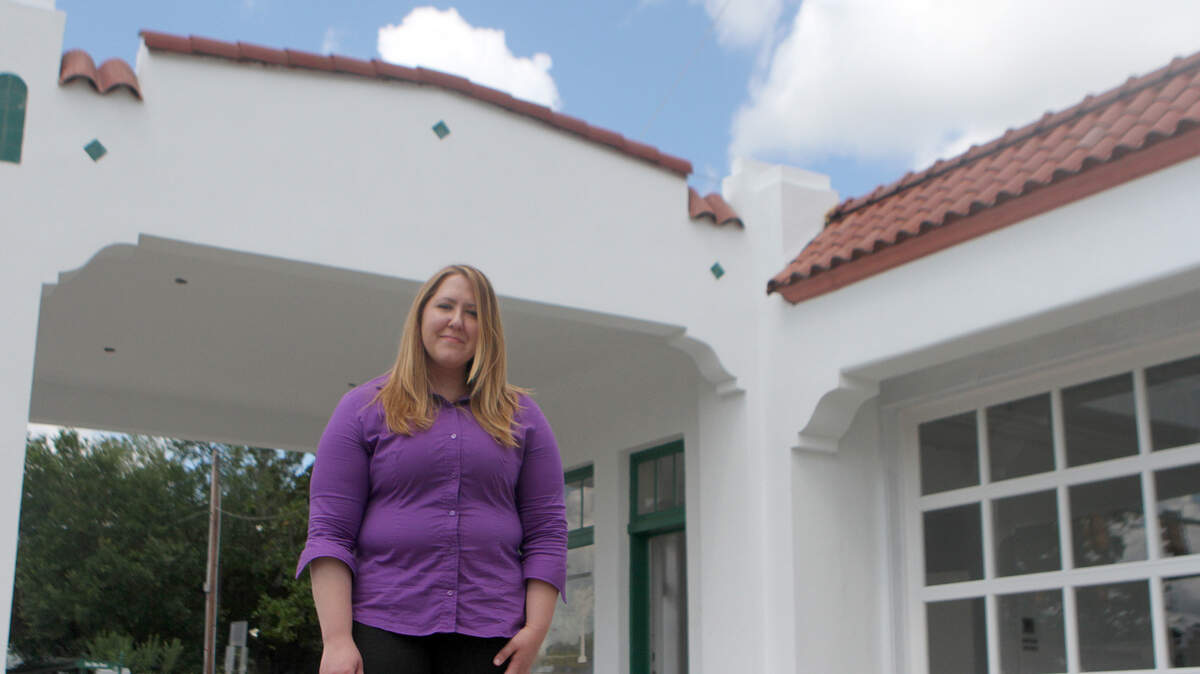
The sound of traffic at one of Ridgeland's main intersections muffled Annmarie Reiley-Kay's voice as she talked about the building in front of her.
A contractor's crew was at work on the town's old Sinclair Service Station, at the corner of Main Street and Jacob Smart Boulevard, busy converting the 1937 building into a museum. The mark of a previous tenant, Palmetto Check Advance, is still visible in the windows.
Organizers plan to open the Morris Center for Lowcountry Heritage this summer in the former station. The project is funded by the trust of Ridgeland businessman Daniel Morris.
Reiley-Kay is its first director and plans to create programming to draw visitors to an area rich in history but all but devoid of a method of interpreting it. Recent efforts in the town have shown a revived interest in preserving the area's history.
Last week, town staff, preservationists and historical advisers held a second public meeting to discuss a plan for the Honey Hill battlefield, a 70-acre site of one of the Confederacy's final victories of the Civil War.
"If you go to the battlefield itself, there's nothing," said Reiley-Kay, who attended the public meeting and hopes to make battlefield tours one of the center's programs. "And that's why this is important."
MORRIS' LEGACY
Daniel Morris owned several businesses in the area, including antique shops and his Handy Dan's convenience stores.
He owned the other buildings on the same block as the new museum, and his trust purchased the Sinclair Station. The first phase of the Morris Center includes the service center, which has been given a new rolling garage door, and the building directly behind it, which will include another exhibition area.
The new door, which opens to U.S. 17/Jacob Smart Boulevard, will be a tribute to transportation that played such a big part of business on the thoroughfare before Interstate 95 was built.
Other phases will include using the nearby tobacco building for a possible artist's space or small business. A small awning has been added to the side of the service station, with plans for a bigger pavilion that could serve as a farmer's market or other gathering place, Reiley-Kay said.
Tillman Grammar School, the former site of Morris' antique business in his native Tillman, is also owned by the trust and is part of its plans. The 1926 building includes original pot-belly stoves.
Morris died of liver failure in 2005 and included in his will plans for the trust.
Reiley-Kay was hired to direct programs for the center after six years at the Earl Scruggs Center in Gastonia, N.C., where she managed artifacts from the bluegrass musician's estate, oversaw operations and maintained traveling exhibits.
She said a positive offshoot of the Morris Center will be to improve the corner and bring some vitality to downtown Ridgeland. But the exhibits will go beyond the town, showcasing surrounding counties with similar pasts.
"It's about educating people here about why it's important," Reiley-Kay said. "It's much more than what you think it is, with the Gullah culture and the rice culture."
Rice dikes created by slave labor are still part of the Honey Hill battlefield the town seeks to showcase.
PRESERVING HONEY HILL
There is little now identifying the site where Union troops, attempting to cut a railroad to support William T. Sherman's march, were turned back by a smaller, better-positioned Confederate force.
A presentation last week included work by preservation firm New South Associates and Columbia-based project manager Natalie Adams Pope. The firm conducted an analysis, which looked at key terrain, fields of fire, cover and concealment, and avenues of approach.
The work included an advisory committee of historians, preservationists and residents.
Among the findings so far are that the Confederate earthworks -- dirt fortifications -- are in good shape, said Doug Bostick, director of the S.C. Battleground Preservation Trust and an adviser to the project. New South Associates has produced three-dimensional renderings of the earthworks.
The core battlefield needs to be cleared of underbrush and invasive plants to restore historic views, Bostick said.
"It's overgrown and not in the best condition currently," Bostick said. "And without on-site interpretation, it's difficult for people to understand what they are seeing."
The presentation Tuesday included plans for a conservation easement, historic zoning, annexing land west of the site and design guidelines for the site and nearby areas.
The interpretation plan includes guided tours, reenactments, signs identifying key strategic points, mobile apps and QR codes.
The Beaufort History Museum and the Morris Center are possible starting points for interpretive tours.
"We want to be part of that process," Reiley-Kay said.
Follow reporter Stephen Fastenau at twitter.com/IPBG_Stephen.
This story was originally published June 6, 2015 at 1:44 PM with the headline "Ridgeland looks to the past to focus on its future."