
Bluffton doctor overcomes memory-destroying sleep disorder
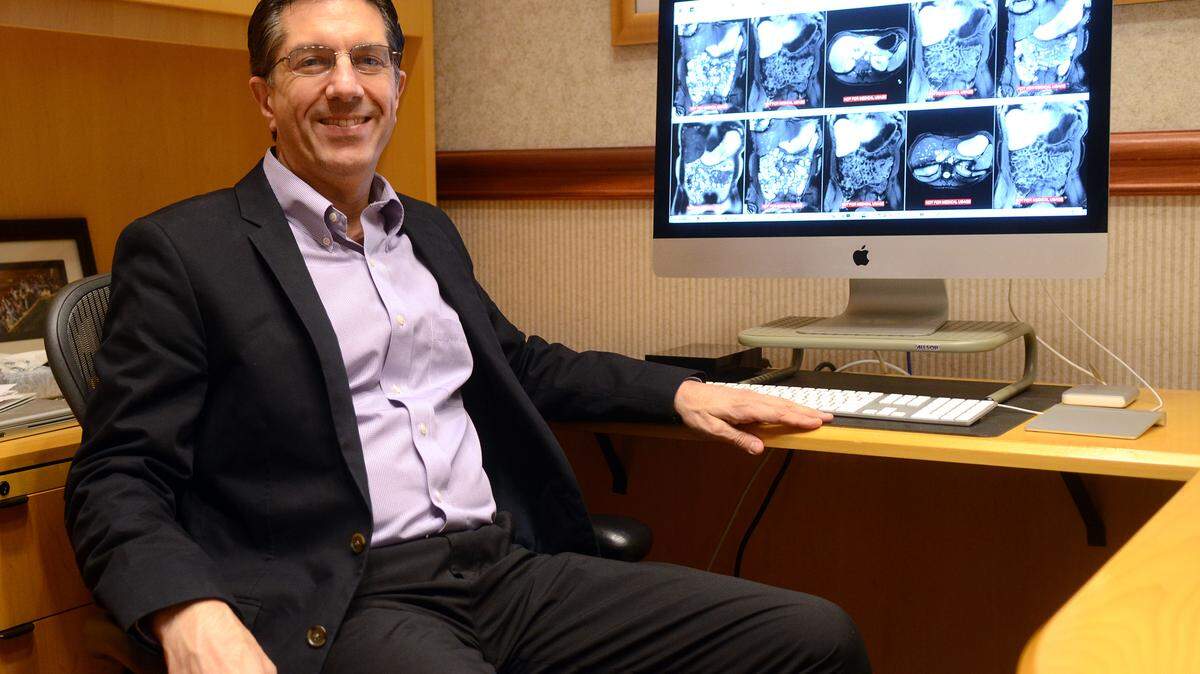
For years, Joseph Borelli couldn't get a good night's sleep.
The president and medical director of 3.0T MRI at Belfair in Bluffton would wake up each morning feeling worse than when he had gone to bed.
"It felt like you got hit by a train when you woke up," he said.
He began to experience fatigue and memory loss. He forgot the names of people, even those he worked with every day.
"That scared me," Borelli said. It was also embarrassing. The doctor started developing the anxiety disorder agoraphobia, in which he avoided going out for fear of running into people he was supposed to recognize. He became depressed.
He went to several sleep studies to try to figure out what was going on, but was told he did not have a sleep disorder. After one such study at a hospital in Savannah, doctors suggested Borelli simply "try, if possible, to get a good night's sleep."
But getting a good night's sleep remained an impossible task.
Finally, Borelli resolved to find the best sleep specialist in the country. He went to Christian Guilleminault, a researcher at Stanford Medical School.
In their first meeting, Borelli said, Guilleminault "looked in my mouth, shook his head and said, 'You've had sleep apnea your entire life.'"
Guilleminault diagnosed Borelli with upper-airway resistance syndrome (UARS), a hard-to-detect disorder in which the airway is partially obstructed during sleep. Much more common is obstructive sleep apnea, in which air flow is completely blocked multiple times during sleep. Both disorders prevent restorative sleep and can lead to chronic fatigue, migraines and depression.
Borelli described UARS as "like breathing through a tiny little straw," all night long. Guilleminault put him on strong CPAP (continuous positive airway pressure) machine therapy, helping him significantly.
About 70 million Americans suffer from serious sleep disorders, according to the National Institutes of Health. The U.S. Centers for Disease Control and Prevention estimates that nearly 10 percent of the population experiences chronic insomnia. The organization is increasingly recognizing sufficient sleep as an essential aspect of health promotion and chronic-disease prevention.
Borelli especially has come to understand the importance of sleep. After his UARS diagnosis, he extensively researched the disorder and now works to help others who have it. He was recently featured in a Discover magazine article about sleep issues.
"This is a very insidious disorder," he said. "It's so slow you don't notice it, until one day it gets so bad that you look back and say, 'I used to feel better, didn't I?'"
A few years ago, Borelli had the idea for a phone app for people with sleep apnea or UARS. He worked with Apple and several makers of CPAP machines to come up with SleepMapper, an app that communicates with the machines to give users feedback and encourage them to use the machines regularly.
The app includes product guides, instructional videos, solutions to common problems like mask leaks and general discomfort, and reminders to clean the mask and wear it for the recommended hours a day.
"Devices today are so much improved from even five years ago. It's a no brainer," Borelli said. "Either it's a no brainer or you're going to lose your brain to this disorder."
Borelli is also working with a patient-powered research network for sleep apnea and spends much of his little free time advocating for greater awareness of sleep disorders.
"I want to help people with this to every extent possible," he said.
Follow reporter Erin Shaw at twitter.com/IPBG_ErinShaw.
Related content:
This story was originally published March 15, 2015 at 6:03 PM.