
Feed company hasn't pulled food linked to St. Helena horse deaths
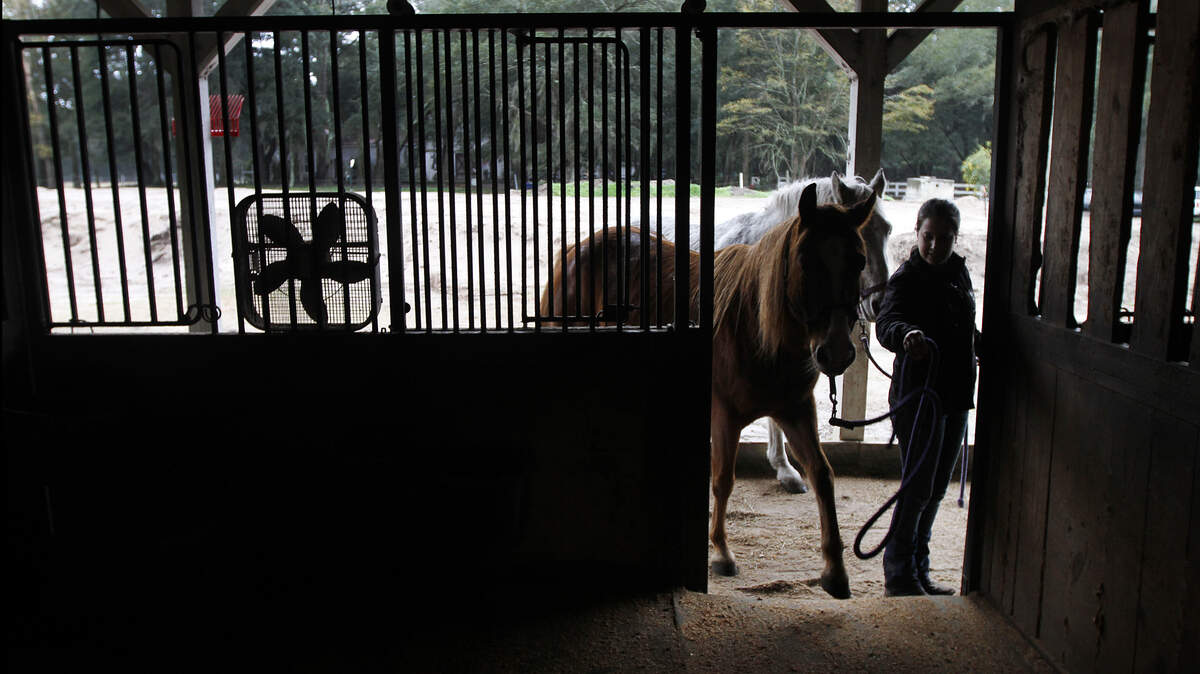
Despite possibly being linked to the deaths of three horses on St. Helena Island, the feed believed to have killed them remains on the shelf.
A spokeswoman for ADM Alliance Nutrition confirmed it produced the feed -- ADM Alliance 12 percent Pellets -- believed to have killed the horses last month at Camelot Farms Equestrian Center. Another horse is seriously ill and will likely be euthanized, farm owner Mark Kennedy said Friday.
The deaths are blamed on a supplement used in cattle feed that is poisonous to horses. A sample of the feed sent to the Diagnostic Center for Population and Animal Health at Michigan State University came back positive for the supplement, called monensin.
The spokeswoman for Chicago-based ADM said the company is working with the farm owners and authorities to "investigate these allegations."
"We have not received any other reports or complaints about monensin in our horse feed," spokeswoman Jackie Anderson said in a statement. She declined further comment, citing an ongoing investigation.
Camelot Farms owners believe the tainted feed came from 70 bags they purchased in late November from G&G Feed & Seed in Beaufort.
The feed was still for sale at the store Friday, according to G&G owner Gene Kirkland. He declined to comment when asked if continuing to sell it meant he might be selling contaminated feed.
Kennedy, the farm owner, said he fed 45 of 48 horses with the tainted feed for two and a half weeks.
Before the animals started dying, Kennedy and his wife, Anne, owned 23 horses and boarded 25 others at their isolated farm five miles from Hunting Island State Park.
On Dec. 14, one boarder's horse and another that belonged to the Kennedys began showing colic symptoms, an indication of a serious digestive problem. With quick treatment, those symptoms can sometimes subside.
But the two horses deteriorated quickly and died within 72 hours.
On Dec. 17, another boarded horse began showing similar symptoms. That horse died two days later.
A fourth horse, Oopsie, is at the University of Georgia's veterinary clinic in Athens. The horse is exhibiting the same symptoms as the others, and the Kennedys fear she will die soon.
"We're going to have to make a horrible decision in the next few days," Anne Kennedy said. "I won't let her stay in pain."
The Kennedys said Friday no other horse at the farm is currently exhibiting the symptoms.
Mark Kennedy has since bought different horse feed.
ONGOING INVESTIGATION
In the wake of the deaths, several groups have visited the Kennedys looking for more information.
The S.C. Department of Agriculture took samples of the feed Thursday, Mark Kennedy said.
Aaron Wood, a spokesman for the department, said the agency wants to test for another deadly toxin, mycotoxin. The agency doesn't have the equipment to test for monensin.
The investigation is being led by the U.S. Food and Drug Administration, Wood said.
FDA spokeswoman Juli Putnam said Friday the agency is "aware of the case and looking into it." She said she did not have additional information.
ADM Alliance representatives also visited the farm before Christmas to collect samples, Mark Kennedy said. No results have been shared with him, he said Friday.
The Camelot Farms deaths are similar to another recent Florida case of contaminated feed and dying horses.
Since October, six horses have died at Masterpiece Equestrian Center in Davie, Fla. Another 16 are sick, and most of them are expected to die.
The deaths are blamed on feed tainted with the same supplement, monensin, according to the Sun Sentinel newspaper.
Late last month, the farm confidentially settled with the feed manufacturer, Lakeland Animal Nutrition, the newspaper reported.
The Lakeland company recalled the product, stopped production and said the feed was contaminated with an ingredient harmful to horses.
After they noticed the parallels, the Kennedys called an attorney for Masterpiece, Andrew Yaffa, to discuss their next step.
Yaffa said Friday he wasn't familiar enough with the Camelot Farms situation to comment on it.
But he did say the Masterpiece case taught him that when a horse eats monensin, it's nearly impossible for the animal to recover.
"It's essentially a death sentence," Yaffa said. "It's not if -- it's when."
'IT DOESN'T TAKE MUCH'
Monensin is an additive used to promote growth in cattle and other livestock.
Every species has a different level at which monensin causes problems, according to Cynthia Gaskill, a veterinary toxicologist at the University of Kentucky.
"For horses, it doesn't take much," she said, adding that even a small amount can permanently weaken their heart.
Gaskill said horses are most commonly exposed when they eat cattle feed or when the supplement is accidentally added to their food.
For example, horse and cow feed might be manufactured at the same mill. In that case, a mixing error or improper cleaning could lead to monensin in horse feed.
Additionally, if cattle feed is left behind when horse-feed production begins, "the first few bags of horse feed can come out highly contaminated and really dangerous," Gaskill said.
That makes monensin hard to detect, since only a few bags in a production line might be tainted, she said.
Mark Kennedy said he hopes that's the case with the 70 bags he purchased.
"If it's something bigger than that, we got a huge problem," he said. "It's the whole production run, and that's a disaster."
Follow reporter Dan Burley on Twitter at twitter.com/IPBG_Dan.
Related content:
This story was originally published January 2, 2015 at 9:37 PM with the headline "Feed company hasn't pulled food linked to St. Helena horse deaths."