Development has St. Helena residents worried. ‘We don’t want to become another Hilton Head’
A developer is proposing to build a gated housing community and luxury golf course on the nearly 500-acre Pine Island Plantation and St. Helenaville — one of the “prettiest” and last large undeveloped properties on St. Helena Island.
The project is facing opposition from residents and the Penn Center, the former school for freed slaves that today shares and works to preserve the history of African Americans in South Carolina. The Coastal Conservation League (CCL) and Gullah/Geechee Sea Island Coalition also are against the plan.
The groups consider the project a threat to the area’s environment, history and rural character.
“We don’t want to become another Hilton head, Charleston, Beaufort, New York,” said Albert Brown, a Penn Center board member, noting the board recently voted to oppose the project.
Beaufort County spokesman Chris Ophardt said Friday the development, as proposed, could not move forward because it falls in a Cultural Protection Overlay (CPO) that provides extra protections for St. Helena Island. The CPO does not allow golf courses or gated communities.
Even higher densities of housing than what’s being proposed, however, Ophardt said, could be constructed in the overlay if the project was not gated and did not include a golf course.
Opponents don’t want to see any development on the property.
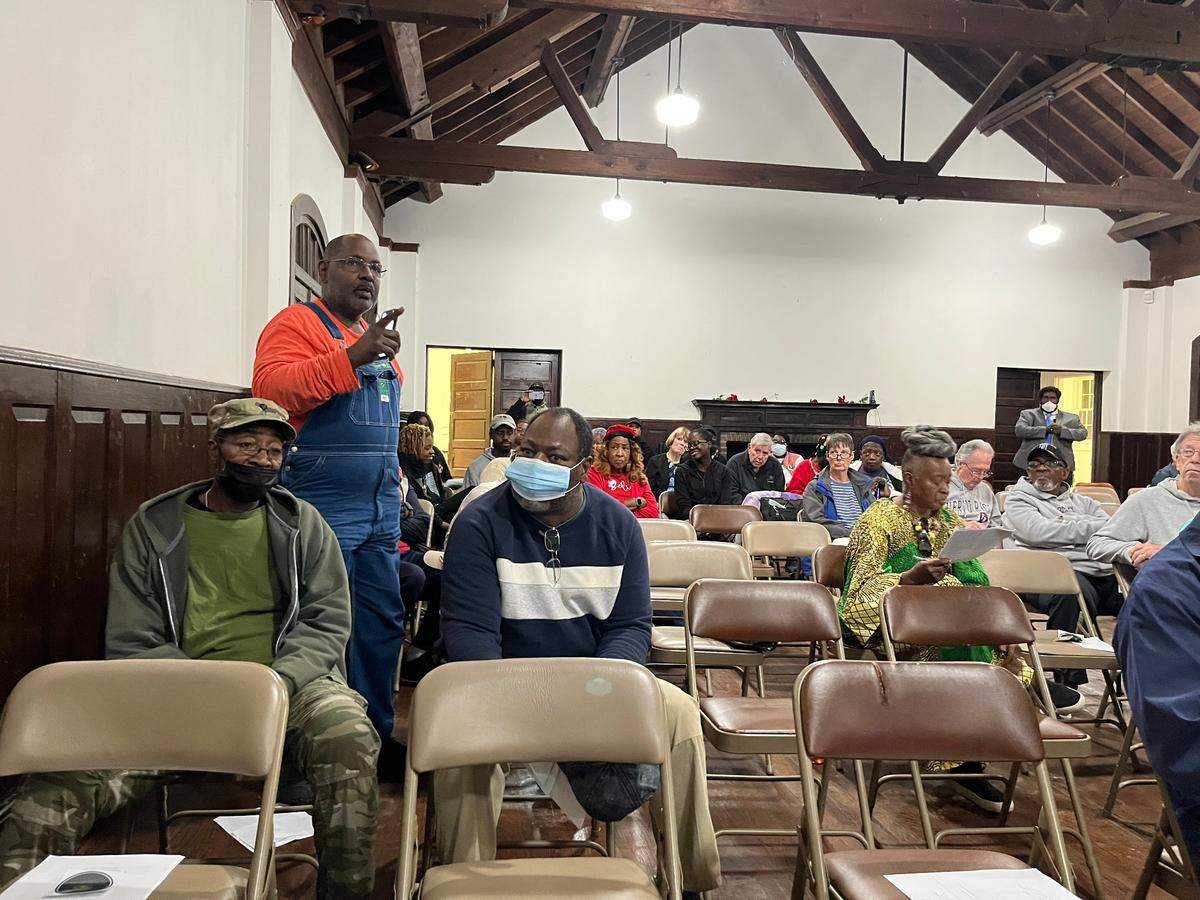
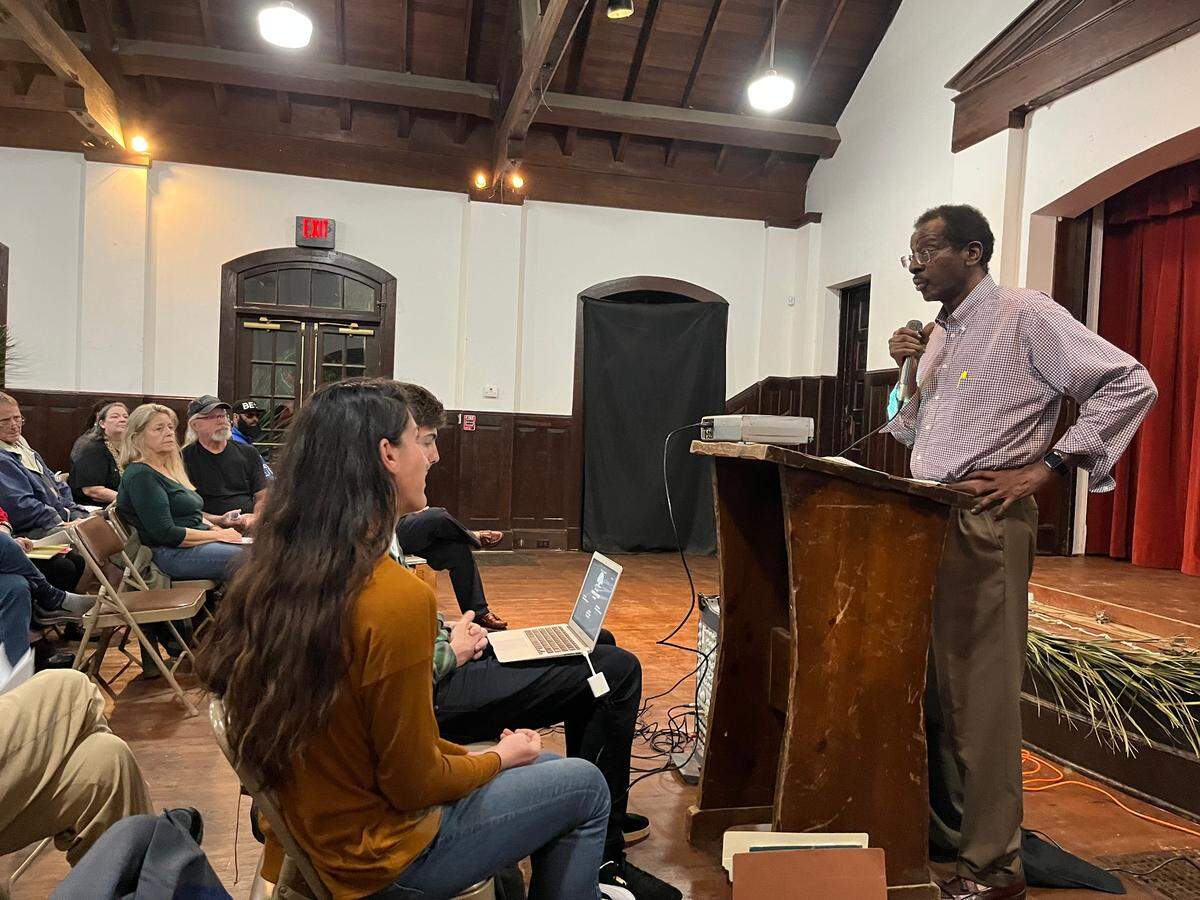
A meeting Thursday night at Penn Center, called by Penn Center and the Coastal Conservation League to inform residents about the proposal, drew 85 people with many speaking against the project and a few submitting written comments in support. Petitions also are circulating in opposition to the project.
Details of the project are sketchy. Developer Elvio Tropeano, of Boston, was not at the meeting and could not be reached for comment Friday.
CCL says the plans call for 66 homes, shared residences and cottage-like structures for guests, in addition to 10 docks and a museum to showcase archaeological findings.
A 9-hole golf course also is proposed, in addition to a public dock, the Beaufort Gazette and Island Packet has learned.
Pat Harvey-Palmer, a real estate broker who lives in neighboring Dulamo neighborhood, says the Pine Island/St. Helenaville property is “one of the prettiest pieces of land on St. Helena left to be developed.”
Harvey-Palmer is not opposed to the project but she’d like to see more details. Development is bound to happen sooner or later, she said, and it would be worse if a large developer came in planning a much larger and denser housing plan.
The problem, Harvey-Palmer said, is rumors are flying around about the specifics and the public needs more information.
“I think we all would like to know exactly what the plan is,” Harvey-Palmer said.
The entire Pine Island Plantation property totals 498 acres on the northeastern end of St. Helena Island facing St. Helena Sound on the Morgan River. It’s accessed off of Dulamo and St. Helenaville roads north of Highway 21.
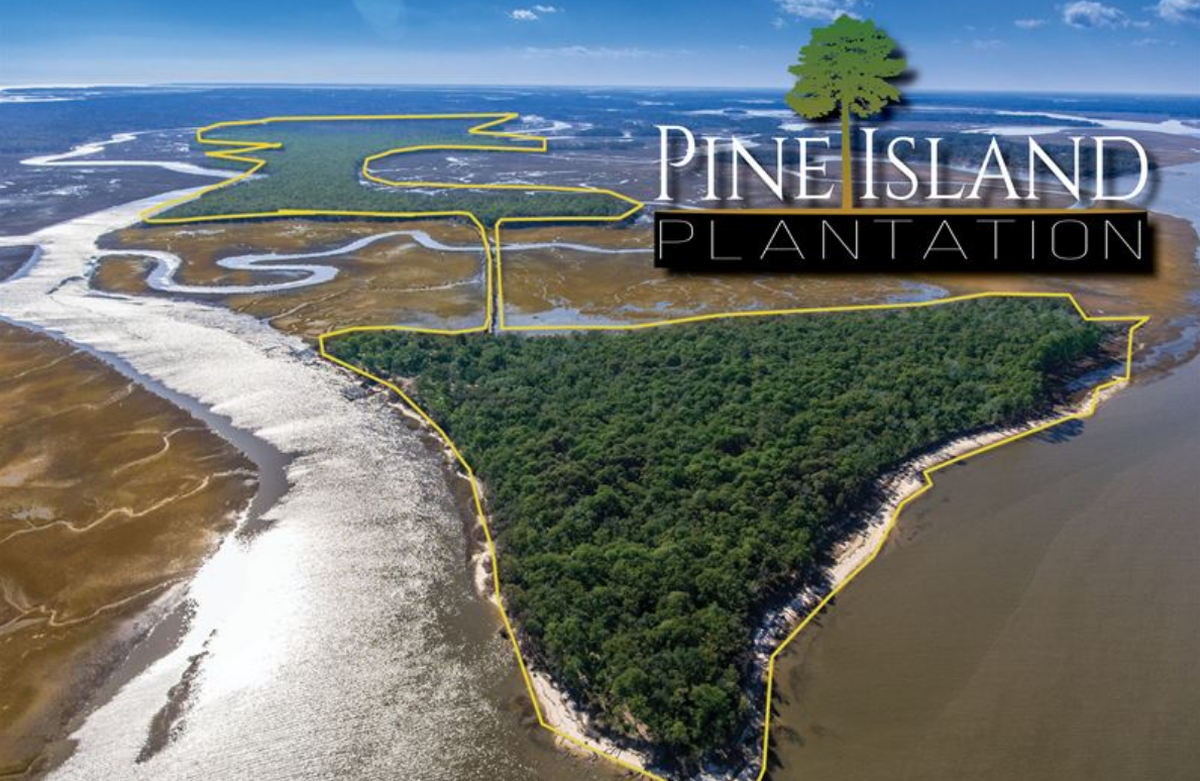
Victoria Smalls, a Gullah/Geechee native of St. Helena Island who is executive director of the Gullah/Geechee Cultural Heritage Corridor Commission, recently visited the site, calling the property “profound.”
It includes Pine Island, a 77-acre island, and a larger property known as St. Helenaville, which are connected by a causeway. St. Helenaville was once a small antebellum village and summer retreat for plantation owners. Pine Island was a hunting plantation. Owned by the Hannah family, it’s been managed as farmland and a family retreat for some 50 years, but now is for sale.
In October, 2021, developer Tropeano, backed by an unnamed financial partner, signed an option to purchase the land for $21 million, CCL says.
Ophardt, the county spokesman, confirmed that Pine Island GC, LLC has applied for a zoning map amendment for a development project off of St. Helenaville Road.
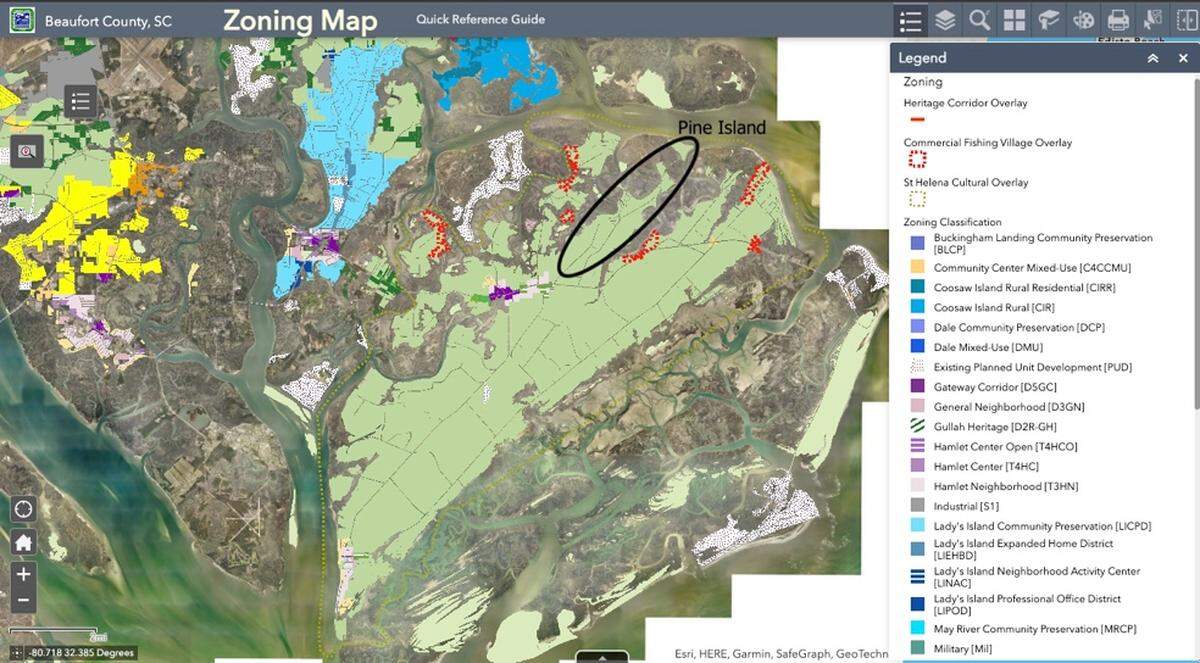
The Planning Commission, which meets on Jan. 5, will not be taking action on the developer’s request for a zoning map amendment, Ophardt said, but it may consider text updates to the overlay ordinance to clarify some of the language.
The thought of a golf course being built on the property, says Jessie White, who heads CCL’s South Coast office in Beaufort, “sends chills down my spine.”
“The layers to which this proposal is concerning are limitless,” White said.
The intent of the overlay protections, the CCL says, is to prevent gentrification and the loss of the land and culture of the Gullah/Geechee, the descendants of West and Central Africans who were enslaved and brought to the lower Atlantic states to work on the coastal rice, Sea Island cotton and indigo plantations.
“We need to march on this issue,” said Marquetta Goodwine, known as Queen Quet, who heads the Gullah/Geechee Sea Island Coalition, an advocacy organization for Gullah/Geechee culture.
A petition by the Gullah/Geechee Sea Island Coalition says one of the reasons St. Helena Island has kept its culture and remained rural, avoiding an “onslaught” of resorts and golf courses, is because local Gullah/Geechee residents fought for the CPO zoning.
The proposal, CCL’s White said, comes as Beaufort County has created a committee to study the CPO and possibly strengthen it. If an exception to the overlay is OK’d in this instance, White predicted, it will lead to additional exceptions that will threaten working farms and increase property values and taxes.
“It is a very, very serious threat,” White said, “because it has real implications and the potential to have ripple effects throughout the whole island.”
Both the Pine Island and St. Helenaville properties are listed on the National Register of Historic Places for their archaeological and historical significance.
St. Helenaville was most active during late spring and summer when most plantation owners moved their families to their summer cottages. White said one photo taken at St. Heenaville shows Penn Center co-founder Laura Towne, who apparently spent time at the site, with some of her students.
Pine Island Plantation is significant as a collection of historic properties that make up an intact example of an early 20th century hunting plantation, the Historic Register said, which were generally owned by wealthy businessmen and professionals. The main house at Pine Island was built ca. 1904 by Thomas Lee of Westport, New York, it says.
CCL’s Grant McClure says artifacts from indigenous peoples also have been found on the properties.
Opponents of the project also are not pleased with the timing of the request during the holidays, with CCL’s White calling it, “Intentionally terrible.”
This story was originally published December 17, 2022 at 5:00 AM.