SC bill could hurt small businesses, cost Beaufort Co. governments millions. Why?
A new business license tax bill that South Carolina legislators will consider in the session that begins Tuesday could leave a multimillion-dollar hole in local government budgets, according to officials in Beaufort County. Local leaders blame major lobbying efforts by the S.C. Chamber of Commerce on behalf of big businesses, which stand to benefit from the changes.
HB 4431 would standardize how municipalities calculate business license taxes — a function that accounts for 12% of Bluffton’s $33 million budget, 18% of Port Royal’s $6.6 million budget, 22% of Beaufort’s $17.8 million budget and 24% of Hilton Head Island’s $79 million budget.
It would cut the amount of license taxes businesses pay, basing the fees on net income rather than gross revenue. Town of Hilton Head Island assistant town manager Josh Gruber said bigger businesses could work with an accountant to adjust their profits and expenses to create a smaller net revenue and pay less license taxes.
“That’s the concern we have with this kind of accounting: that people are going to play games with it,” he said Tuesday at the town finance committee meeting. “Small businesses can’t afford to go to a CPA for that creative type of accounting.”
The bill would allow state lawmakers to say they cut taxes while requiring municipalities to live with the reduction in revenue — or increase the tax rate used to assess businesses.
“If they want to say they cut taxes, business licenses are kind of the low-hanging fruit,” Gruber said. “It’s an election year.”
Ted Pitts, the president and CEO of the state chamber, said Friday that local officials are misunderstanding the bill. He said the bill would help small business owners who work across municipal lines and have to have several different licenses with varying expiration dates.
“The reason we’re working on it is because our small business council approached us about solving this problem,” he said. “This is about the small landscaper who works across counties and needs to go to every town hall (for a business license). What we’re trying to do is simplify that process and create a central standard system.”
The bill, sponsored by Rep. Wallace Jordan, a Florence Republican, has 18 co-sponsors but is still being debated in House committees and has not been introduced in the Senate.
The 2020 legislative session, the second year of a two-year legislative term, begins at noon Tuesday. If the bill does not pass both the House and Senate by the end of the 2020 session, it will effectively be dead.
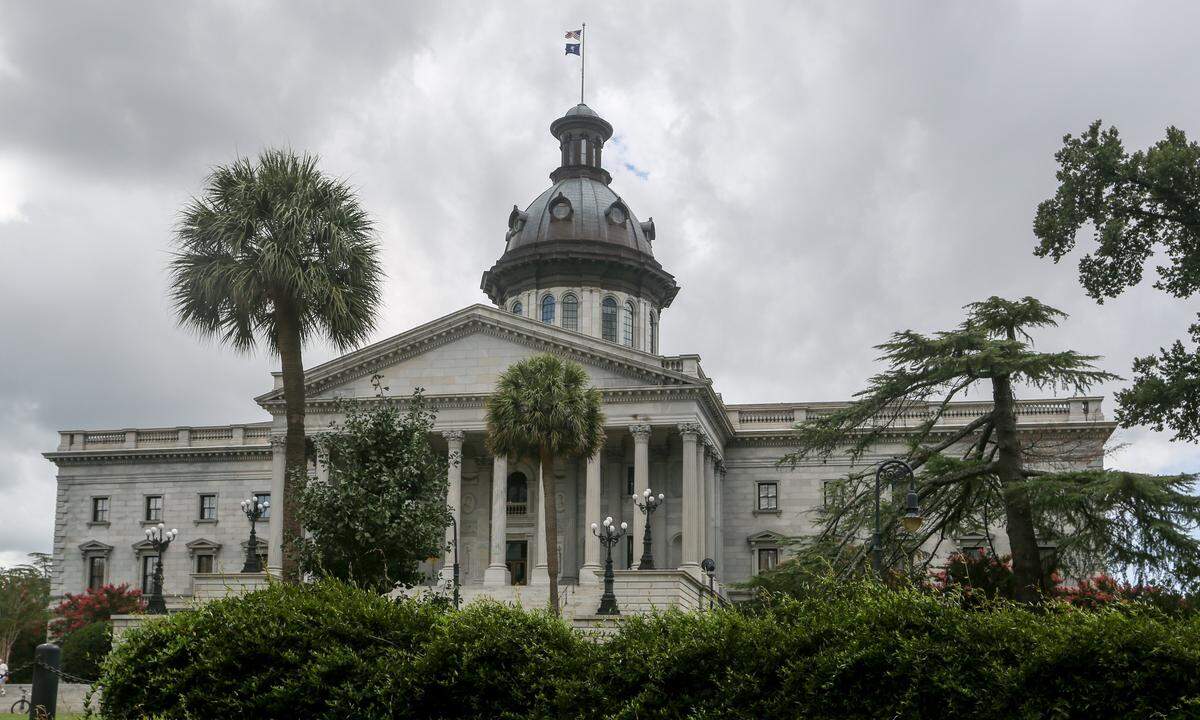
Less power for local governments?
Local leaders say the bill also would reduce their ability to raise money.
The legislation is an example of how, “little by little, state government is diminishing and rendering less effective our authorities and powers,” said Hilton Head Island Town Council member Tom Lennox at an October town council meeting.
He referenced the Home Rule Act of 1975, which gave local governments some independent authority in taxing powers, appointments and land use.
“Prior to home rule in South Carolina, the General Assembly exercised nearly total control over local governments,” according to the South Carolina law encyclopedia.
Whether the bill would decimate local budgets remains to be seen, since businesses are taxed differently according to category and municipality.
Hilton Head, for example, has 37 different classes of business tax classifications. Bluffton has 22, and Beaufort has eight.
Local officials, including Hilton Head Mayor John McCann and Bluffton Mayor Lisa Sulka, sent a letter in late 2019 to mayors across the state to encourage them to oppose the state bill.
Asked Tuesday why the legislature is considering the bill, Gruber said high-profile lobbying efforts by the state Chamber of Commerce explain the bill differently to state representatives.
The chamber has identified lowering taxes for businesses as one of its four main objectives for 2020, and has three dedicated lobbyists registered with the State Ethics Commission: Katherine Philpott, Cynthia Bennett and Sarah Cohen.
Pitts said the chamber’s focus is tax reform for businesses.
Although business license taxes could be manipulated by what Gruber called “creative accounting” for big businesses, Hilton Head town council member Bill Harkins said the people most likely to be hurt by the bill are citizens and small businesses.
Pitts denied that creative accounting would help protect bigger businesses from increased taxes.
“If companies are using creative accounting, they’re already using that with the federal and the state governments with income taxes,” he said. “We want to make it easier for small businesses to comply... with an online portal.”
‘Nowhere else to go’
Under the proposed model, most businesses would pay reduced license taxes because they would be calculated based on the amount left after yearly expenses are subtracted from yearly profit.
Kathy Todd, finance director for the City of Beaufort, said in October that the bill would “significantly impact” the city’s operations and general revenues.
“We’ll have to cut services because there’s nowhere else to go,” she said Thursday.
Local governments reported the following amounts for business license tax revenue in the most recent fiscal year:
Town of Port Royal: $1.2 million
Town of Bluffton: $1.9 million
- City of Beaufort: $4 million
- Town of Hilton Head Island: $10.3 million
On Hilton Head, that may mean the council has to increase property taxes.
“If our revenue goes down substantially, we will have to raise property taxes,” Gruber said Tuesday. “But we run into the restrictions of Act 388 and how much you can raise property taxes.”
Act 388 is a 2006 state law that limits how much local governments can raise property taxes, The Island Packet has previously reported.
S.C. Sen. Tom Davis, who represents Hilton Head, Bluffton, parts of Hardeeville and Beaufort, said he supports the bill because license taxes would be more equitable across different types of businesses.
Asked in October about changes in municipalities’ revenue, Davis said the bill also allows local governments to change the percentage at which they can assess business license taxes.
That means that municipalities could increase the tax rate to make up for a deficit in their budgets, but Davis acknowledged that many local leaders shy away from raising taxes.
This story was originally published January 10, 2020 at 4:30 AM.