
February: The month gardeners are in control
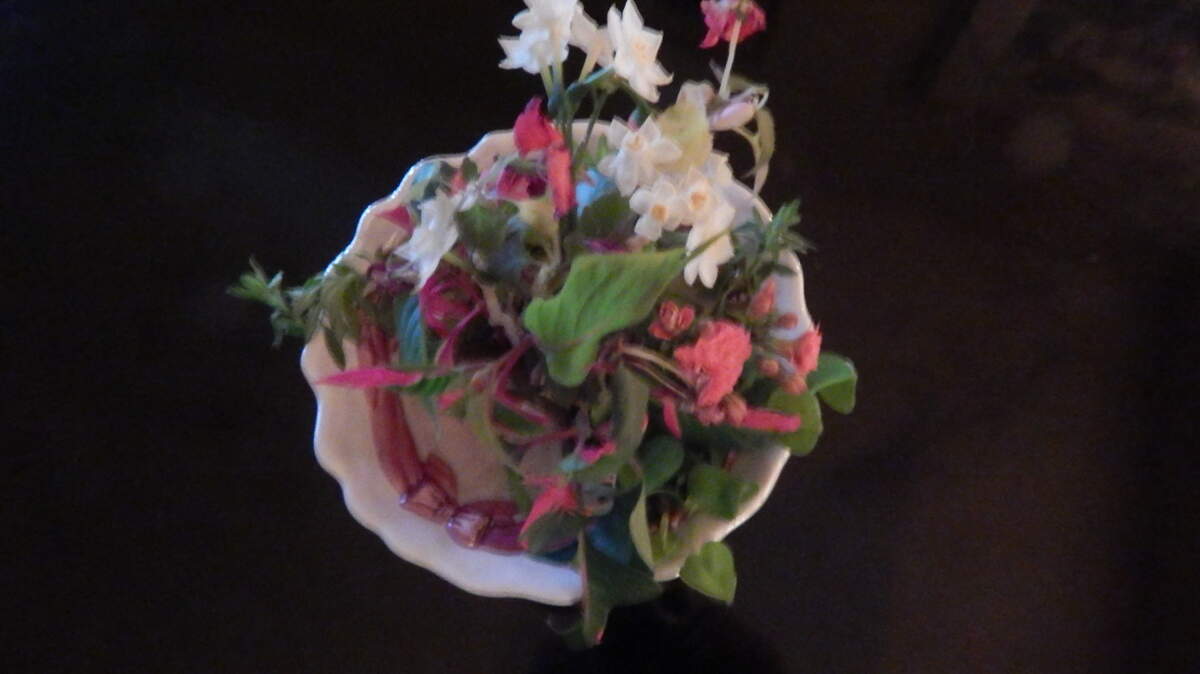
February is my favorite month to garden because I'm not fighting dry spells, insect or disease infestation.
I'm in control.
It's no surprise there are more than fifty plants in my house and small greenhouse. Excepting orchids and other tropical wonders, most are the small plants that will grace outdoor garden beds come spring. They were taken as cuttings from last summer's plants that, in turn, were taken from plants of the previous summer.
I have a good view of what's going on in the greenhouse through the kitchen window. There are nine orchid plants budding up, countless coleus plants, pepper both decorative and edible, seven bonsai plants, hanging baskets of impatiens, geraniums pulled out of the cold, croton trees, "purple shield" plants as well as several mystery plants whose labels have been lost.
One rainy day last week, I counted the potted plants. There are more than fifty. While you might think care and feeding takes a lot of time, it doesn't. In fact, many house plants don't like to be fussed over. As to feeding, flowering plants should be fed about three times a year. Evergreen plants should only be fed once a year. More than that and you'll be growing a tree.
Watering should always be done with room temperature water since cold water can destroy the ability of root cells to take in water and nutrients. On the day before I plan to water plants, I fill my watering cans.
NEW VARIETIES
At a recent meeting of the Callawassi Garden Club I was asked to explain the flowering schedule of our Southern hydrangeas.
Oh my, I thought, I'd hoped hydrangeas would not come up.
With new varieties on the scene, it's tempting to say they're everblooming and try to walk away. Actually, garden experts call it "continuous bloom" or, in the case of bigleaf hydrangeas, "rebloom". Longtime gardeners such as I may have difficulty adapting to modern plant schedules.
Is there a plant variety on the market today that is not a new variety of an old favorite? It would be hard to find one.
You may be seduced, as was I, by Diamond Delight, a new euphorbia that's a mound of white flowers that tolerate drought. There's also a knockout sunflower called candy mountain that grows 8 to 10 feet tall with flowers of burgundy on white. Then there's clematis recta -- "serious Black" -- with black foliage and white flowers. How dramatic is that? There is also the drought tolerant, resistant to deer gaura 'intermountain beauty', and a variegated lavender 'merlo' that Southern Living Plant Collection calls "the most drought and heat tolerant of the lavender species."
Called "a just right" crapemyrtle, "delta jazz" is not too big and not too small. It's a mid-size tree. It has purplish foliage and deep pink flowers. "Red rooster" has deep red flowers while ebony has dark leaves with white flowers.
The most widely recommended U.S. National Arboretum crapemyrtle introduction is the white flowered "acoma." Wayside Gardeners and Woodlanders have it or you could simply ask at your local garden center.
NEED HELP?
The Lowcountry Master Gardeners Association offers an unique service in their Rent A Master Gardner Program to assist homeowners with gardening in the Lowcountry -- a visit from a team of Master Gardeners to offer advice and assistance.
In Beaufort, call Martha Jamison (843) 986-5965.
In Bluffton, call Gail Havens (843) 368-4851.
On Hilton Head Island, call Corinne Roe (843) 400-2231.
SPRING SALE
The Hilton Head Island Herb Society will hold their Annual Spring Sale from 10 a.m. to 1 p.m. on March 28 at Pineland Station on Hilton Head.
Sixty-year master gardener and environmentalist Betsy Jukofsky has spent three decades on Hilton Head Island learning the peculiarities of Coastal Lowcountry gardening.
This story was originally published February 9, 2015 at 8:59 AM with the headline "February: The month gardeners are in control."