
Curious event happens to fairy lilies during thunderstorms
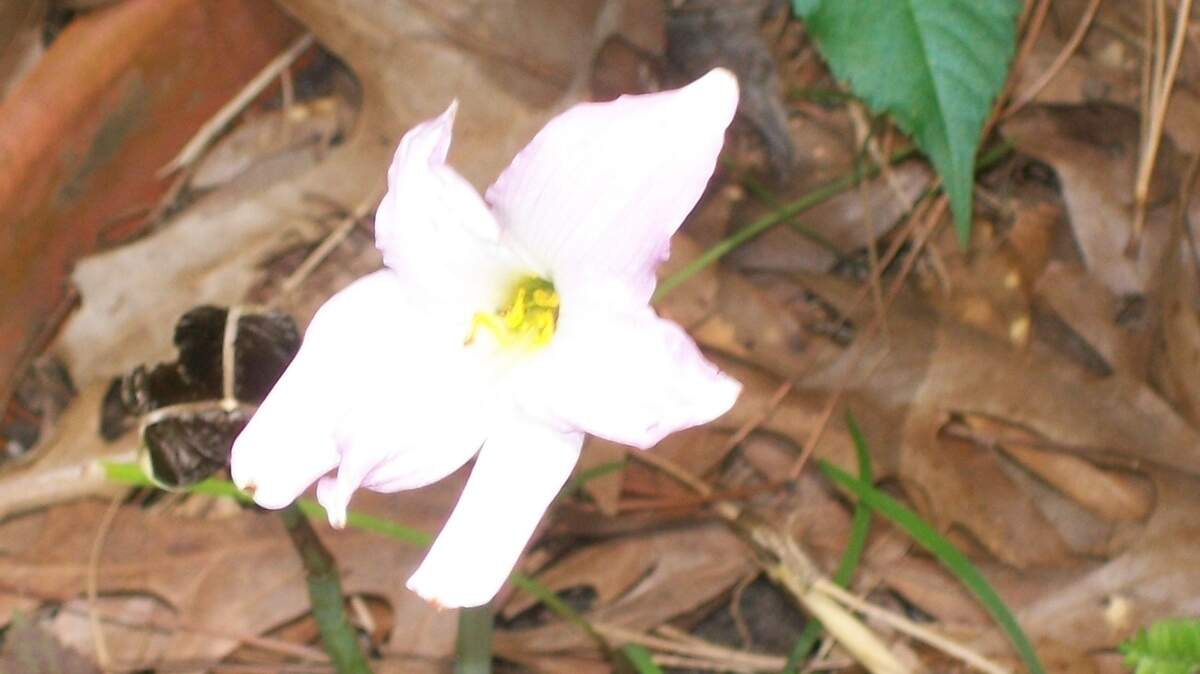
When there's something going on in my garden that's not gone on before, I want to know what's happening and why. It's during these times that I turn to an expert grower who will be sure to have some answers.
Last week found me on the phone with a super smart lady grower of flowering bulbs. That would be Becky of Brent and Becky's Bulbs in Virginia. My problem was not a problem -- rather, a curious and exciting happening. The dozen or so fairy lilies I purchased from them and planted 15 years ago have multiplied to more than 60 pink flowers with no foliage, and can be found throughout the front yard and are continuing on to the west side. Plus this oddity: They began to flower in May and are still at it.
"The genus Zephyranthes, called fairy or rain lily, will normally react when there are thunderstorms. When there is crashing thunder and rain, it does something to them that promotes flowering three weeks afterward," Becky said. "They even know the difference between rain and water from the hose.
"Plants talk to you. We humans aren't quiet very often or we'd hear them. Plants are like humans who are put on Earth to procreate if they feel threatened. They feel the need to make more and better plants and more seeds. This past freezing winter could happen again."
The pink tidal wave of rain lilies in my yard are of the genus rosea. They are native to Texas, Mexico, Colombia and Guatemala. The bulbs are pest proof, not picky about soil and can grow in full- or part-time sun. I likely fed them when first planted; they've had nothing added since, except shredded oak leaves after they've quieted down.
If you wish to order fairy lilies, Becky advises to place your orders beginning Jan. 10. In Brent and Becky's fall 2014 catalog, there is a page of pre-cooled varieties of daffodil bulbs for Southern gardens.
The other showpieces in my yard right now are blood lilies and six-swamp hibiscus from a Georgia swamp. These are native from Georgia to Louisiana. They grow 5 to 7 feet tall, have 6-inch brilliant scarlet flowers and are traffic stoppers. The rounded seed pods are highly decorative and hang on until winter.
To my readers who are serious gardeners: In all of my reading, searching and looking up, this stands out -- when the plant information says that the plant flowers in late summer or fall, usually it doesn't. It begins to bloom in early summer in the Lowcountry.
Sixty-year master gardener and environmentalist Betsy Jukofsky has spent three decades on Hilton Head Island learning the peculiarities of Coastal Lowcountry gardening.
RELATED CONTENT
- So you have a few questions about chrysanthemums ...
- Make your Lowcountry gardening life easier with plethora of native plants
- Month of May brings more Lowcountry garden questions
This story was originally published July 19, 2014 at 4:00 PM with the headline "Curious event happens to fairy lilies during thunderstorms."