
'Historic Trees for Historic Places' aims to celebrate existence of trees native to South Carolina
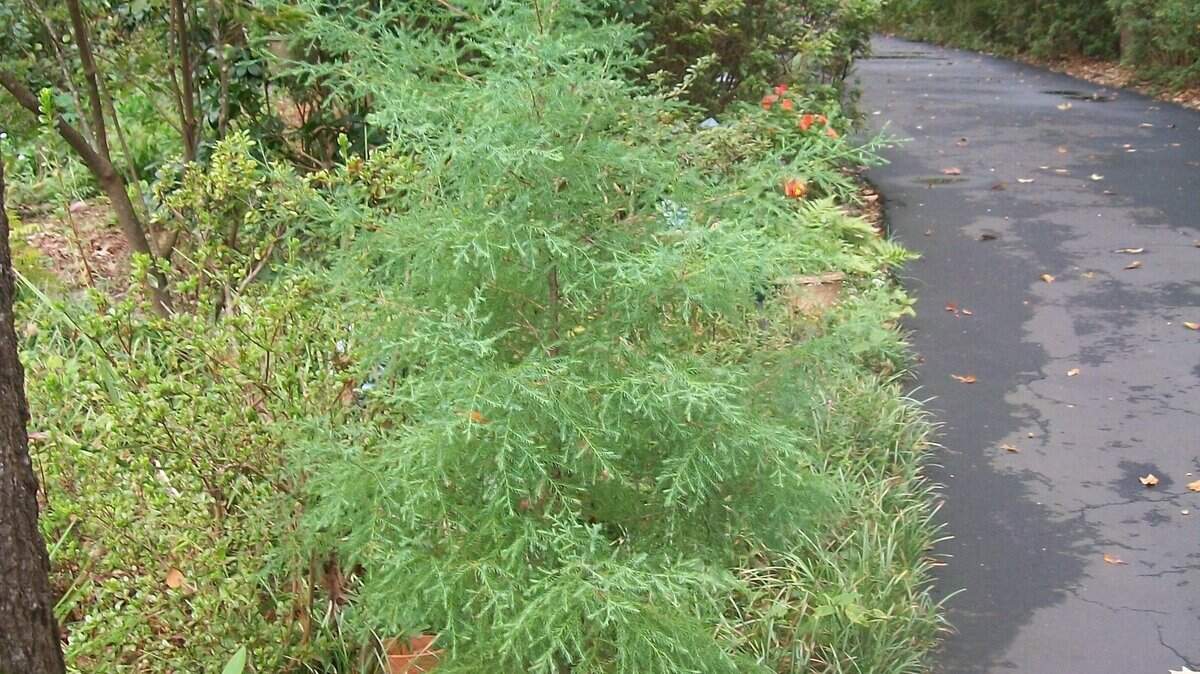
November and December are prime tree-planting time in the lower South, where we celebrate our native forests by adding trees to our yards, where they were once prolific.
Over the years, unprotected forest land has become buildings or roads; and many of our native trees have been destroyed by hungry animals or used as ingredients in various manufactured products.
If, like me, you're hung up on trees, you might have noticed the many indigenous trees that have been destroyed by man-driven mowers. In fact, trees I used to love on two local golf courses just disappeared. They were injured to death, and then cut down. They included the seldom seem loblolly bay, the golden rain tree and the toothache tree. A favorite stand of persimmon trees growing at the edge of a par three wetland were fun to pick while waiting to tee off. They ripened slowly, from sour to a sweet treat. These trees disappeared, too, perhaps a golf course maintenance man deemed them messy.
You'll now understand why I'm excited to share with you the news that the Garden Club of South Carolina has announced a statewide project, "Historic Trees for Historic Places." President of the club Judith Dill said in her message to members: "We inherit our past to plant trees and wildflowers, preserve our historic landscapes and conserve our natural resources."
Jane Pearman, chairwoman of Historic Trees for Historic Places, described its goals as the identification of historic trees across South Carolina, to plant historic trees in historic places and to celebrate their existence. Garden clubs throughout the state will be able to submit their historic tree choices by visiting the Garden Club of South Carolina website at www.gardenclubofsc.org.
With the Southern Arbor Day celebration coming up on Dec. 6, I was excited to go over the listing of candidate trees with Pearman. I dismissed those trees not indigenous to our coastal hardiness zone and concentrated on those that are.
We did not know we were being "historic" the past two years when our Arbor Day choice of trees was the fringe tree, Grancy Gray Beard, and the loblolly bay. They are on the list, along with surprises like sycamore, white pine and Yaupon holly. Gadzooks! I've got Yaupon coming up all over my yard.
Decisions. Decisions. Just when I was trying to decide between a Hercules Club, a prickly ash with large thorns that has almost disappeared from our landscape, and a Southern red cedar, an important tree of our forests until all those cedar closets became a must have, I got a break. The red cedar was declared an endangered and threatened tree.
An environmentalist's dream, plus a perfect place to plant it. That would be Fort Howell, a National Historic Monument on Hilton Head Island. It's looking like Arbor Day 2013 will indeed be a historic celebration.
Sixty-year master gardener and environmentalist Betsy Jukofsky has spent three decades on Hilton Head Island learning the peculiarities of Coastal Lowcountry gardening.
RELATED CONTENT
"A look back at Hilton Head's past sheds light on how its beauty was protected"
"Getting answers on growing herbs in the Lowcountry"
This story was originally published October 27, 2013 at 12:01 AM with the headline "'Historic Trees for Historic Places' aims to celebrate existence of trees native to South Carolina."