
Are woolly bear caterpillars the groundhogs of fall? / Natural Lowcountry
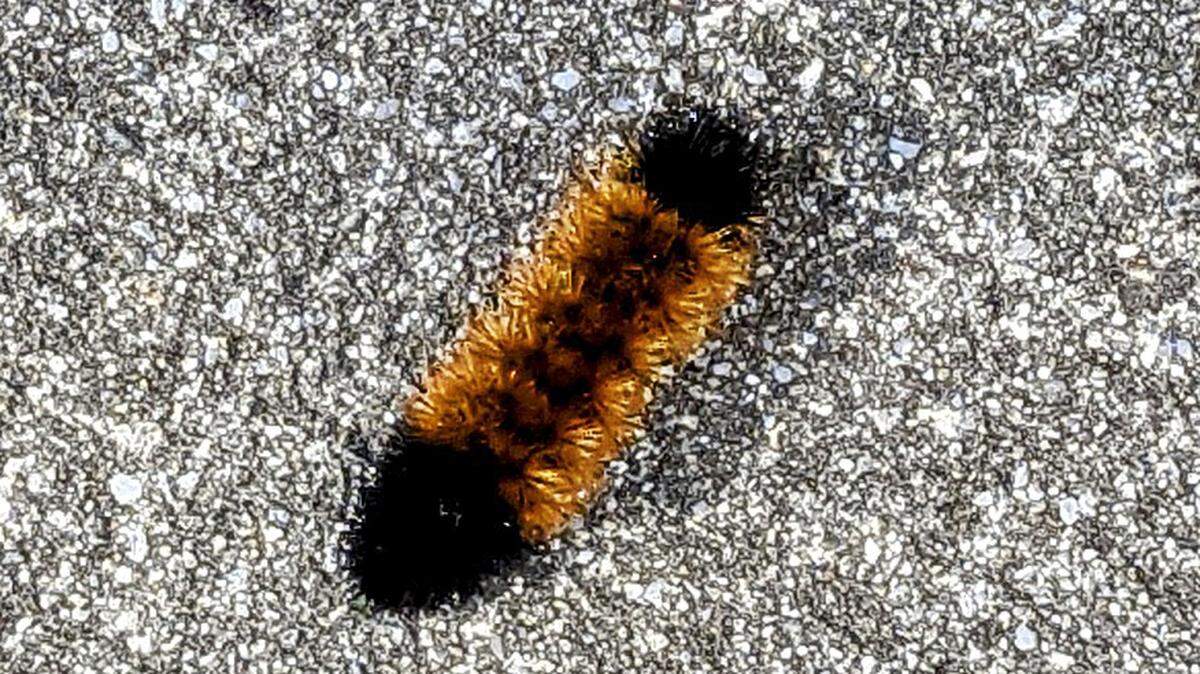
Banded woolly bears, or woolly worms, are those fuzzy, brown and black caterpillars often seen in late fall wandering across roads, sidewalks and driveways.
They’re the larvae of the Isabella tiger moth (Pyrrharctia isabella), a yellowish-tan moth found throughout much of the U.S., including the Lowcountry.
When fully grown, woolly bears are an inch or so long with a dense covering of stiff hairs. The mid-section of their stocky body is orange-brown, and the front and posterior ends are banded with black.
According to folklore, “band width” in woolly bears predicts the severity of the coming winter. If the caterpillar’s middle brown section is wide relative to the black ends, winter will be mild. If the brown band is narrow, the weather will be severe.
In a further elaboration of this myth, if the black band is wider at the caterpillar’s head end than at its “tail,” then the beginning of winter will be particularly harsh. Even the woolly bear’s 13 body segments are supposed to correlate with the weather of each successive week of winter.
In reality, there’s no solid scientific evidence that woolly bear color patterns can predict future weather. In fact, band widths and slight differences in color vary from one individual to another, and they also change as a caterpillar ages.
When I was very young, though, I found the myths about woolly bears as appealing as the fuzzy caterpillars themselves.
Woolly bears don’t bite, and (unlike some other bristly caterpillars) they don’t inject venom from their hairs. If you cradle one gently in your hands (as we did when we were children), it will “play possum” and roll itself into a ball. Just exercise caution if you have over-sensitive skin, as some people can develop a mild rash from handling them.
The caterpillars feed on the leaves of a wide variety of common plants, including goldenrods, asters, clovers, plantains and dandelions. In most parts of their range, there are two generations per year.
The meandering woolly bears we see in the fall are members of the second generation, searching for winter hibernation spots. They’ll spend the cooler months resting motionless under plant debris with their basic bodily functions virtually shut down.
Studies have shown that woolly bears produce anti-freeze-like chemicals that protect their tissues from damage by ice crystals during deep freezes.
Once spring arrives, the caterpillars thaw out, feed for a while, then pupate within hairy cocoons. After a month or so, they emerge as adult moths, mate, and die a few days later.
The woolly bears arising from this second brood won’t mature into moths till the following spring, after hibernation.
Although woolly bears aren’t accurate weather forecasters, they’re still familiar harbingers of winter. And they’re engaging enough to have inspired local celebrations in their honor. These include annual festivals in Banner Elk, North Carolina, and Vermilion, Ohio.