
Natural Lowcountry / See the orange butterflies, fall’s perfect accent, before they fly away
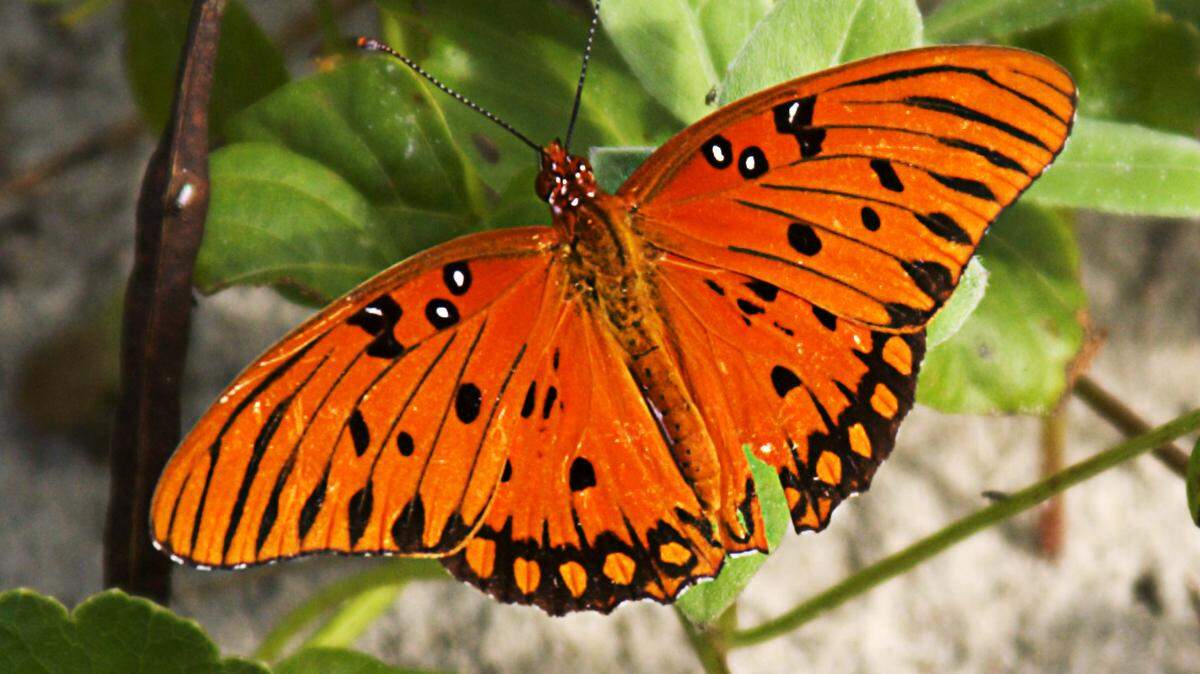
Fall in the Lowcountry is full of orange butterflies.
Many are Gulf Fritillaries (Agraulis vanillae), medium-sized butterflies with narrow wings and a graceful, gliding flight. Their color pattern is distinctive: bright orange with black markings on the upper surface of the wings and three black-rimmed, white spots on each forewing. Underneath, the wings are brownish with large silvery patches.
Gulf Fritillaries are found throughout the southern U.S., southward to Central America, Mexico and South America. They’re common in fields and gardens, sipping nectar from lantana, verbena and other flowers.
The spiny orange caterpillars feed on passionflower vines, including maypop (Passiflora incarnata). These plants contain toxic alkaloids that Gulf Fritillaries not only tolerate but sequester in their bodies through adulthood. The toxins make both the caterpillars and adults unpalatable to birds and other predators.
Gulf Fritillaries can survive cool weather for short periods, and on warmer days in late fall or even early winter, you might spot a butterfly or two. But they can’t tolerate freezing temperatures, and most eventually fly southward to overwinter in southern Florida.
Even more famous for migratory behavior are Monarchs (Danaus plexippus), often confused with Gulf Fritillaries. But Monarchs are bigger, with a network of thick, black veins on their orange wings. Along the edges of the wings are rows of white dots.
Monarchs occur throughout most of the U.S., as well as southern Canada, Bermuda, Australia, the Galapagos and other parts of the world.
The caterpillars eat the leaves of various milkweeds (Asclepias), tolerating the toxins the plants contain. Like Gulf Fritillaries, Monarchs taste bitter to most birds, which can learn to avoid them after a single bad experience.
And, like Gulf Fritillaries, Monarchs have no life-cycle stage resistant to winter freezes. As fall approaches, butterflies west of the Rocky Mountains migrate in large flocks to overwintering sites in coastal California. Monarchs east of the Rockies fly to communal roosts in the fir forests of central Mexico.
Monarch travel patterns are complex. For example, not all East Coast migrants actually go to Mexico. Some — including butterflies moving through the Lowcountry — may end up in Cuba or the Caribbean. Others “sink” down into southern Florida to join resident, non-migratory populations there.
Some Monarchs even linger in coastal South Carolina, as shown by studies at migratory stopover sites in Folly Beach, near Charleston. I’ve spotted Monarchs in my Hilton Head garden on warm days in December and January.
Once spring arrives, Monarchs and Gulf Fritillaries start re-appearing in the North, but these are not the same individuals that migrated. In fact, no single butterfly ever makes a complete roundtrip. Instead, successive descendants of the original travelers straggle northward as the weather warms, gradually re-populating breeding grounds over the following summer.
Monarchs are the best studied of all migratory butterflies, as this familiar species now faces severe threats from pesticides and herbicides, habitat destruction and climate change. But along with Gulf Fritillaries, at least a dozen other North American butterflies are known to migrate seasonally. Much remains to be learned about them, as well.