
Natural Lowcountry: Don’t mind the swarming dragonflies; these agile insects are eating
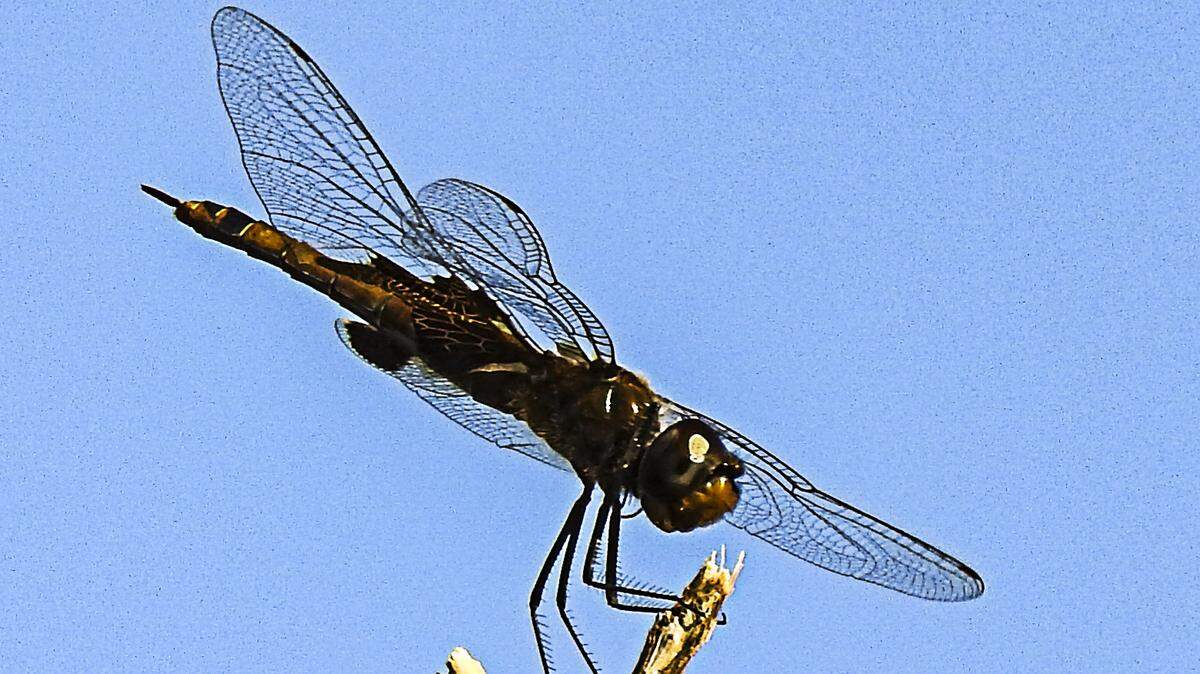
For naturalists and biologists, sometimes a single experience has lasting effects.
My lifelong interest in insects dates back decades to a hot, sultry afternoon on Long Island. It had been the kind of summer day that seems to last forever when you’re young. The air felt thick with humidity. There wasn’t a hint of a breeze.
Rounding the corner of our house, I suddenly saw dozens of dragonflies — variously colored, large and small — darting, hovering, and swooping, some at eye level, others as high as the roof.
To my eyes it was a spectacular sight. I had no idea why these dragonflies were all together nor why, after a half hour or so, they suddenly disappeared.
I know now that many different dragonflies may form aggregations. In some cases, these are one-way migratory events. Along the Atlantic coast, for example, some species start to drift southward en masse in the fall. Once these dragonflies reach warmer habitats, they stay and reproduce. Their offspring eventually re-populate northern breeding areas the following spring.
But what I saw that afternoon was a different kind of aggregation — a swarm that had materialized where mosquitoes, midges, or other small prey must have been congregating, as well.
Feeding swarms are often composed of several kinds of dragonflies, including both females and males.
These short-lived foraging phenomena may be more common than we realize.
We tend to associate dragonflies with ponds and other freshwater habitats, where they go to reproduce. The immature stages of a dragonfly’s life are, in fact, spent as aquatic larvae that have hatched from eggs laid in or near the water.
But once dragonfly larvae morph into winged adults, they spend much of their time away from freshwater, feeding on a wide variety of insects — from mosquitoes and sand gnats to moths, butterflies, and sometimes even other dragonflies.
Agile fliers, dragonflies catch their prey in mid-air, scooping up tiny insects in their mouths and seizing larger ones with their front legs. Prominent among their mouthparts are powerful, serrated jaws.
Dragonflies can hover like helicopters, pivot in any direction, and fly forwards, sideways, even backwards. Some species have flight speeds of over 30 mph.
Their huge, multifaceted eyes provide sharp vision and rapid responses to sudden movement. Almost 80% of a dragonfly’s brain is dedicated to sight.
Even within a dense feeding swarm, dragonflies can track the rapid, erratic paths of their prey without colliding with other dragonflies swooping around them.
Studies suggest that, in general, dragonflies have a capture rate of up to 95% and can eat a fifth of their body weight per day.
And clearly they are opportunistic predators, responding quickly to local, temporary increases in the density of prey.
Here in the Lowcountry, you may spot feeding swarms along beaches, over fields, golf courses, and other open places — even in your own backyard.