
Natural Lowcountry / Salty succulents found in glass, soap, food and, one day, medicine
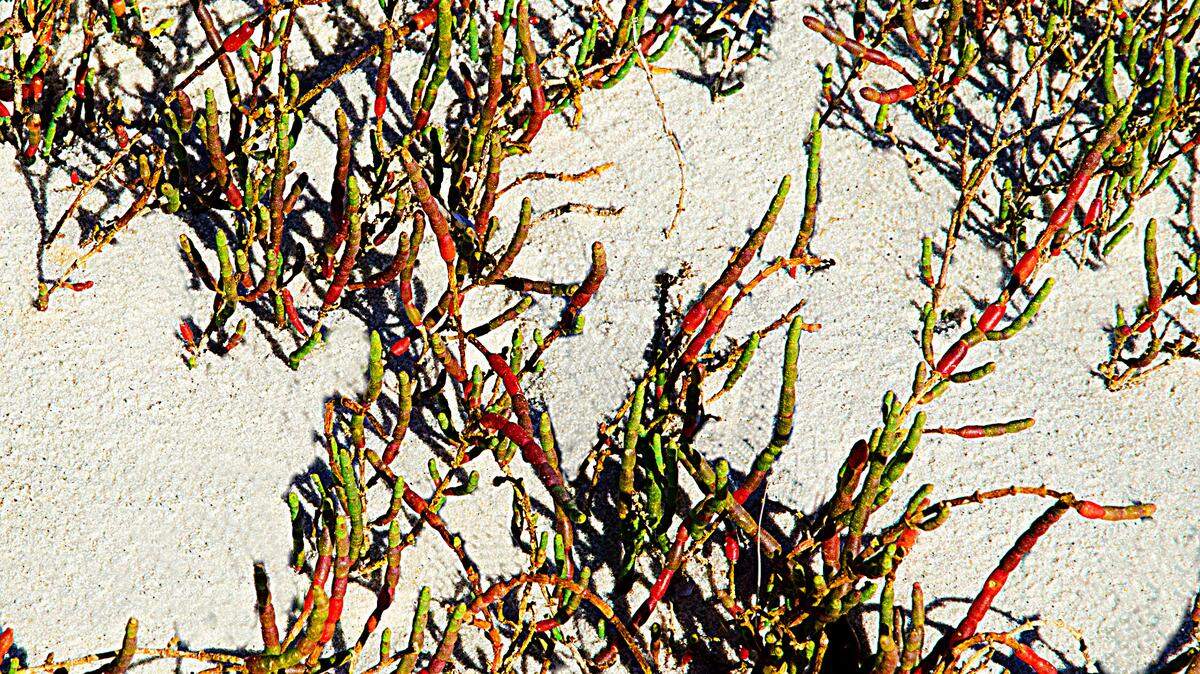
Although often overlooked, glassworts are key features of many Lowcountry salt marshes.
They’re low-growing, succulent plants with jointed green or reddish stems. The leaves are tiny and scale-like — you need to look carefully to find them — and the flowers and fruits are equally inconspicuous. Worldwide, dozens of different kinds of glassworts thrive in salt marshes, tidal mudflats and inland saline habitats. These tough little plants accumulate salts in their leaves and stems, and some even survive immersion in seawater.
As “pioneer” plants in saline habitats, glassworts are colonizers of sites that are inhospitable to most other species. By trapping sediment and nutrients they pave the way for other plants, along with the animals dependent on them.
Many glassworts are species in the plant genus Salicornia, though the names “glasswort” or “saltwort” have also been applied to a few other close relatives. All belong to the Amaranth Family, which also includes beets, quinoa, and spinach.
The word “wort, incidentally,” derives from the Old English word “wyrt,” meaning plant, and it appears in the names of many common plants with a long history of human uses.
The name “glasswort” comes from the use of these plants in glassmaking in England and Europe, particularly during the 18th century. Glassworts were harvested in huge quantities and burned, yielding a product called “soda ash,” a mixture of sodium carbonate and potash, which was used in making glass and soap.
The young shoots of some glassworts have also been used for food around the world, either raw or cooked. As you might expect, they have a salty flavor.
Recent pharmacological analyses of glassworts have revealed the presence of an array of substances with the potential for treating osteoporosis, liver disease, sepsis, diabetes, and cancer.