
Natural Lowcountry: Horsetails are ancient plants with a history of human uses
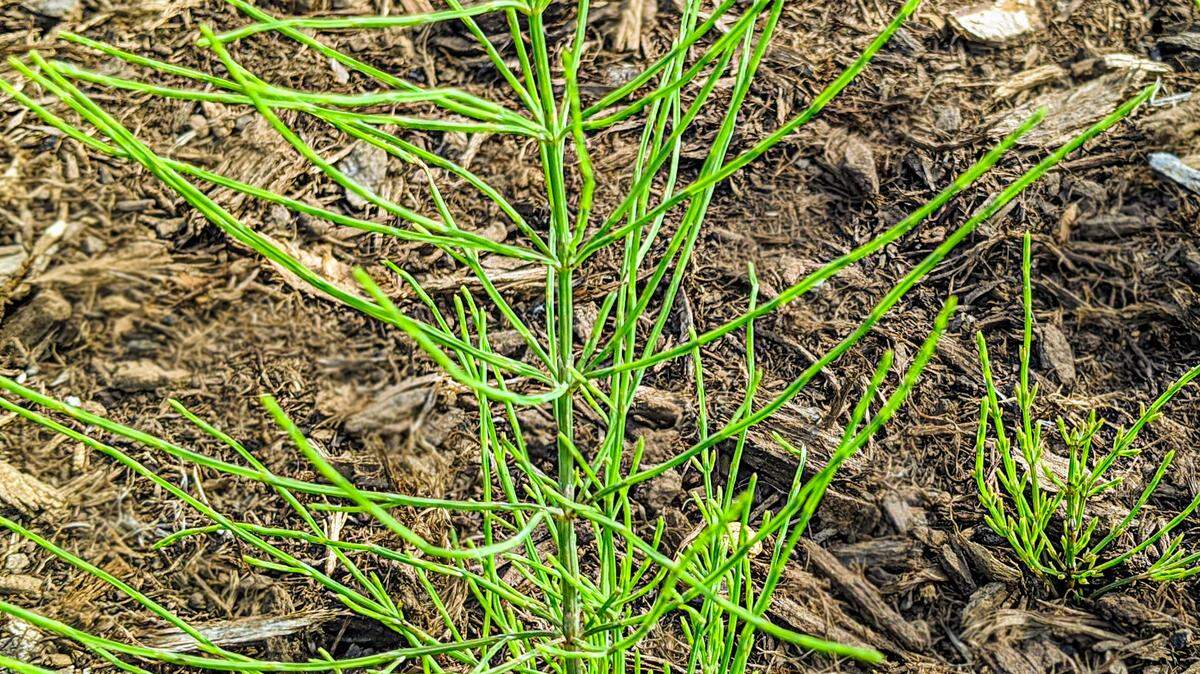
Looking at a horsetail plant is like taking a step backward in time.
During the Carboniferous period, over 350 million years ago, ancient relatives of horsetails flourished in the first forests on Earth. Some grew over 100 feet high, towering over ferns, club mosses and other early land plants.
These early horsetails are extinct now, and only about 15 species, all in the plant genus Equisetum, exist today. As a group, these “living fossils” are found virtually worldwide except for Antarctica. Many grow in moist habitats, such as the banks of ponds, lakes and rivers, and in marshes and wet meadows. A few kinds are adapted to dry places.
Aside from the “giant horsetails” of Mexico and Central and South America, which reach heights of 16 to 24 feet, today’s horsetails tend to be only a few feet tall. Still, they share many basic traits with their prehistoric ancestors.
They’re unusual-looking plants, with hollow, jointed, ribbed stems that may or may not have branches, depending on the species. The leaves, minuscule and scale-like, are found in whorls (rings) at intervals along the stem.
In horsetails it’s the green stems, not the leaves, that conduct photosynthesis. The stems also contain abundant silica, giving them a gritty texture and accounting for another common name, “scouring rush.” Early colonists in America used the plants as an abrasive to scrub dishes and pots.
Horsetails don’t produce flowers, seeds, or fruits. Instead, they reproduce via spores borne in cone-like structures at the ends of some of the shoots. Many also spread by creeping, underground stems.
Horsetails are toxic if eaten by horses and other livestock, though there are reports of their use as human food. Some species have also been used in folk medicine to treat kidney problems, osteoporosis and other ailments.
However, experts advise caution here, as more research is needed on the safety of horsetails as food or therapeutics.
Better, perhaps, just to appreciate the beauty and evolutionary significance of these little-noticed plants. A clump of horsetails makes an unusual and arresting addition to the garden. It’s wise to confine these plants to a pot, though, because of their tendency to spread.