
Colorful, deer-resistant, attractive to butterflies: What’s not to love about this plant?
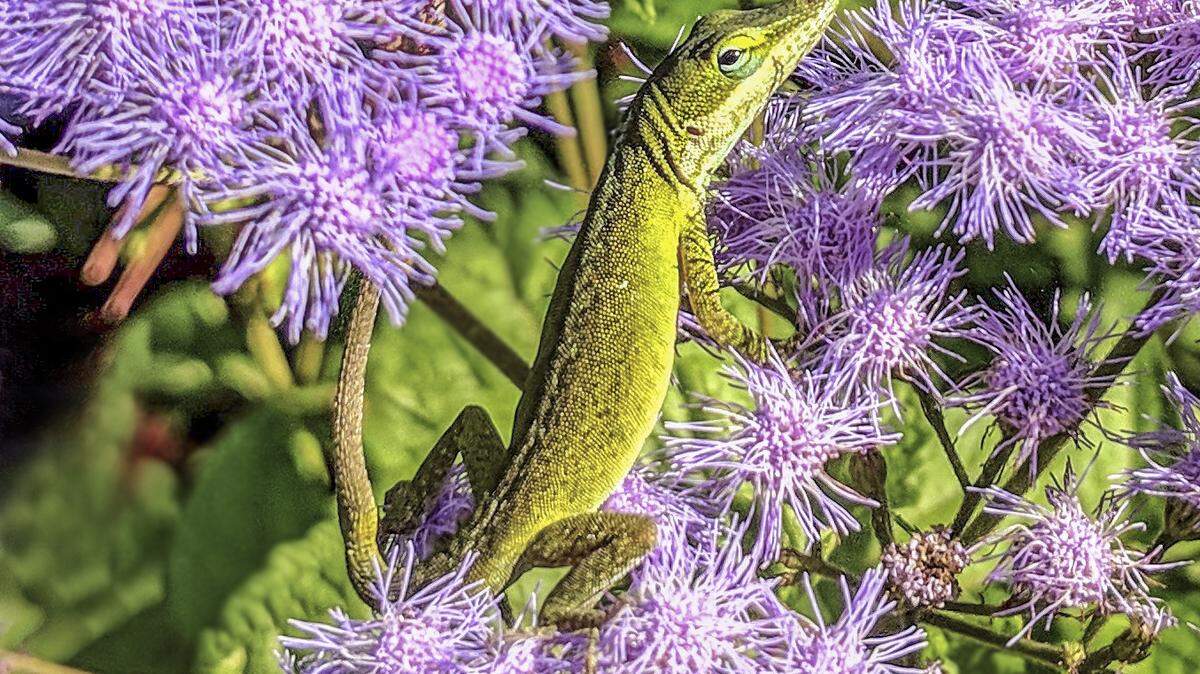
Blue mistflower — Conoclinium (Eupatorium) coelestinum — is a native plant so lovely that it arguably deserves a spot in our Lowcountry gardens.
Also called blue boneset and wild ageratum, it belongs to the plant family Asteraceae, along with sunflowers, asters, daisies, and some 23,000 other species. It’s related to the non-native, annual ageratum sold as a bedding plant in nurseries.
The species is found throughout the eastern and central U.S., along the edges of woods and streams, and in moist meadows and clearings.
Plants grow 2-3 feet high and have lavish masses of fuzzy-looking, bluish-violet blooms. Actually, each “flower” is a tightly packed cluster of multiple, tubular “disk” florets, each only a quarter-inch long.
In my own garden, masses of blue mistflower add a welcome burst of color throughout the fall. The flowers also provide nectar for bees and butterflies into November. I’ve watched green anoles staking out the flower tops for nectar-seeking prey.
Blue mistflower is not only easy to grow, it’s also relatively deer-resistant and tolerant of partial shade. A perennial, it dies down in the winter but reappears reliably in the spring. But it does have the tendency to spread rapidly via rhizomes (underground stems), so it needs some attention to keep it under control.
Because of its vigorous growth habits and attractiveness to multiple pollinators, blue mistflower has become a valuable plant for natural habitat restoration.