
Natural Lowcountry | Now is the time to view sanderlings before they migrate north
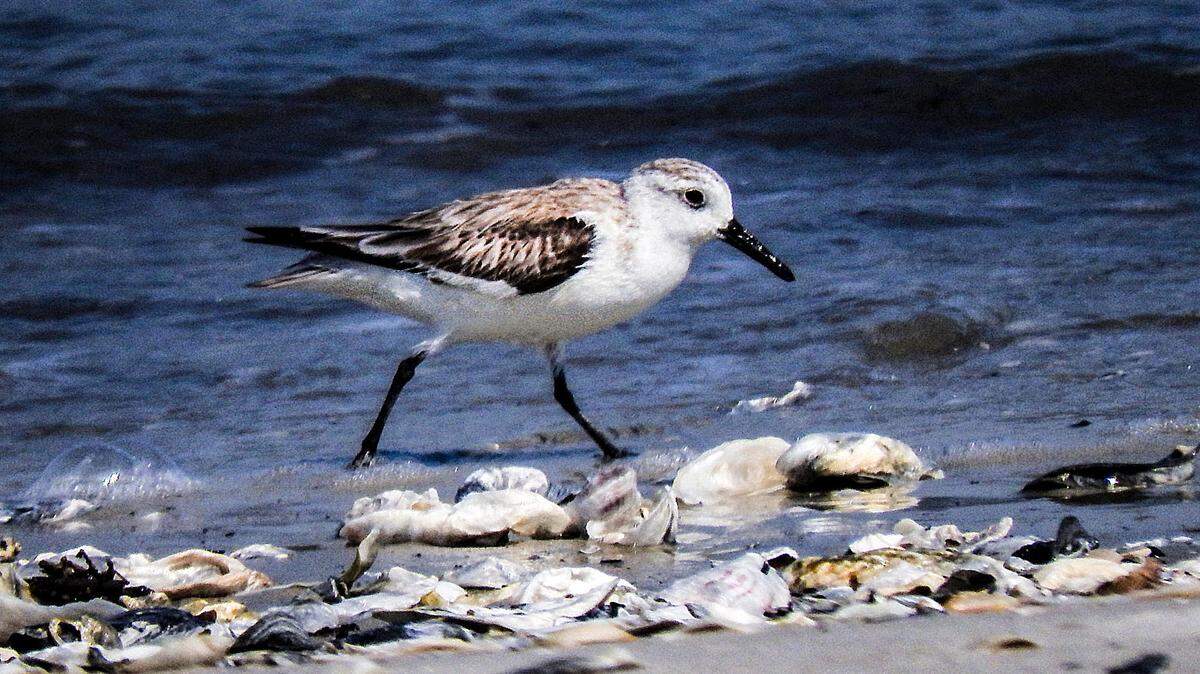
On beach walks these days, I always look for sanderlings — those cute little sandpipers that run back and forth like wind-up toys in synchrony with the waves.
Sanderlings are among the most common winter shorebirds in South Carolina. In non-breeding plumage they’re easily recognized by their white neck and belly, black bill and legs, and ashy gray back.
Look for flocks foraging at the water’s edge, chasing receding waves to probe the wet sand for crabs, worms, amphipods, mollusks, and other invertebrate prey. In some areas, horseshoe crab eggs are also an important source of food.
Now and then you may see a sanderling take a break by standing on a single leg. Some other shorebirds do this, too. This behavior probably helps to conserve heat that would otherwise be lost from the birds’ limbs.
Most of the time, surf-chasing sanderlings seem tireless and relentless in their pursuit of the next meal, and it’s easy to appreciate why. These compact little birds, only 7 inches or so long and weighing 3.5 ounces or less, have migrated thousands of miles from the Arctic.
Now they need to replenish their reserves, plus store up extra energy for the flight back in the spring.
During the short Arctic summers, male sanderlings defend breeding territories on the tundra, and their mates build cup-shaped nests on the rocky ground amid mosses and other low-growing plants. Both sexes incubate the three or four eggs and defend the brood against wolves, owls, skuas, foxes, and other predators.
Usually pairs are monogamous, but sometimes a female produces two clutches, either with the same mate or a second one, and the males do some of the parental care on their own.
Overwintering populations of sanderlings are common not just along the coastal U.S., but also on sandy beaches worldwide. However, scientists are worried that species numbers may be declining.
For sanderlings, migration depends heavily on key staging areas where the birds can rest and refuel. These stopping places are becoming increasingly vulnerable to human disturbance. And as with many other birds, pollution from pesticides and oil spills are ongoing threats.
As we walk on our own beaches, we can help by admiring sanderlings from a respectful distance, giving them wide berth to feed and rest as they prepare for their journey back North.
This story was originally published February 13, 2022 at 6:00 AM with the headline "Natural Lowcountry | Now is the time to view sanderlings before they migrate north."