
The first Heritage almost didn't happen. Here's why
The Heritage is turning 50 this year — much to the amazement of longtime fans and organizers who say the first tournament in 1969 shouldn't have happened.
It was illegal, for one.
An archaic S.C. blue law dictated that no sporting event should be held in the state on a Sunday.
Another strike: Hilton Head itself. Fewer than 4,000 people lived on the island at the time, and the bridge connecting the mainland to the island had been built just over a decade before. Not many people had heard of the little island off the Lowcountry coast, where the majority of the land was still overrun by wild palmettos, pines, ferns and oaks.
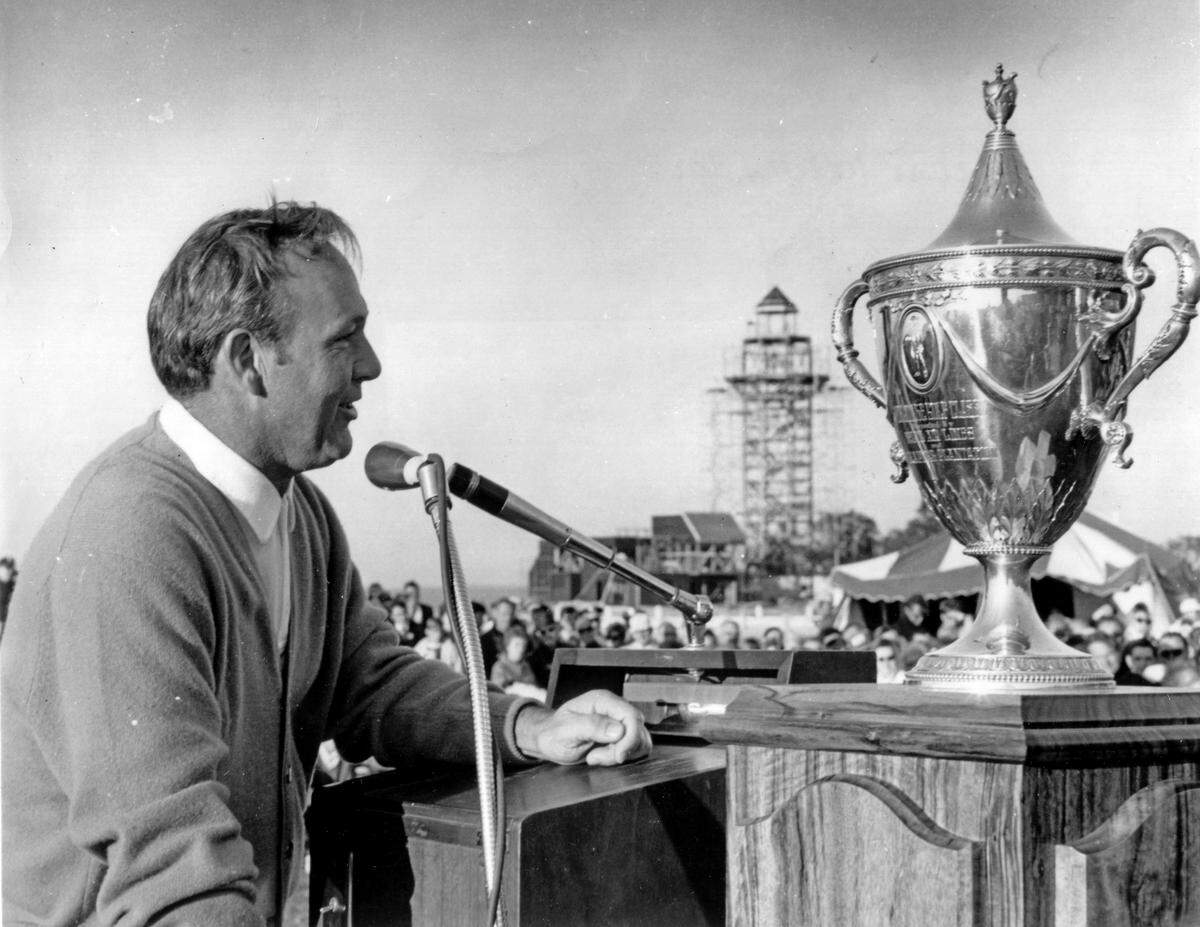
Plus, with only a year to build an entire golf course, the grounds hadn't even been completed during that Thanksgiving week of the first Heritage. When the date of the tournament rolled around, the lighthouse still stood in scaffolding. Parts of the ground remained bald.
"People ask me, 'How long before the tournament did you get the course ready?'" said Bill Carson, who was in charge of building the course and later became tournament director. "And this is the honest answer: We didn't. We just quit working. We covered up all the bare spots with pine straw."
And that other small detail, that the tournament was illegal? The solicitor agreed to look the other way, and the law has since been changed.
Somehow, the nascent Sea Pines community pulled it off. The course was challenging, and the people were welcoming. Arnold Palmer, in the middle of a professional slump, famously made his comeback at that inaugural event.
This week, half a century later, the RBC Heritage Presented by Boeing is celebrating its 50th year.
One of the most noticeable changes: The tournament's size. Back in the day, Sea Pines developer Charles Fraser limited the number of tickets to 5,000 (his staff laughed when he told them that; they doubted the tournament would attract even close to that number of people).
In contrast, more than 130,000 people attended last year's tournament — a figure that translates into an estimated $96 million being pumped into South Carolina's economy every year, according to economic impact studies.
"With social media and the tournament being broadcast on television in HD, all of those things have created bigness," said Steve Wilmot, the tournament director.
The growth of the volunteer force also illustrates the magnitude of the event. The first Heritage involved about 75 volunteers, the vast majority of them locals, many of them friends and family of Sea Pines employees. Everyone pitched in, even the high school kids — teenage girls babysat, teenage boys helped build the golf course.
This year, more than 1,200 people signed up to volunteer for the tournament.
But the event also requires much heavier security than it ever has, especially in the aftermath of the Boston Marathon bombing in 2013 and the slew of mass shootings in recent years. Although the Heritage has been spared serious cases of violence, the security presence has been beefed up heavily as a preventative measure.
Although circumstances have changed, Heritage is undeniably the same tournament it's always been.
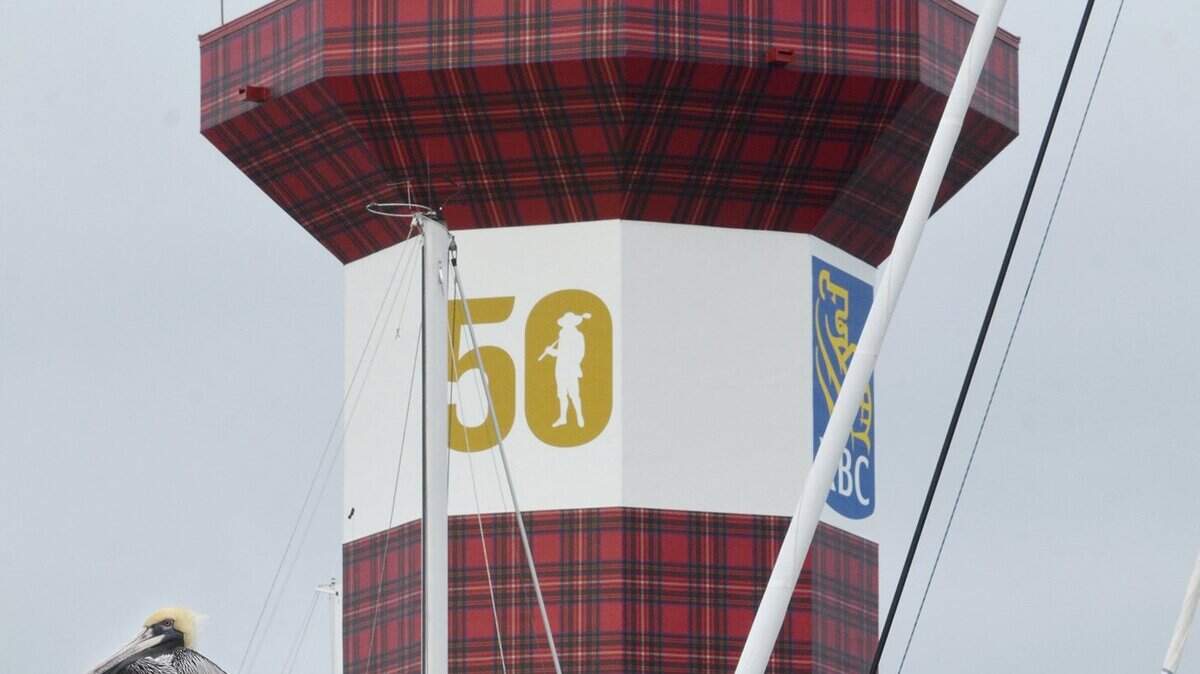
To celebrate the anniversary, tournament organizers have decked out the once-scaffolded lighthouse in Scottish plaid, a color representing the origins of the sport.
"You'll see plaid as the primary theme wherever you go," said John Farrell, the director of golf at Harbour Town. "The staff will be wearing plaid, retail outlets will have plaid decorations. And visitors: Get your plaid on."
A mad dash to the starting line
The birth of the tournament often is described as the brainchild of Charles Frasers' brilliance. Fraser wanted to market his newly-built Sea Pines community on the island paradise, the story goes. Hilton Head sat between Charleston — the home of the first golf course in the U.S. — and Savannah, where the second American golf course was built.
That's all certainly true. But there's more to the story.
Fraser didn't golf.
"In my 10 years with the Sea Pines Company, I never saw Charles Fraser with a golf club or a tennis racket," said Jim Chaffin, who was a young real estate salesman in 1969 and helped with the creation of the first tournament.
Instead, Fraser had an insatiable appetite for learning. In his effort to make Sea Pines the sort of laid-back resort community of his mind's eye, he studied how people spent their leisure time and became fixated on golf.
Heritage would not have begun without a stroke of luck. Fraser had recruited Jack Nicklaus and Pete Dye to design the new golf course at Harbour Town. Nicklaus and Dye, in fact, asked Fraser if he had ever considered hosting a golf tournament — and lo and behold, when another golf course backed out of a Thanksgiving tournament for the 1969 PGA tour, Hilton Head snagged the deal.
For 13 months, the Sea Pines staff, contractors, construction workers, Dye and Nicklaus worked from sunup to sundown, seven days a week.
Since Hilton Head was sparsely populated at the time, Sea Pines hired a firm in Savannah to bring in more labor. For several weeks, about a dozen members of a commune arrived in a van each day — it was 1969, after all — and helped out at the 11th hole. While the men laid sod on the green, the women sat in their long skirts and wide-brimmed hats, reading the Bible.
The last few weeks before the tournament were frantic.
A PGA commissioner was scheduled to examine the golf course six weeks before the tournament. Parts of the course remained unfinished, but there was one especially notable problem, remembered Carson: The second hole.
An imposing and seemingly ancient oak stood above the second hole, a tree that epitomized the natural allure of the sea island. It provided a stunning backdrop to the hole. Underneath, though, the ground was pure dirt. Bermuda grass couldn't grow under the shade of the tree.
Everyone was nervous about what the commissioner would say. If the Harbour Town course didn't meet PGA standards, they'd have to move to another location.
''Looks good. We'll play," Carson recalled the commissioner saying. And there was no turning back.
The first tournament
Simon Fraser remembers the first tournament well, partially because he found himself attracting the ire of golf legend Lee Trevino.
It was the fall of his junior year in high school, and he had to leave the tournament over the weekend to lead his football team in the state playoffs. But in those first few days, he and his younger brother worked as marshals at the 17th hole.
The sand in the trap near the hole was new, having been put in maybe a week beforehand. So when Trevino hit the ball into the sand trap, it sunk. Nobody could find it.
Simon Fraser and his brother were the two people closest to the sand trap, but they hand no idea where the ball had gone.
"He blamed me and my brother for it," said Fraser, speaking with a cheeky smile while recounting the memory. "He wasn't too happy with us."
If Fraser's name sounds familiar, that's because he's the nephew of Charles Fraser and the son of Joe Fraser, who worked to turn his brother's ideas into a reality. The younger Fraser is now the Heritage Classic Foundation chairman, the organization that runs the tournament and has given $38 million to charities over the years.
The feeling was somehow both more formal and more intimate during that first year, said Signe Gardo, owner of Signe's Heaven Bound Bakery and Cafe on the south end of the island. Spectators stood on the green near the golfers, or they brought picnic baskets and blankets, she remembered (although a year or two later, marshals asked Gardo to leave when she brought her baby daughter, who didn't seem to care much about the quiet rule when she wailed in hunger).
Chaffin, the then-young real estate agent, also remembers the first tournament: "Nobody could believe that in fact it was actually happening," Chaffin said. "It was like the dog that caught the bus."
Chaffin spent the tournament walking up and down with a plat book under his arms.
"I asked people if they had any idea they were standing on a lovely home site," Chaffin remembered with a grin.
By the end of the event, he managed to sell four home sites and three Ketch Court units.
The pros seemed to love the smallness of the event and the friendliness of the community. It wasn't uncommon to see the golfers eating dinners at locals' homes, and volunteer Debbie Chester, who was 15 at the time, remembers Trevino snoozing in a neighbors' armchair after he had loaded up on good food and a couple of drinks.
Plus, the pros loved the golf course — there was a purity to it, a design that integrated the relatively small course into its natural surroundings without any artificial props that gave it both a challenging (or "diabolical," as Hale Irwin called it) edge and almost enchanting atmosphere.
Sports Illustrated writer Dan Jenkins wrote with great gusto about Dye and Nicklaus, praising their creation as "the best new course that anyone has built in ages, a brutally narrow, abruptly twisting tangle of brooding pines, oaks, palmettos and magnolias with tiny greens guarded by wriggling bunkers and fierce marshes" and, more succinctly, "nothing short of a work of art."
A community effort
Sea Pines continued to host the tournament on Thanksgiving for the next few years. That changed in 1974, when Heritage shifted to spring in an effort to land TV coverage — and despite a March Madness game between North Carolina State and UCLA that went to overtime and limited the tournament's screen time to less than an hour on a Saturday evening — the plan ultimately succeeded.
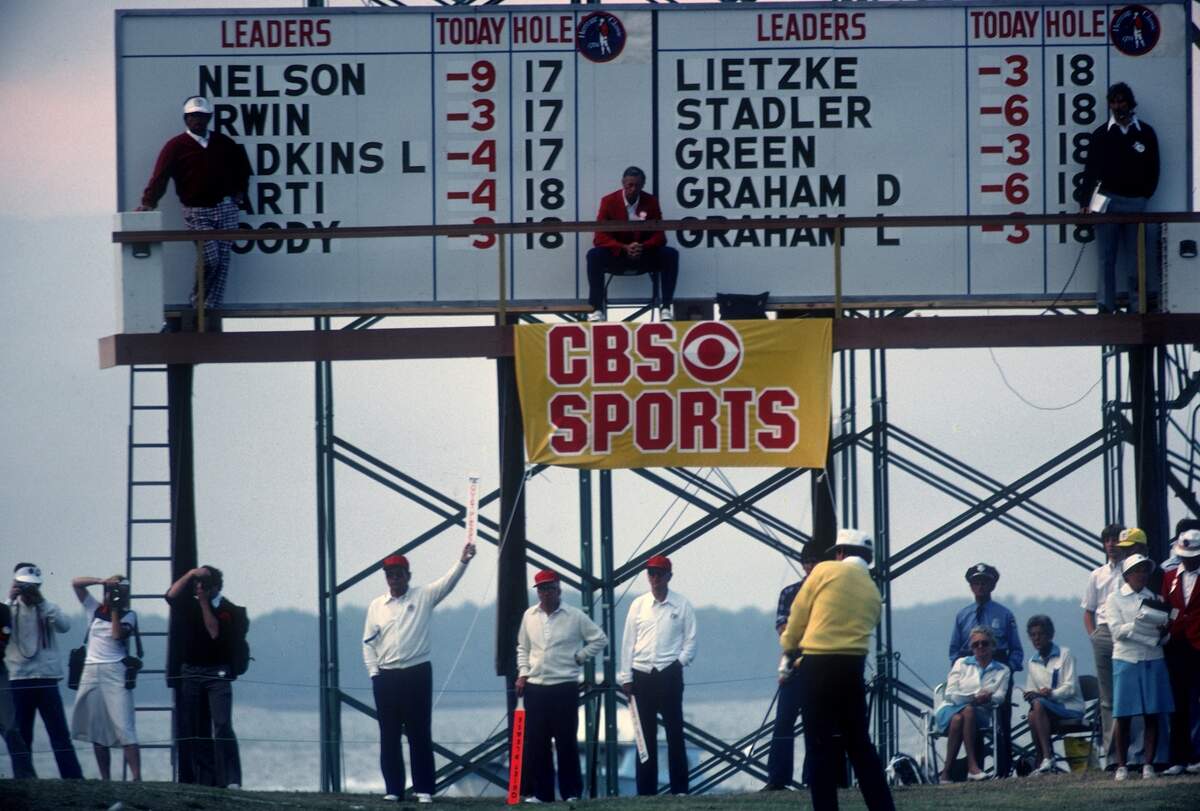
As Heritage became increasingly well-known around the country, the number of attendees continued to grow. And so did the number of volunteers. Those volunteers, Heritage veterans say, made the tournament what it is today: A community event, not a commercial event, wherein everyone from the island buckles down and gets busy.
It's a spirit that has lasted throughout the past half century, and a spirit perhaps best exemplified in the year 1976, when the economy had soured and put a strain on the tournament.
This also happened to be Carson's first year as tournament director, and he needed to find food. The previous concession services were conducted by a commercial concessionaire, but the PGA recommended that Carson find someone knew (a good idea, concurred Carson, as this concessionaire's specialty seemed to be subpar "hot dogs boiled in dirty gray water," Carson said).
Carson found his solution in the community. He asked the chapter of the local Jaycee — the U.S. Junior Chamber — if they'd be willing to pitch in. They agreed. Then he asked two women who ran the concession stand for a youth football team if they might volunteer too. They did.
By the time the tournament came around, about five community organizations provided the food. The Montessori School baked homemade chocolate chip cookies, and the Sea Pines Academy served oysters on the half shell.
That attitude, the mindset that everyone chipped in, no matter from which end of the island they hailed, only improved the tournament quality, said Chester, who's now the chairman of the volunteer tent and uniform committee.
"It was important that this tournament was a place that the players wanted to bring their families," Chester said. "That set us apart from the other tournaments, because that created a culture of family and children and the community."
And although the number of television spectators, visitors and volunteers has mushroomed since the tournament's humble beginnings, Chester and others who have stuck around since the beginning agree: the heart of Heritage has always been the island and its people.
This story was originally published April 9, 2018 at 12:00 AM with the headline "The first Heritage almost didn't happen. Here's why."