
The ‘anointed’ national significance of Beaufort bluesman Cool John Ferguson
By DAVID LAUDERDALE
The world lost one of its greatest guitarists with the passing of Beaufort’s Cool John Ferguson in August and the South lost one of its greatest exports.
The Gullah-Geechee culture of the South Carolina Lowcountry lost one of its greatest claims to fame – though Ferguson never sought fame and, in fact did not want it.
And Beaufort lost one of its gentlest spirits when Ferguson was tucked into a coffin wearing his trademark black flat-rimmed hat. His life was celebrated at the Burton New Church of Christ with seven guitarists, drums, a horn, an organ, a piano and saxophonist Greg Whittaker.
He was 71.
John Wesley Ferguson Jr., son of Deacon John Ferguson and St. Helena Island native Martha Jenkins Ferguson, was a child prodigy in a religious home of seven girls, one boy and always a piano.
He had an ear to play anything he heard, and he grew up to play blues, jazz, rock, funk and gospel. He could play electric and acoustic guitar, organ, piano, and drums. He learned to read music when he played trumpet in the Beaufort High School marching band, class of 1972.
But it was a guitar, stashed high in a closet, that grabbed Ferguson’s attention at age 3,and never let go. His mother didn’t want him to have it until he got older. But his parents gave up on the hide-it plan about the time their little boy strummed out “Amazing Grace” -- turning a guitar as big as he was upside down because he was naturally left-handed.
At age 5, he was performing on a Charleston television station as Little John and the Ferguson Sisters.
And as a boy, he played in the Beaufort church of Reverend Ike – who later became a national figure preaching the gospel of prosperity over more than 1,000 radio stations, wanted Ferguson to dazzle crowds at his “Palace Cathedral” in New York City.
At school, kids would give their milk money to hear Ferguson play. The principal sometimes had him play his guitar on the loud speaker to calm everyone down.
Whatever Ferguson heard, he could play, whether it was an Isley Brothers record or the rhythm and blues hits played over radio station WAPE in Jacksonville. James Brown may have been his greatest influence. He pored over James Brown. He always shared his gift, teaching others and playing at funerals, weddings, festivals, schools and churches.
Bassist Delbert Felix, a St. Helena Island native, said, “He influenced all the musicians around here. He solidified with me the fact I wanted to play music as my career.”
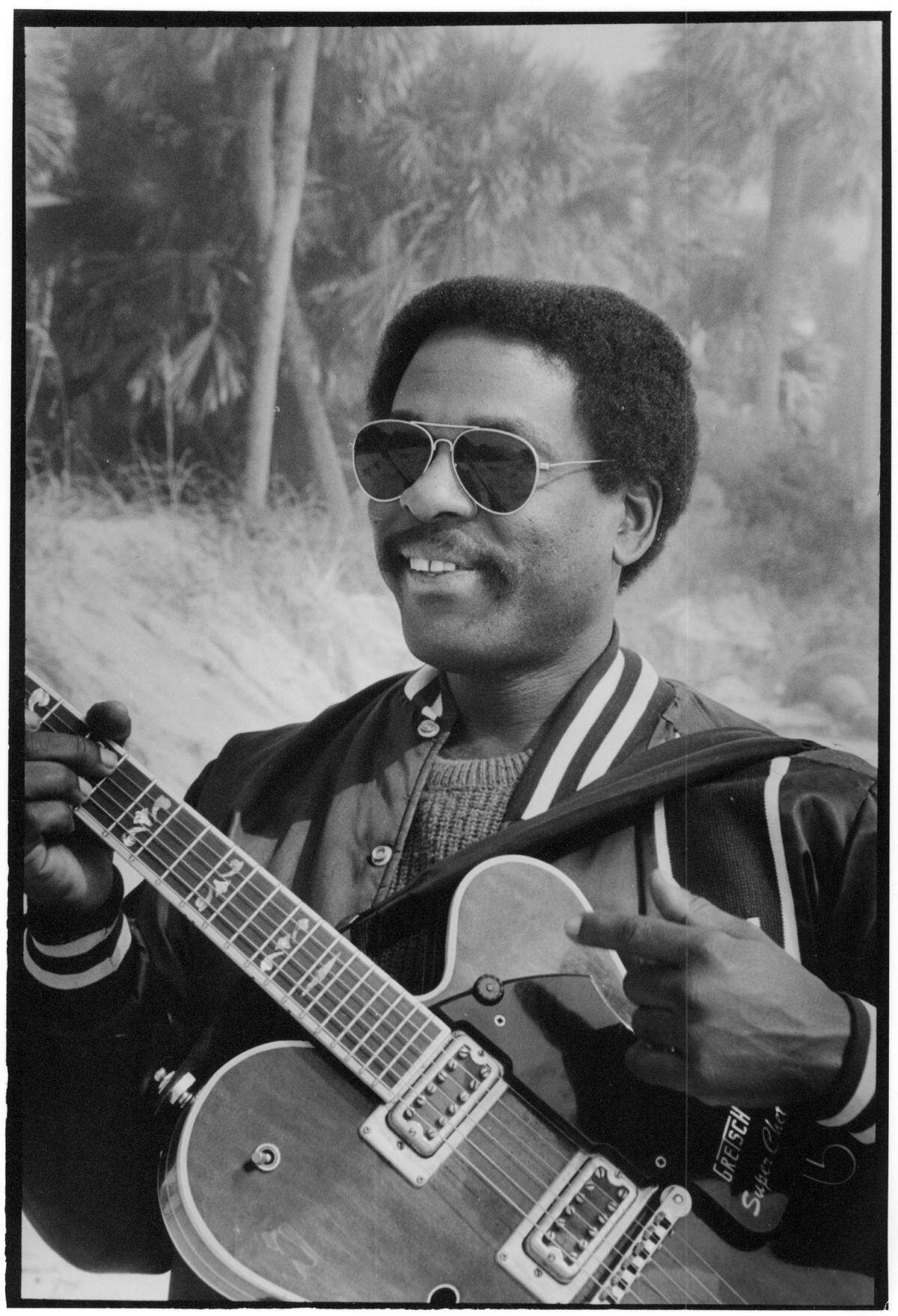
Ferguson ended up playing around the world, recording five solo albums and playing on about 20 more.
Blues guitarist Taj Mahal said Ferguson was one of the best guitarists ever, up there with Jimi Hendrix, Django Reinhardt, Wes Montgomery and George Benson.
“John had been discovered so many times,” said his sister, Vernita Dore of Beaufort. “A lot of musicians live to be discovered. He did travel, but he just really felt there was no place like home.”
‘The Star-Spangled Banner’
Cool John didn’t really want the name “Cool John.”
He didn’t care about having a catchy name like other blues musicians. To him, the music was the thing. But the name fit. Fans gave him that label when he lived in North Carolina, making regular gigs at the All People’s Grill juke joint near Durham. Ferguson seemed to never break a sweat. He counseled his sister to “roll with the flow.”
His wife, Shirley Wilkins of Atlanta, said, “I’ve never seen him get upset. I’ve never seen him angry, which is amazing. He’s just had patience and things never bothered him.” Vernita Dore, his sister, said, “He would be in the same room with you and be comfortable not saying anything, but he saw everything. He saw everything that was going on. He didn’t miss a beat.”
But on stage, “his trademark was when he was really ready to play, he would throw his pick down on the stage and there’d always be somebody running to get it,” his wife said. “But when he threw the pick down, you know, he was getting ready to really rip it.”
Ferguson lived at times in Atlanta, several cities in North Carolina, and finally back home where he died.
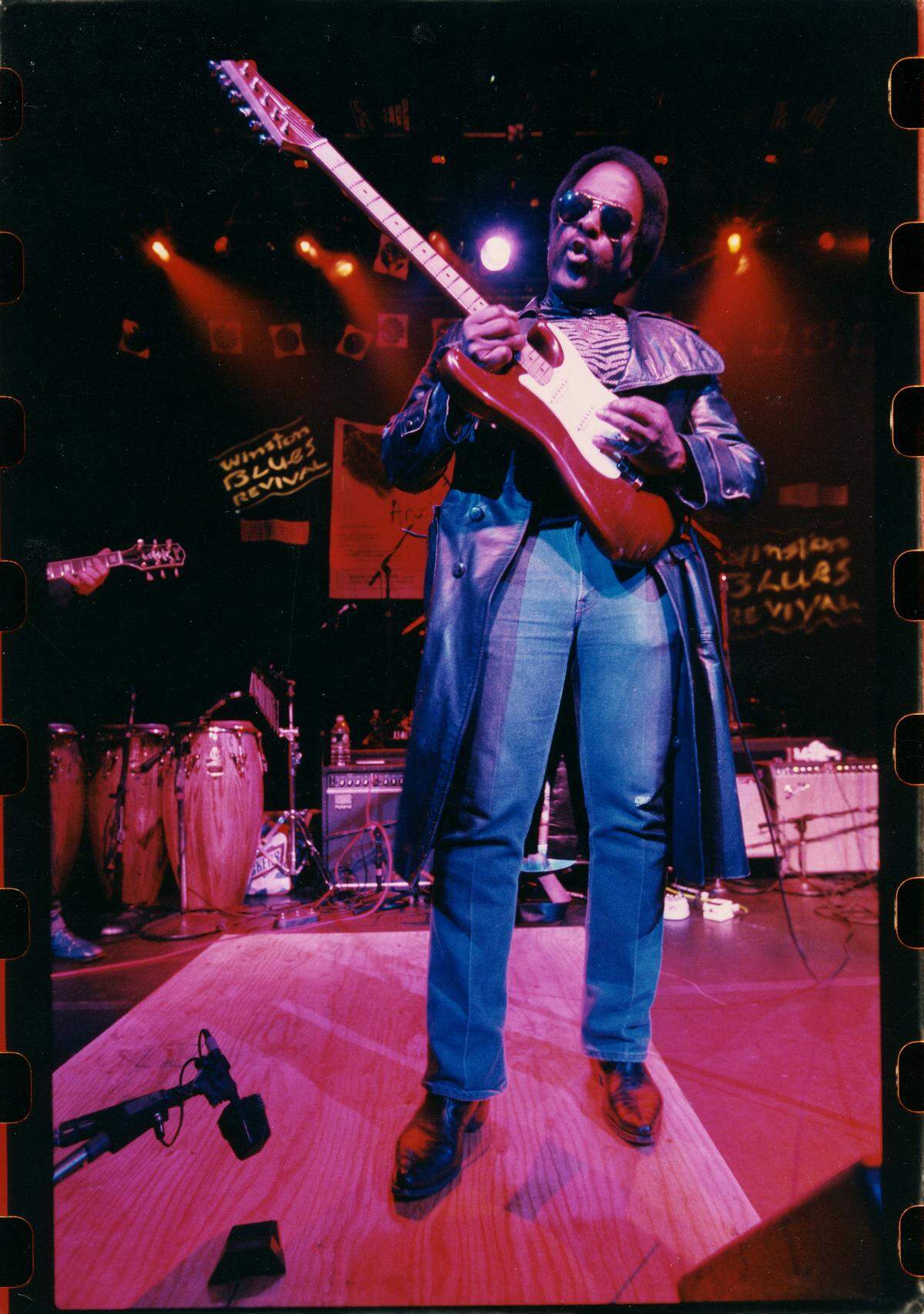
He will always be remembered for the day his Fender Stratocaster blasted “The Star-Spangled Banner” over the Beaufort River during the memorial service at the Henry C. Chambers Waterfront Park for “Smokin’ Joe” Frazier of Beaufort.
It is a fitting memory for Beaufort – and the world. Frazier left his home in Burton and ended up licking Muhammad Ali to become the world heavyweight boxing champion. For Ferguson, it was guitar licks with the famous and the obscure.
Both proved Robert Smalls correct. The man born into slavery in Beaufort to then became a Civil War hero and five-term Congressman said, “My race needs no special defense, for the past history of them in this country proves them to be equal of anyone. All they need is an equal chance in the battle of life.”
Music Maker Foundation
The best discovery of Cool John Ferguson happened at Penn Center on St. Helena in the 1990s.
Blues musician Luther “Captain Luke” Mayer told Tim Duffy, founder and director of the Music Maker Foundation in North Carolina, that bluesman Guitar Gabriel said they needed to find this wizard guitar player someone had heard playing in a church.
They didn’t know who or where, but Duffy called Penn Center and they knew exactly who he meant. Duffy and Captain Luke came to Penn Center, and from that meeting, Ferguson would go on to tour the world and cut four albums with the foundation. He’s featured in their documentary, “Toot Blues.”
For years, Ferguson was creative director of the non-profit foundation that “meets the day-to-day needs of the artists who create traditional American music, ensures their voices are heard, and gives all people access to our nation’s hidden musical treasures.”
Duffy said Ferguson “was anointed” as a music theory genius with incredible musical memory and techniques that he developed with endless practice. \“Fame eluded him, but I don’t think he pursued it,” Duffy said. “And I think he was on a nobler cause and a more ancient tradition of being a community musician.”
But Ferguson “didn’t dumb it down for anybody,” he said. “He would play as brilliantly for a little kid or some old blues man who’s rag taggy and John could sit in a recording session and make him heard and make him seen. And I think that was the religious part of John, that everybody is somebody and everyone deserves to be heard.”
What they heard from Ferguson came from deep and painful Lowcountry roots. “Charleston was ground zero for all American music,” Duffy said, “because that’s where they brought so many Africans for enslavement and that was the beginning of field songs, work songs, spiritual songs, gospel songs and every music that came down the pike since. It’s our greatest export to the world. It’s one of our greatest cultural things we’ve ever done.”
“John was from the direct route of 400 years of the development of American music. He knew every aspect of it from hip hop to gospel, Dixieland to blues, to jazz, to every rock and roll style, and he was the embodiment of it.”
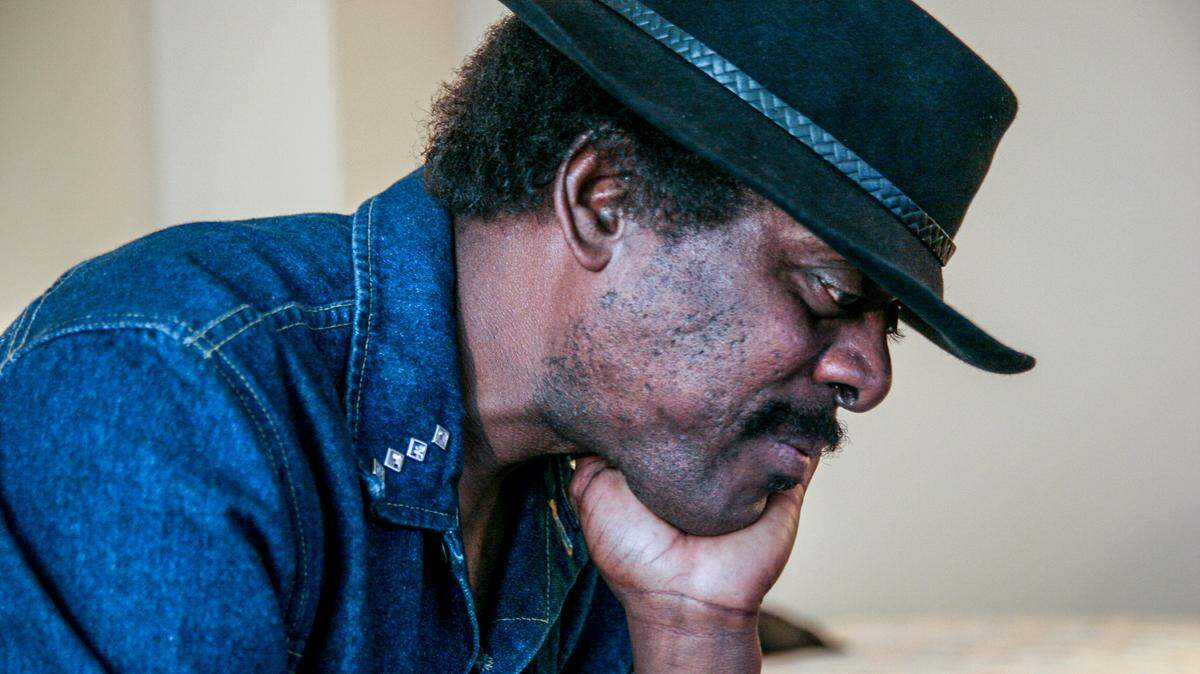
Ferguson stands out in today’s culture, like the silhouette of a man with a guitar and flat-brimmed hat.
“In America you are only valued if you are famous,” Duffy said, “but in African communities, they love that you know how to do what you do. You’re cherished, even if you’re one little lady singing in a tiny church, to be that person who is a vessel of cultural knowledge and heritage, keeping it flowing from generation to generation.”
“So that’s how, as a folklorist, I look at Cool John.”
Ferguson’s wife saw Cool John the musician come full circle.
“He had kind of gotten away from playing secular music and he was focusing on getting his life really right with the Lord,” Shirley Wilkins said.
“He never lost his love and passion for music, but most of his work in the last years of his life was in the churches.”
In the end, he came home.
David Lauderdale may be reached at lauderdalecolumn@gmail.com.
This story was originally published November 2, 2025 at 6:00 AM.