Woman won $1M at Hilton Head McDonald’s in ’97. She was a fraud, new HBO series shows
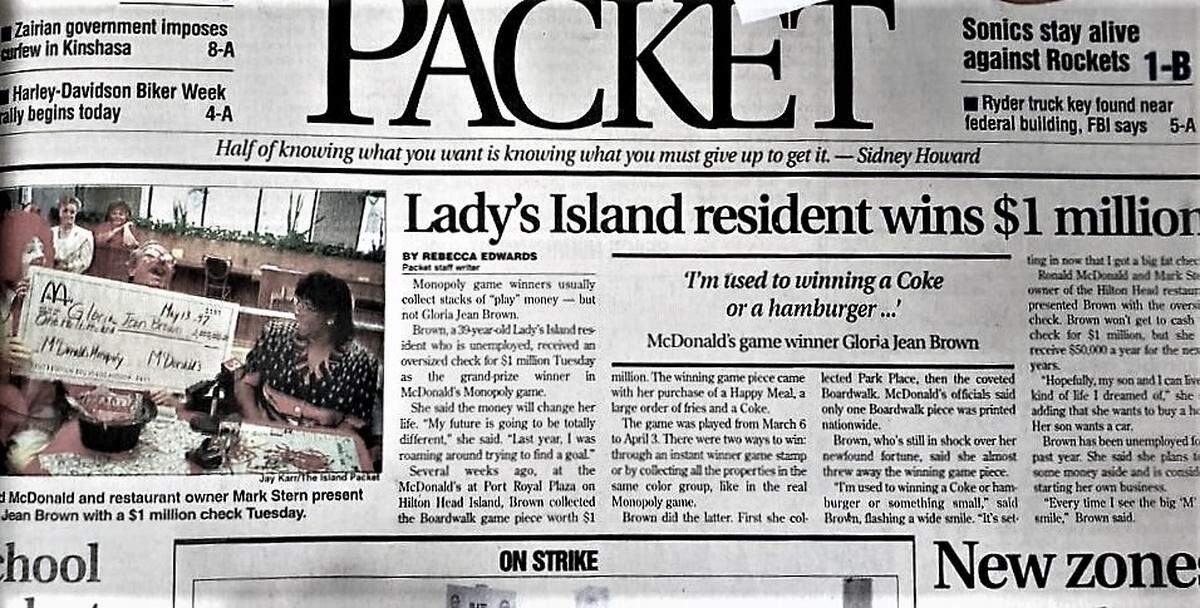
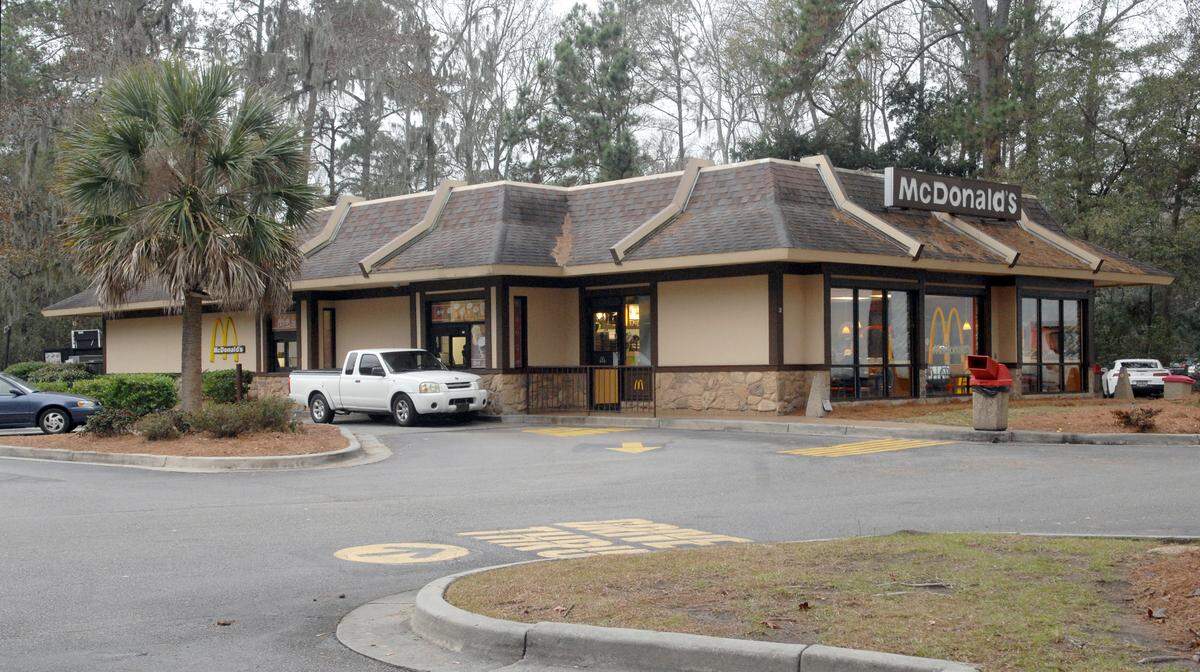
When 39-year-old Gloria Brown appeared on the front page of The Island Packet newspaper in 1997, she was a single mother living on Lady’s Island who had won $1 million in a McDonald’s monopoly game. She cashed in her Boardwalk ticket at the McDonald’s in Port Royal Plaza on Hilton Head Island.
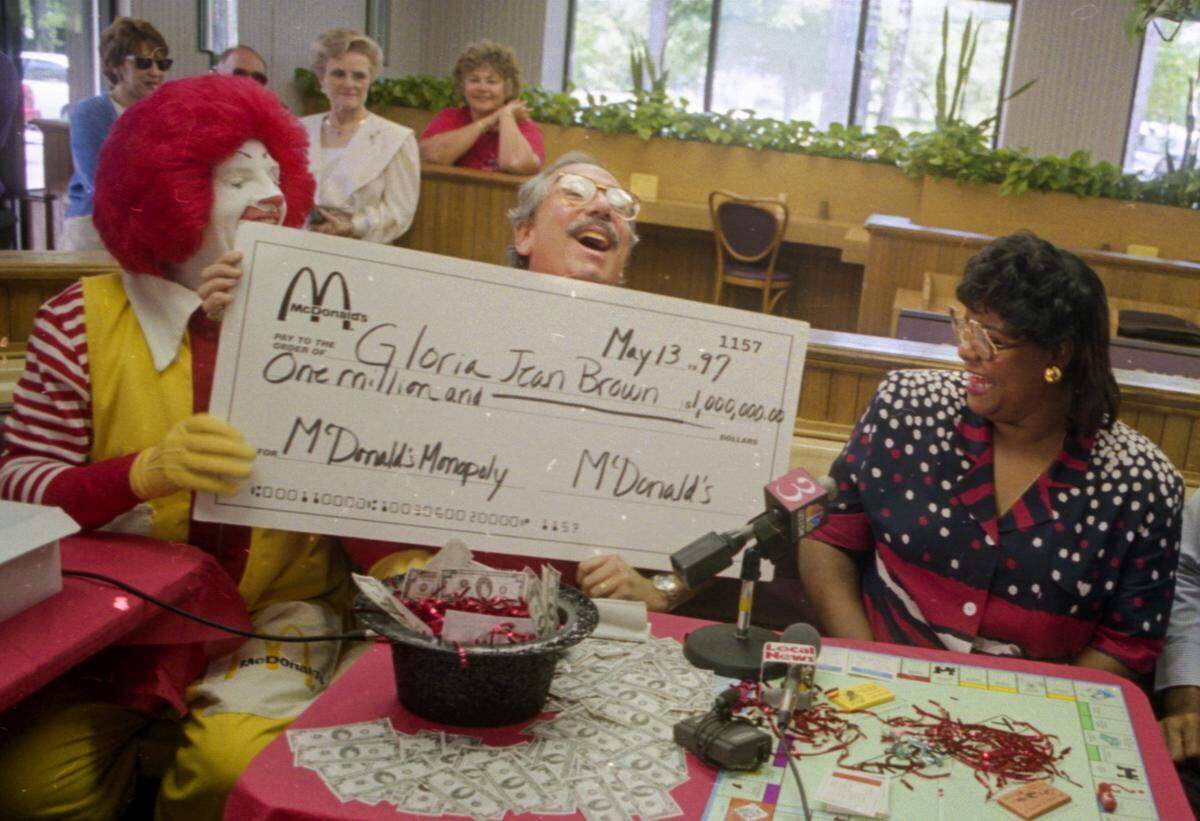
Brown is grinning in the photo. She’s accepting a check from an open-mouthed McDonald’s owner Mark Stern, surrounded by fake dollar bills and Ronald McDonald himself.
But Brown didn’t live on Lady’s Island, and she hadn’t found the winning Boardwalk ticket in a Happy Meal, an order of large fries and a Coke, like she said.
She purchased her winning ticket through an underground monopoly ring run by a Florida man who stole and sold 60 winning game pieces and $24 million in prizes from 1989 to 2001. The FBI uncovered the scam in 2001; more than 50 people were convicted of mail fraud and conspiracy charges.
A 2018 article in The Daily Beast by Jeff Maysh titled “How an Ex-Cop Rigged McDonald’s Monopoly Game and Stole Millions,” brought the scheme back into the public eye, and is the basis for a new HBO series, “McMillion$.”
The series airs new episodes every Monday night.
Brown’s story on Hilton Head Island is detailed in Episode 3, which was released Feb. 17.
In 1997, Brown’s win resulted in a lot of attention from local media, including the Savannah Morning News, local TV stations and The Island Packet. She was a single mother who said she had been searching for a goal and greater purpose in her life.
She was easy to root for.
In the newspaper’s May 14, 1997, edition, Brown told The Island Packet, “hopefully my son and I can live the kind of life I dreamed of.”
The scheme, which encompassed several states over 11 years, duped local and national media, law enforcement, local and global McDonald’s executives, and the thousands who play the game every year in hopes of winning big.
How did the Uncle Jerry scheme work?
The McDonald’s monopoly scheme was run by a man named Uncle Jerry — 46-year-old Jerry Jacobson.
In the scheme, “winners” paid Uncle Jerry for stolen game pieces either up front, sometimes mortgaging their homes like Brown, or by giving him a portion of the winnings, according to the Daily Beast article.
Jacobson, a former police officer, got the winning pieces through his position as the director of security for Simon Marketing, the Los Angeles-based company that produces the game pieces, the Daily Beast reported.
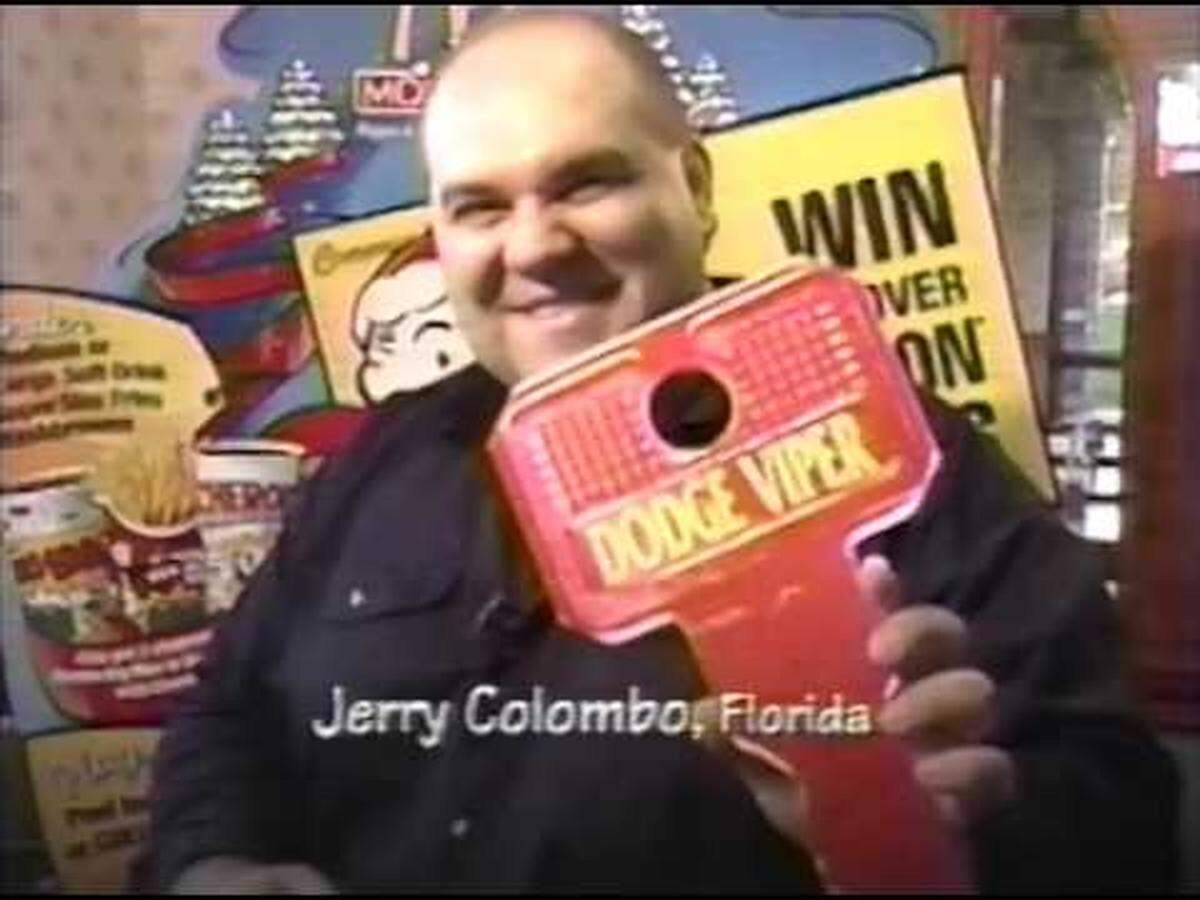
Jacobson had solicited a cadre of associates to help him sell the pieces in the years-long scheme. They included Jerry Colombo, a man who lived in Charleston and had direct ties to the New York Colombo crime family, and Dwight Baker, a South Carolina real estate developer and leader in the Mormon Church.
Who is Gloria Brown?
Brown was a social worker who was unemployed and living in Jacksonville, Florida, when she got into the Uncle Jerry scheme, the HBO series shows.
She said she was originally contacted by Robin Colombo, Jerry Colombo’s wife, who was trying to increase diversity among the winners.
Robin Columbo said in the HBO series that she feared authorities would get suspicious if “Italians on the East Coast” kept winning big at McDonald’s monopoly.
“Bring some women into it and some women of color,” she said she told her husband in the HBO series.
When Brown get involved, she mortgaged her home to pay Colombo up front for the $1 million winning piece.
“He asked... how much money I could come up with... in order to be eligible,” Brown said in the Daily Beast article.
She met him weeks later on the side of I-95 and handed him $40,000 in cash.
In the HBO series, Brown recalled that moment with intense emotion.
“I put all the stuff I worked hard for on the line because I believed that this was my blessing,” she said in the HBO series. “I met him on the side of the road and gave him my first portion of my money. It felt like something had just been ripped from me.”
Winning at the Hilton Head McDonald’s
Once Brown paid Colombo, things moved quickly.
Although Brown lived in Jacksonville, Uncle Jerry insisted she win in another state to quell suspicions, according to McMillion$.
She, Colombo and his cousin set her up in Beaufort County with a fake address on Lady’s Island, where Colombo’s cousin lived.
She used the address and the cousin’s phone number to set up a fake life on Lady’s Island — where she recorded her voice on the phone’s voicemail system to make it seem as if she lived there.
When Brown went to “find” her prize, Colombo and his cousin drove her to the Port Royal plaza McDonald’s on Hilton Head Island, where they parked around the corner while she went in to claim her prize, according to McMillion$.
After she reported the win, she said in the HBO series that she “hung around” Beaufort County for another day before returning to Jacksonville. She eventually rerouted her McDonald’s winnings checks, which she received in $50,000 annual installments over 20 years, to her real home in Florida.
But the big win wasn’t quite what Brown expected, she said in the HBO series.
She paid the income taxes on the award, although she had to give $25,000 of her winnings to Colombo each year. In McMillion$, she said she was making about $24,000 per year working before she won, and the $1 million win ended up adding $10,000 of income each year for her.
“Nothing changed for me,” she said in the HBO series.
McMillion$, a dramatic reenactment of the Uncle Jerry scheme, does not show the Hilton Head Island McDonald’s. It does include television footage from Brown’s check presentation at the north end fast-food restaurant.
Mark Stern, owner of the Hilton Head McDonald’s where Brown won, found out that her win was part of the scheme on Monday, when the episode aired and his youngest daughter called to tell him the news.
“I thought my winner was kosher up until Monday at about 8 o’clock at night,” he said. “I would have thought McDonald’s would have notified me, or the producers of the documentary. There was almost a whole episode on this one woman.”
He was stunned by the news, and also felt like he’d been defrauded.
“In my head, it wasn’t that everyone was fixed,” Stern said he was thinking when he learned of the scheme in 2001. “I just assumed that there were a couple winners here and there that were fixed.... Someone would mention it because they knew I was with McDonald’s, and I would say ‘yeah but my winner was real.’”
Stern, who owned both of the Hilton Head McDonald’s and lived in Beaufort County for 20 years, said he never suspected Brown to be part of the scheme.
“How are they gonna pick some small place like Beaufort County, South Carolina?” he asked.
Stern sold his McDonald’s restaurants in 2006 and moved to Ventura County, California.
How did it end?
The end of the Uncle Jerry scheme was just as bizarre as its heyday.
Jerry Colombo died in 1998 after a car accident near the Georgia state line while wife Robin was driving him and son Frankie to scout out land to build a home, according to the Daily Beast article.
His wife and child survived the crash.
In 2000, after the FBI received an anonymous tip about the scheme, Special Agent Richard Dent set up a massive sting operation in Florida to gather information using wiretaps. In 2001, Dent launched a fake marketing stunt to gather all the suspected fraudulent winners and catch them lying on camera.
FBI offices in Columbia, South Carolina; Atlanta; Memphis; Boston; Indianapolis; Dallas; Miami and Chicago all participated in the investigation, according to a 2001 news release from the Department of Justice.
The details of the marketing stunt and sting are front and center in the McMillion$ series, which is produced by James Lee Hernandez and Brian Lazarte.
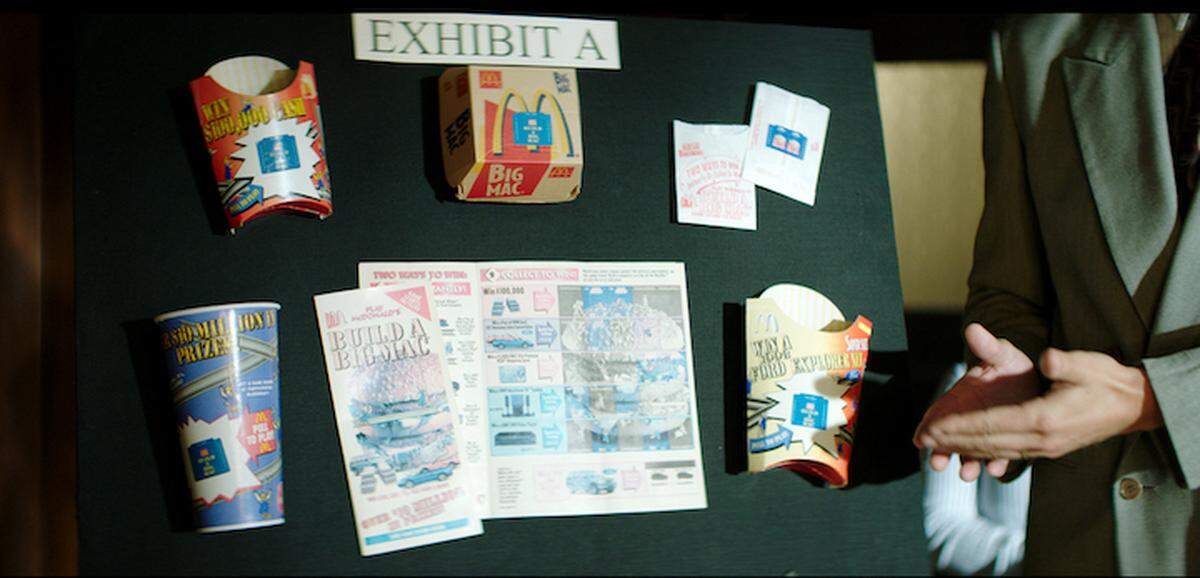
After the sting, Jerry Jacobson (Uncle Jerry) and several of his associates were arrested on Aug. 1, 2001. Jacobson’s bond was set at $1 million, the Daily Beast article said.
The court case in Jacksonville began on Sept. 10, 2001 — the day before the terrorist attacks in New York City, Washington, D.C., and near Shanksville, Pennsylvania.
“The stunned news media quickly forgot about the McDonald’s trial, which explains why so few Americans remember the scandal, or how it ended,” according to the Daily Beast article.
Baker, one of Uncle Jerry’s recruiters and the South Carolina leader of the Mormon church, told The Daily Beast, “if the FBI had focused on surveilling terrorists and not McDonald’s winners, 9/11 might never have happened.”
Baker pleaded guilty to conspiracy to commit mail fraud and was sentenced to probation. He was also excommunicated from the Mormon church. He and members of his family, also implicated in the scam, are repaying their prize money at $50 per month, according to the Daily Beast article.
Jacobson was sentenced to just over 3 years in prison and ordered to pay back $12.5 million, according to the Atlanta Journal Constitution. He was the only person implicated in the scheme to spend more than a year and a day in jail.
Over 50 defendants, including Brown, were convicted of mail fraud and conspiracy in the Uncle Jerry scheme. Brown was ordered to pay $300,000 in restitution, The Associated Press reported.
Brown now lives and works in Florida, where she is trying to pay down the mortgage she took out on her home, according to Oxygen.com.
Brown wrote a memoir titled “I Thought I Would Be Living My Best Life,” which is scheduled to be published after the final episode of McMillion$ on March 9, Oxygen.com reported.
How to watch McMillion$
Here’s how to see the six-part HBO series:
- Spectrum: channel 511
- Hargray: channel 330
- Streamed on HBO Go with monthly subscription
New episodes drop every Monday at 10 p.m., and Episode 3 shows Brown’s story and the Hilton Head McDonald’s win.
You can find the broadcast schedule for that episode on www.hbo.com/schedule