USC doesn’t cap nonresident students. What about other Southern, SEC schools?
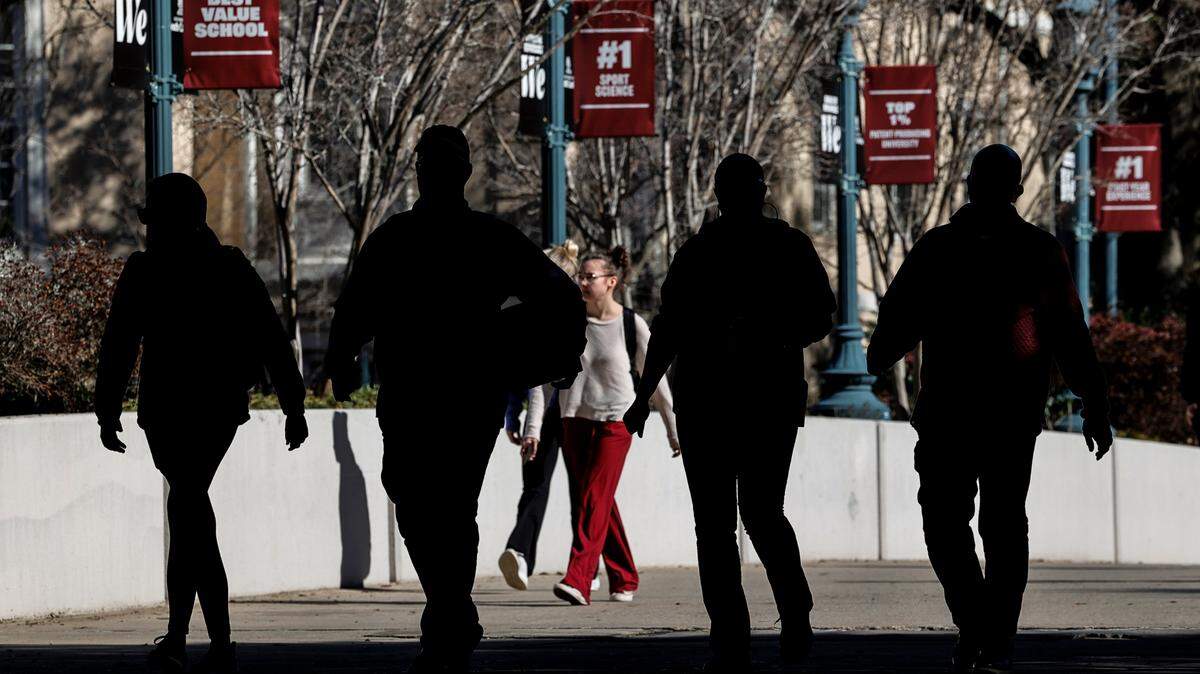
Going to college in the South has become an attractive venture and a cultural fascination, with national news outlets claiming that many college hopefuls are ditching the Ivy Leagues for schools like the University of South Carolina.
USC doesn’t have any formal enrollment quotas or caps for in-state or out-of-state students, but the application pool has significantly grown over the last two decades. Enrollment skyrocketed, and it doesn’t seem to be slowing down. South Carolinians must compete not only with the growing out-of-state interest in USC when applying to college, but also with those in other states who, like USC, try to prioritize in-state students.
In 2022, the Brookings Institution, a private, nonpartisan policy research group, found that over the last 20 years, public, flagship institutions across the country have decreased their share of in-state students and enrolling more students from out of state. It’s a phenomenon the organization dubbed the “Great Student Swap.”
Between 2002 and 2018, USC out-of-state enrollment grew from 23% to just over 48%.
Of its approximately 30,000 undergraduates right now, about 56% are South Carolina residents, while about 43% are not, according to the USC Office of Institutional Research, Assessment and Analytics. The latest freshman class had about 7,800 enrollees, 4,100 of which were in-state students — about 53%.
Many out-of-state students are from northern states like New York, New Jersey, Pennsylvania and Maryland, with another portion hailing from states like North Carolina, Virginia and Georgia.
However, the university has made moves to prioritize its Palmetto State applicants, and has boasted enrolling more South Carolinians than ever before in recent years.
Residents who graduate in the top 10% of their high school class are guaranteed the opportunity to become a Gamecock. Officials have said that just about every in-state applicant who is qualified and college-ready has a place at the school. And the state has simplified a pathway for students at South Carolina’s technical colleges to transfer to USC. As Southern colleges see surging student bodies, how do other neighboring institutions compare?
North Carolina
The University of North Carolina, one of the most prestigious public universities in the country, has an out-of-state enrollment cap for its Chapel Hill campus. Each fall, nonresidents are capped at 18% of the incoming undergraduate freshman class, according to state law and a policy by the UNC System Board of Governors.
The same goes for the UNC campuses in Charlotte and Wilmington, as well as North Carolina State University in Raleigh.
If enrollment caps are exceeded, UNC campuses can be subjected to financial penalties, according to The Daily Tar Heel, the student newspaper at Chapel Hill.
Georgia
The University of Georgia has no formal quota for in-state and out-of-state students, nor does it have quotas for certain high schools or zip codes. And admissions standards for both residents and nonresidents are the same, according to the university.
However, it can be more challenging for an out-of-state student to be admitted, officials have said, because of the volume of applicants, and the school’s goal of enrolling a freshman class that is about 80% in-state students.
Tennessee
The University of Tennessee does not limit the number of out-of-state students on its campus. It was among the states with the smallest change in percentage of nonresidents with just a 3.7% increase between 2002 and 2018, the Brooking Institution found.
Florida
The Florida State University System has a nonresident enrollment cap of 10% across the system, which includes the University of Florida, Florida State University and other schools. It does not limit out-of-state students at specific schools, however. Instead, it mandates that the systemwide average stays at or below 10%.
Alabama
The University of Alabama and Auburn University also do not have formal nonresident enrollment caps.
According to The New Yorker, Alabama made a concerted effort to recruit out-of-state students in recent years. It’s worked.
Enrollment data shows that what was once a student body of about 23% out-of-state students had grown to about 65% in 2018, according to the Brookings Institution. This year’s freshman class at Alabama was about 54% nonresidents.
This story was originally published January 5, 2026 at 5:00 AM with the headline "USC doesn’t cap nonresident students. What about other Southern, SEC schools?."