
100,000-pound whales spotted off Hilton Head coast. Their heads were as big as boats
It’s the most magical time of the year off the coast of Hilton Head Island.
While water temperatures are too cold for most humans, rare creatures like the great white shark and the North Atlantic right whale are occasionally spotted gliding through Lowcountry waters.
Last week, Hilton Head’s “great white shark whisperer” saw a spectacularly special sight: two female right whales slowly coasting southbound, just a few feet apart from one other.
The Outcast Sport Fishing charter captain spotted the two massive whales while he was taking a few customers fishing about 6 miles off the coast of Hilton Head Wednesday morning.
“Out of the corner of my eye, I saw a huge splash that I knew was too big to come from a dolphin,” Chip Michalove said.
Then, he saw two 50-foot whales from hundreds of yards away, coming slowly straight toward his boat.
He grabbed his drone and flew it a little closer to get a better view. From the drone, he saw a sea life explosion at the surface: two gigantic whales “looking like they were having a good time,” surrounded by dozens of dolphins that “looked like they were hanging around the whales to annoy them,” Michalove said. Up above, a swarm of sea birds circled and swooped.
Michalove said he was careful with his wheel as the gigantic creatures calmly swam by them.
“They’re so massive, you can see them from about a half-mile away,” Michalove said. “The head alone is as big as a boat.”
Michalove, who has received nationwide attention for hooking and releasing more than 30 great white sharks for scientific research, said he has seen right whales in the past, but this was the first time he saw two together.
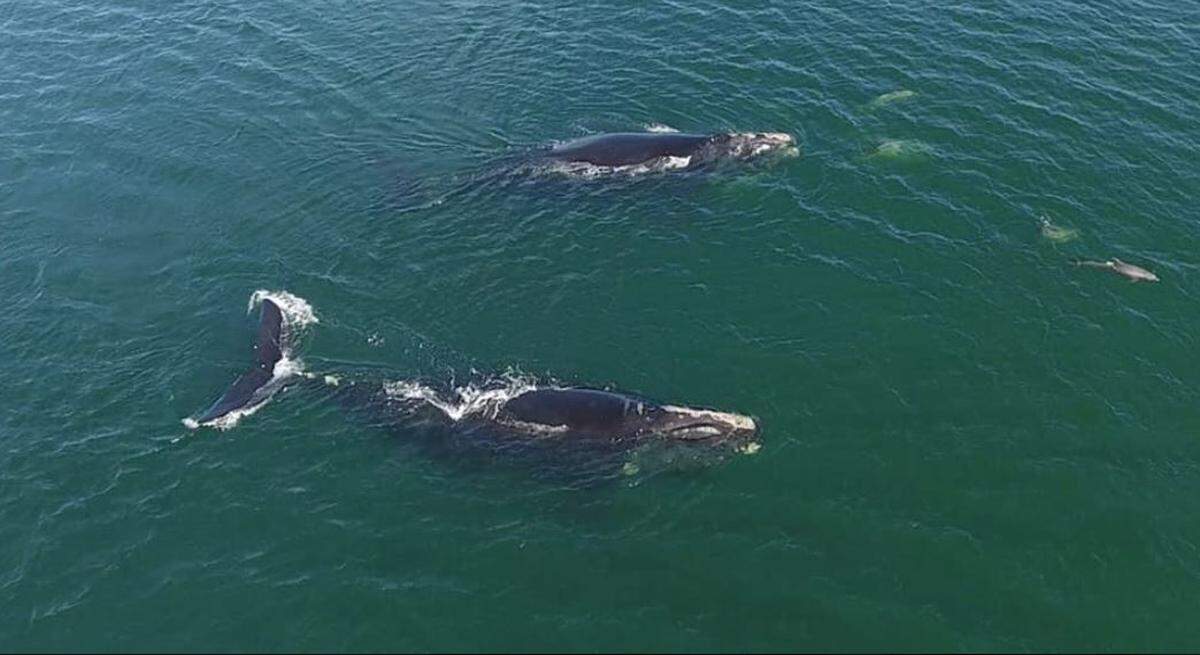
He kept his distance from the whale after it first surfaced, slowly backing away the charter, as it’s illegal to be within 1,500 feet of any right whale, according to the National Oceanic and Atmospheric Administration.
The North Atlantic right whale is “among the rarest of all large whale species and, indeed, of all marine mammal species,” according to the South Carolina Department of Natural Resources.
In fact, there are only 405 North Atlantic right whales still alive, after six died this summer, the Atlantic magazine has reported. Of those, only around 100 reproductive females are left in the ocean.
“A whale expert who saw my video said the whales I saw were both female, and one was pregnant,” Michalove said. “That’s pretty crazy I saw 1/50th of the reproductive females in the entire population.”
Last year, Mark Baumgartner, a marine ecologist with the Woods Hole Oceanographic Institution in Massachusetts, told The Guardian that right whales could be extinct by 2040.
“At the rate we are killing them off, those 100 females will be gone in 20 years,” Baumgartner told The Guardian.
Right whales got their name because they are slow moving and float after they are killed, making them “the right whale” to hunt. They can grow up to 52 feet long and weigh up to 140,000 pounds, or 70 tons, according to NOAA. That’s larger than a typical semi-truck.
The endangered whale lives up to 70 years, according to NOAA.
They can eat between 2,200 and 5,500 pounds of food in a day, and its head is about a third the size of its body.
Where can you see right whales?
A map that tracks sightings of the whales indicates two additional recent sightings off the Georgia coast in the past two weeks.
Right whales are migratory, and will make their way to the southeastern coast in the wintertime after spending summers in New England and Canada, according to the Smithsonian.
“I usually see them between November and December, but sometimes January,” Michalove said, adding that he’s spotted about 20 over the last couple of decades off the coast of Hilton Head. He said they travel between 6 and 15 miles off the Lowcountry coast. .
Boaters may see the whales breaching the surface of the water and then “crashing back down with a thunderous splash,” according to a NOAA fisheries report. They may also see them slapping their tails or flippers on the water’s surface.
Michalove said boaters should be careful traveling in the dark this time of the year.
“It’s easy to see them in the day, but not at night,” Michalove said.
How can you tell it’s a right whale?
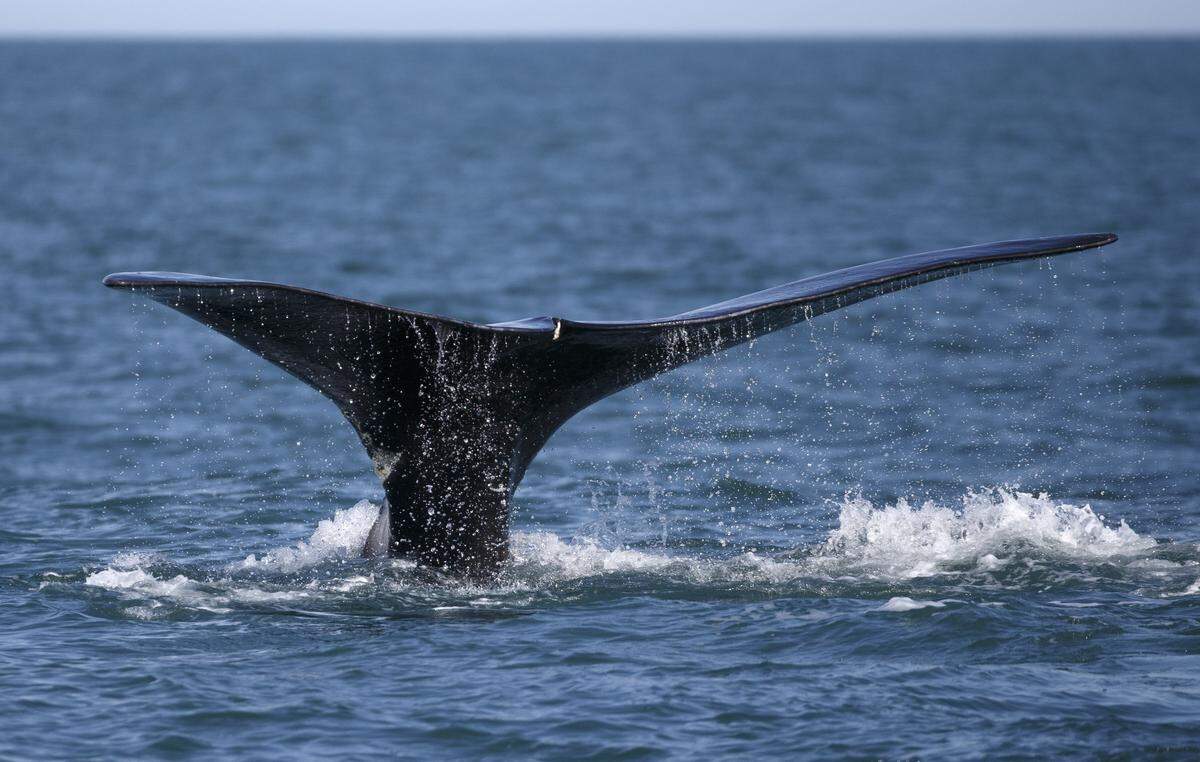
NOAA says the North Atlantic right whale has “a stocky black body,” with no dorsal fin. Its tail “is broad, deeply notched, and all black with a smooth trailing edge. The stomach and chest may be all black or have irregular-shaped white patches.”
The whales don’t have teeth. Instead, they feed by filtering minute zooplankton through their baleen, the report explains.
Researchers tell the whales apart by their unique “callosities,” patches of rough skin on their heads that appear white because of whale lice.
Those lucky enough to encounter a right whale between North Carolina and Florida may report the location by calling 877-WHALE-HELP, contacting the U.S. Coast Guard via channel 16 or logging the sighting via the WhaleAlert iPhone/iPad app.
This story was originally published December 3, 2019 at 10:38 AM with the headline "100,000-pound whales spotted off Hilton Head coast. Their heads were as big as boats."
%20Cropped.jpg)