Your questions answered about the alligator captured and killed on Hilton Head this week
On an island that was built on ideals of environmental conservation and respect for nature, an alligator’s capture and euthanasia on Hilton Head Island this week has launched a town investigation and resulted in an apology from a local wildlife control company.
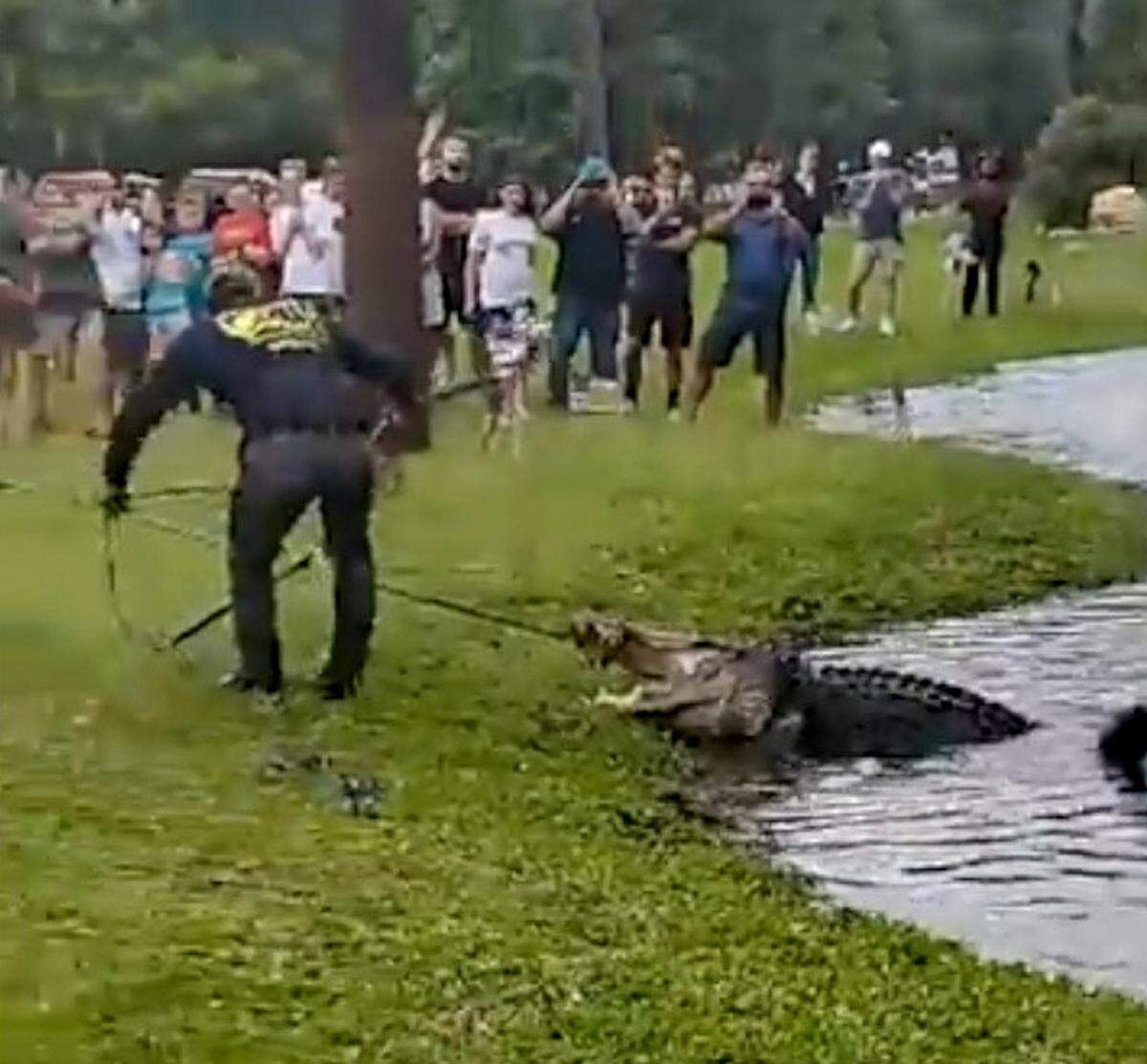
On Tuesday evening, a 12½-foot male alligator estimated to be 80 to 100 years old was removed from the property of Legendary Golf mini-golf course on U.S. 278 by Critter Management, a Hilton Head-based business.
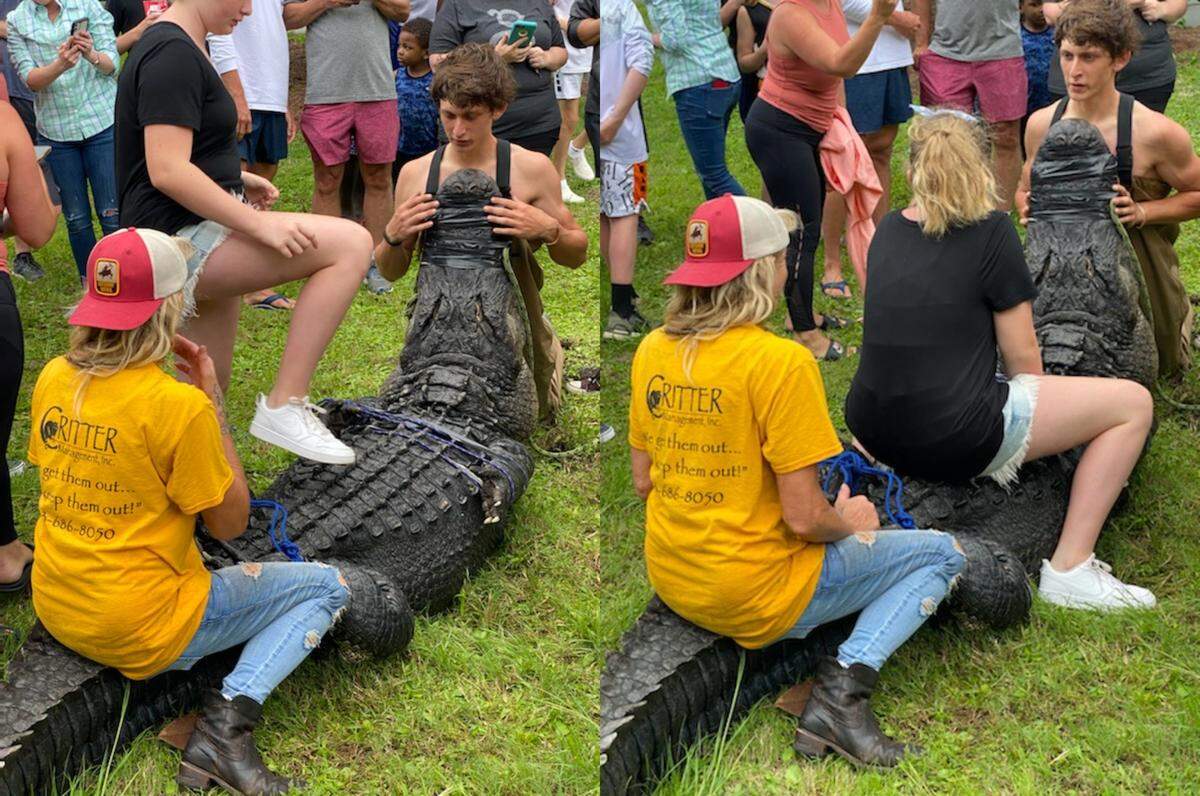
Anger over videos and photos that show several bystanders taking turns sitting on the animal’s back after his limbs and jaws were bound fueled outrage on social media.
Amid the emotional response, which has spurred a protest, are also logistical questions about the removal of some of the island’s oldest natural species.
“Why did this animal have to be killed?” some readers asked. “What happened to the alligator after it was removed?”
Here are answers to those and other questions:
What happened to the Legendary Golf alligator after it was taken away?
After the alligator was removed from Legendary Golf, it was taken by tow truck to Critter Management where it was shot and killed.
On Thursday afternoon, the alligator’s carcass sat on a loading dock at Critter Management’s offices on Hilton Head. A representative of the S.C. Department of Natural Resources stopped by to make sure the animal wasn’t relocated.
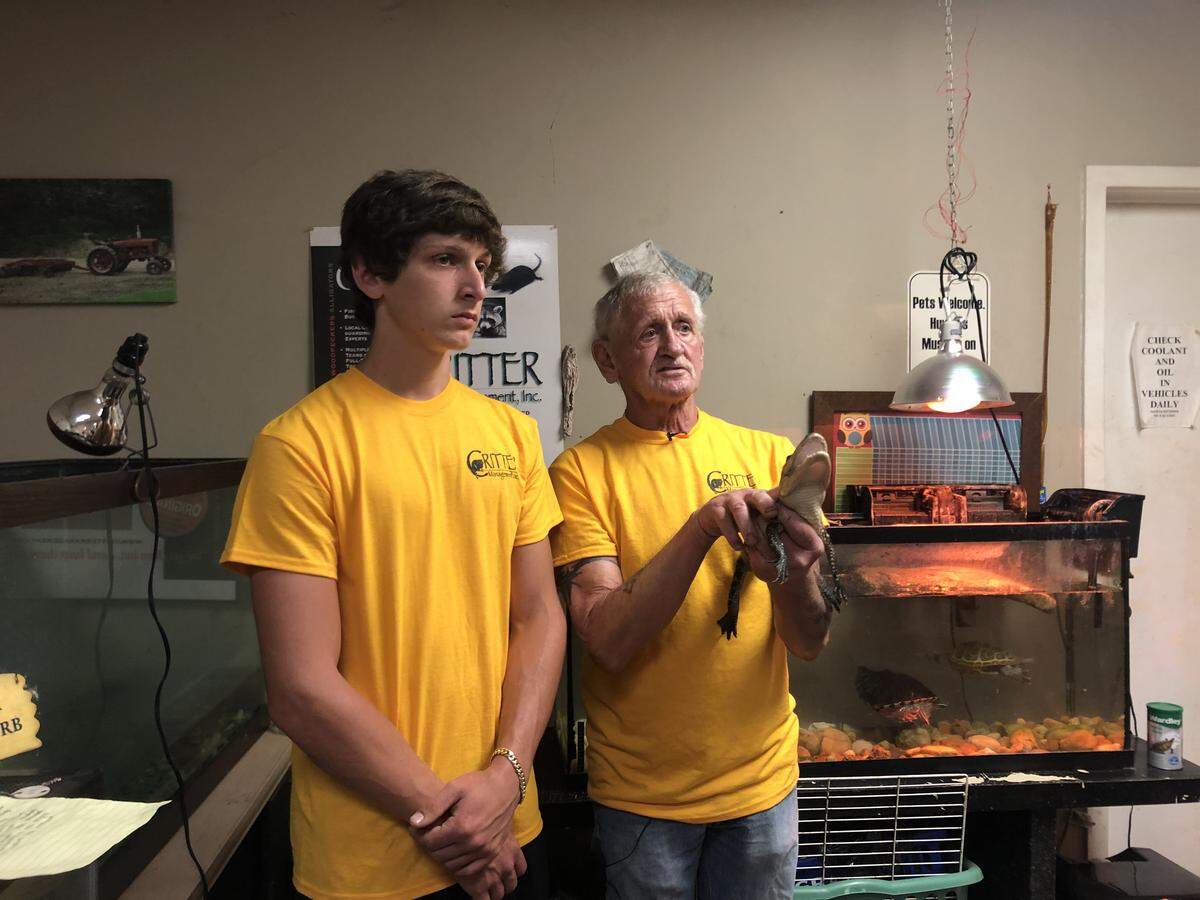
Joe Maffo, owner of Critter Management, said the animal’s head and hide would be taken to a taxidermist and preserved while the alligator meat would be harvested and donated.
“Nothing goes to waste,” Maffo said.
SCDNR allows agents who kill alligators legally to harvest the meat and hide and keep any money they receive for it.
Maffo’s business is under scrutiny on social media for the treatment of the alligator and a widely-circulated screenshot that appears to show Critter Management staff replying to a Facebook message about the incident by saying “f--- you we make money doing this.”
Asked Thursday whether Maffo or Critter Management will profit from the alligator’s preserved head or hide, he said he will not sell them.
Will anyone make money?
While some forms of taxidermy in South Carolina are restricted and illegal to sell - such as bear or waterfowl parts - alligator taxidermy can generally be sold if the harvest tag is included, according to SCDNR and online estate sale resources.
Maffo said Thursday that alligator taxidermy doesn’t sell for much money, and Columbia-area taxidermist Keith Crout agreed.
“There’s not any money in them,” Crout said Friday. “We end up stuck with some skins sometimes, even if it’s a large (alligator).”
Why did the alligator have to be killed instead of relocated?
In South Carolina, it’s illegal to relocate an alligator without a permit. Even with one, it’s illegal to transport an alligator from one property to another.
David Lucas, spokesperson for SCDNR, previously told The Island Packet that moving alligators simply creates safety hazards elsewhere.
Alligators have been known to travel miles to find their way back to the place they started.
“So relocating a problematic alligator is really just moving the problem around,” Lucas told the newspaper in 2018.
Of the roughly 300 alligators SCDNR determines to be nuisance animals each year, only about five are relocated, he said at the time.
Why did this happen?
Ed Berry, who owns Legendary Golf with his wife Lorraine, said he saw only two options when a giant alligator showed up at the mini-golf course: He could close the business temporarily and hope the animal moved along or he could try to have the alligator relocated.
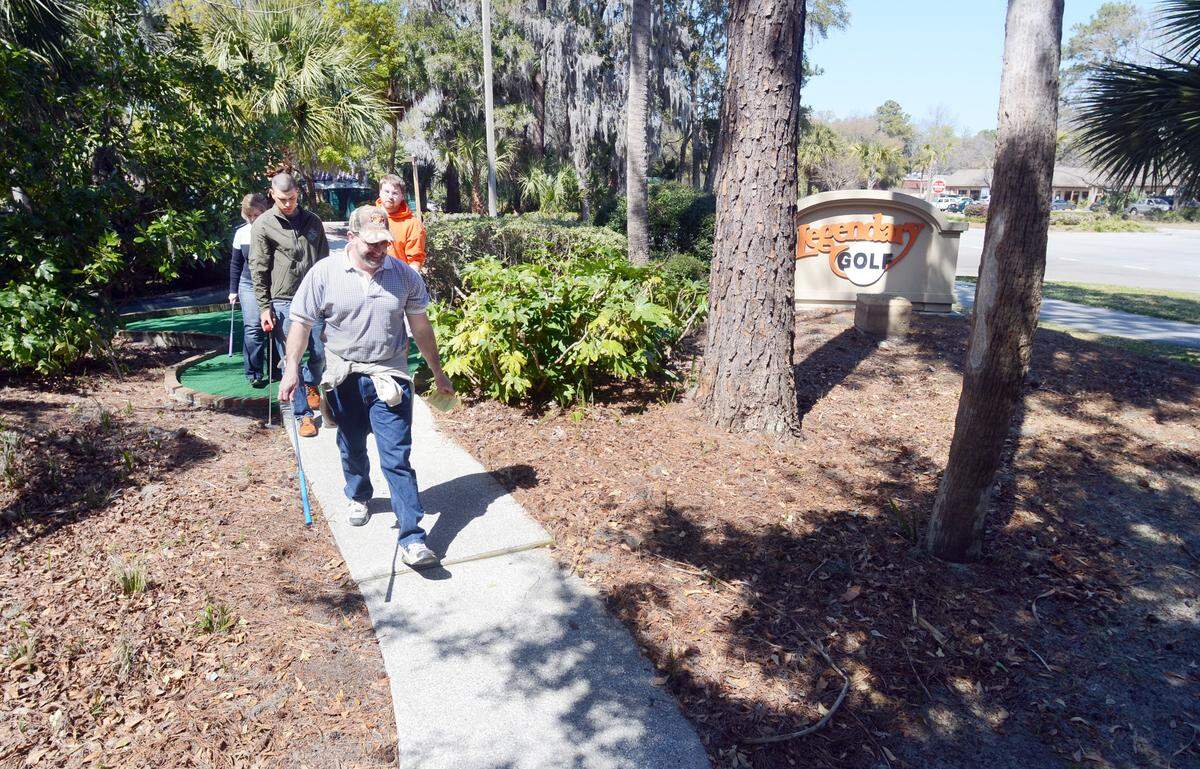
Ultimately, he said, he made the wrong choice.
Even though the alligator wasn’t behaving aggressively, Berry was worried for the safety of his customers, so he called the South Carolina Department of Natural Resources.
He was told the alligator would be euthanized if he was removed from the property, so instead of moving forward with SCDNR, Berry contacted Critter Management.
“It was my intention, and when I talked to Critter Management, that it be rescued,” Berry said on Thursday. “... The whole day long, I thought we would be saving this gator.”
Berry, who called the situation “a nightmare” and “a tragedy,” said he offered to pay to have the alligator transported to a sanctuary.
Joey Maffo, Joe Maffo’s 19-year-old grandson who led the team capturing the alligator, told The Island Packet he was “very disappointed” that SCDNR required the animal to be killed but also said Thursday that alligators that large are never simply relocated.
Smaller, less aggressive animals have been relocated to different lagoons within neighborhoods on Hilton Head Island.
“It’s sad that the DNR regulations call for destruction of these animals. He deserved to live out his life,” Berry said. “I did what I thought was right, and it didn’t work out the way I hoped it would have.”
Why were people allowed to sit on the alligator?
Joey Maffo took responsibility for inviting between 20 and 30 people to sit on the alligator after it was removed from the pond.
“That was actually on me,” he said. “As soon as I taped the gator, I thought it was a good opportunity to get people to understand how big and powerful it was.”
In videos of the incident, smiling people sit briefly on the alligator for photos as Joey Maffo holds its head. On Thursday, he said alligators heads are held upward to control them, and that he wasn’t hurting the alligator.
He and his grandfather apologized for “letting it get out of hand.”
SCDNR issued a written statement Wednesday night stating that the removal and euthanasia of the alligator were legal, but that the agency did not condone the manner in which the animal was treated.
“The capture and handling of alligators should be left to experienced professionals, and allowing untrained people to interact with an alligator is irresponsible and puts those people at risk,” alligator biologist Morgan Hart said in the statement.
On Thursday, some media outlets reported that SCDNR does not anticipate bringing criminal charges related to the incident.
What’s next?
A protest spurred by the treatment of the alligator was scheduled on Hilton Head Friday afternoon.
“Let Them Live, Let Them Cross, Respect Our Wildlife” is the name of the event where people planned to gather on the island’s south end to protest the alligator’s death, which organizers called “inhumane.”
“This will begin awareness and then we will attend a town hall meeting and begin to bring this up until we are heard and something changes,” the event’s description says.
“This is no way to treat our wildlife and we need to make some changes. Let’s come together.”
This story was originally published May 29, 2020 at 1:21 PM.