Rabid animals confirmed in half of SC counties this year. Here’s where, how to stay safe
The South Carolina Department of Public Health recently confirmed five new cases of rabid animals across the state that resulted in the exposure of four people, five pets and two livestock animals.
The confirmed animals — a bobcat, a fox, two raccoons and a skunk — were discovered in separate incidents and were confirmed positive for rabies by SCDPH on Aug. 19 and 20.
To date, 23 of South Carolina’s 46 counties have reported rabies cases in 2025, totaling 56 confirmed rabid animals, according to Casey White, spokesperson for the SCDPH.
Here’s what to know about these recent cases and how to keep pets and yourself safe:
County-by-county breakdown
- Aiken County: A bobcat exposed one goat and one pig. This marks the first rabid animal in Aiken County and the first rabid bobcat in 2025. In total, it’s the seventh confirmed rabid bobcat in South Carolina since 2008.
- Berkeley County: A fox exposed four people and one dog.
- Laurens County: A raccoon exposed one dog.
- York County: A skunk exposed two dogs. This is the fifth rabid animal in York County in 2025.
- Pickens County: A raccoon exposed one dog.
The following counties have had the highest rabies cases so far this year, according to Aug. 1 data from the SCDPH:
- Anderson County: Six cases total (one cat, one skunk, one fox, three raccoons)
- York County: Five cases total (one cat, two skunks, two raccoons)
- Charleston County: Five cases total (one cat, four raccoons)
Below is a map outlining all other affected counties in the Palmetto State, which have only documented between one and three cases so far this year. The only counties not included in this map from the SCDPH are Edgefield County, from a confirmed rabid fox on Aug. 6 and the rabid bobcat confirmed in Aiken County on Aug. 19.
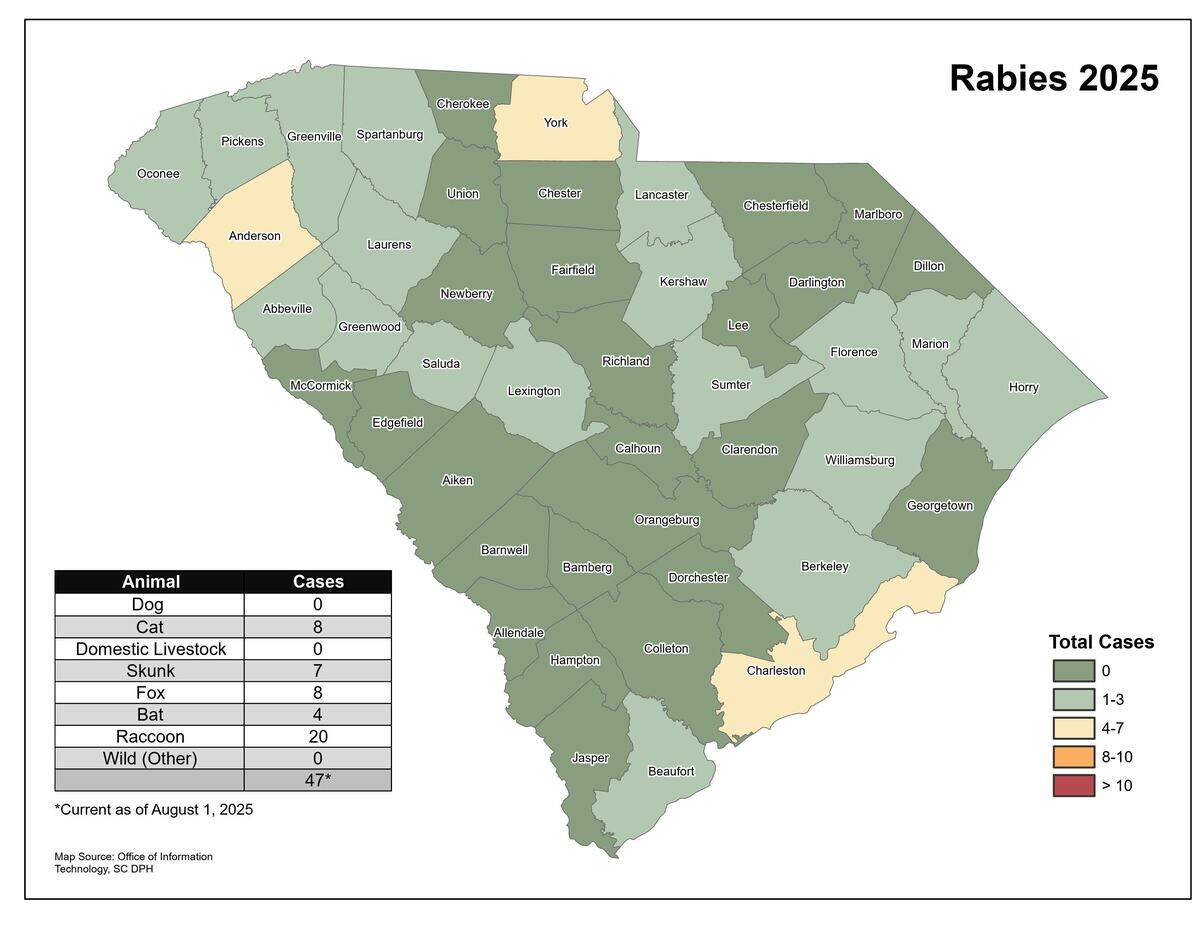
Since 2002, the Palmetto State has averaged 144 rabies cases annually, the SCDPH states. In 2024, there were 81 confirmed cases statewide.
How to keep yourself and pets safe
The U.S. Centers for Disease Control and Prevention estimates that over 90% of the roughly 4,000 reported rabies cases each year in the U.S. occur in wildlife animals including bats, raccoons, skunks and foxes.
In the Palmetto State, raccoons, skunks, foxes and bats are among the most common carriers.
Under South Carolina’s Rabies Control Act, dogs, cats and ferrets must be vaccinated against rabies.
While livestock are not required to be vaccinated, it is strongly recommended by the SCDPH, especially for cattle and horses, which are the most commonly infected livestock.
Terri McCollister, rabies program manager for the SCDPH, states that keeping pets and livestock up to date on their vaccinations is one of the “easiest and most effective ways” to protect yourself, your family and your animals from this fatal disease.
What to do if exposed
The CDC reports that between 2015 and 2024, 17 cases of human rabies have been documented nationwide.
While the number of rabies-related human deaths has declined significantly, to reduce the risk of exposure, the SCDPH urges residents to avoid contact with wild or stray animals and to report any bites, scratches or exposures to potentially rabid animals.
If you find any wild or stray rabid animals, it’s recommended to contact a professional, such as a local animal control officer, wildlife control operator or wildlife rehabilitator.
If you believe you or your pet may have been exposed, you can report all animal bites, scratches and exposures to potentially rabid animals to the SCDPH through the 24-hour rabies reporting line at (888) 847-0902 and selecting “option 2” or by contacting your SCDPD county office.
For more information, visit the SCDPH rabies page or check the rabies surveillance map.